Don’t Balkanize My Installer, Yo!

kubernetesLast week, RackN announced our enterprise support for Kubernetes using nothing but upstream Ansible from the project itself.  This effort represents years of effort by the RackN founders to keep platforms interoperable via open and shareable operations automation.

That’s why our Digital Rebar approach targets underlay challenges and leverages existing automation tools instead of investing yet another install path.

dcosThis week, we added Install Wizard templates to the DC/OS install automation we build in collaboration with Mesosphere last year.  That makes it even easier to run DC/OS on physical infrastructure.  Like our Kubernetes work, the Digital Rebar automation uses the same community dcos_install.sh that’s used in the community documentation.  The difference is that we’re also driving all the underlay prep and configuration automatically.

If this approach appeals to you, contact RackN and join in the open Day 2 revolution.

Interested in seeing the DC/OS install in action?  Here’s a demo video:


Accelerating Community Ops on Kubernetes in Hybrid Style

Preface: RackN is looking for SRE teams who are enthusiastic about accelerating Kubernetes on-premises in a long term operational way that can be shared and reused across the community.

kubernetesWe’re excited to see and be part of the community progress towards enterprise-ready Kubernetes operations on both cloud and on-premises.  The RackN team is excited to be part of multiple groups establishing patterns with shareable/reusable automation. I strongly recommend watching (or, better, collaborating in) these efforts if you are deploying Kubernetes even at experimental scale.

We’ve worked hard to make shared community ops work accessible, repeatable and multi-platform without compromising scale or security.

The RackN team has been enthusiastic supporters of Kubernetes since the 1.0 launch with our first deployments going back to June 2015 with updates for 1.2, 1.3 and now 1.5. I’m excited to report that fully converged the composable Digital Rebar approach with the Kubernetes Kargo Ansible. Our 1.2 efforts leveraged the Kargo predecessor “Kubespray.” This integration brings the parallel hybrid operation and node-by-node function of Digital Rebar with the Ansible community efforts around Kargo.

Composable design is a key element the RackN focus on SRE automation because it allows ecosystem

That allows a fully integrated deploy where Digital Rebar stages the environment and then use Kargo directly from upsteam to install Kubernetes. Post-deployment, Digital Rebar is able to extend the cluster with packages like Helm, Deis, Dashboard and others.

Since Digital Rebar supports parallel deployments, it’s possible to fully exercise the options enabled by Kargo simultaneously for development and testing.  Benefits????

For example, you can built-test-destroy coordinated Kubernetes installs on Centos, Redhat and Ubuntu as part of an automation pipeline. Unlike client side approaches like Terraform or Ansible, our infrastructure allows transparent monitoring of the deployments including Slack integration.

Flexibility is also important between users because Ops variation is both a benefit and a cost.

A key Digital Rebar design goal is for users to explore useful variation and still share operational best practices. We are proving that shared community automation can support many different scenarios including variation between between clouds, physical, operating system, networking and container engine.

If we cannot manage this variation in a consistent way then we’re doomed to operational fragmentation (like OpenStack has endured).

We’re inviting you to check out our open work supporting the Kubernetes Ops community. As Rob Hirschfeld says, looking for “Day 2” minded operators who want to make sure that we are always able to share Kubernetes best practices.

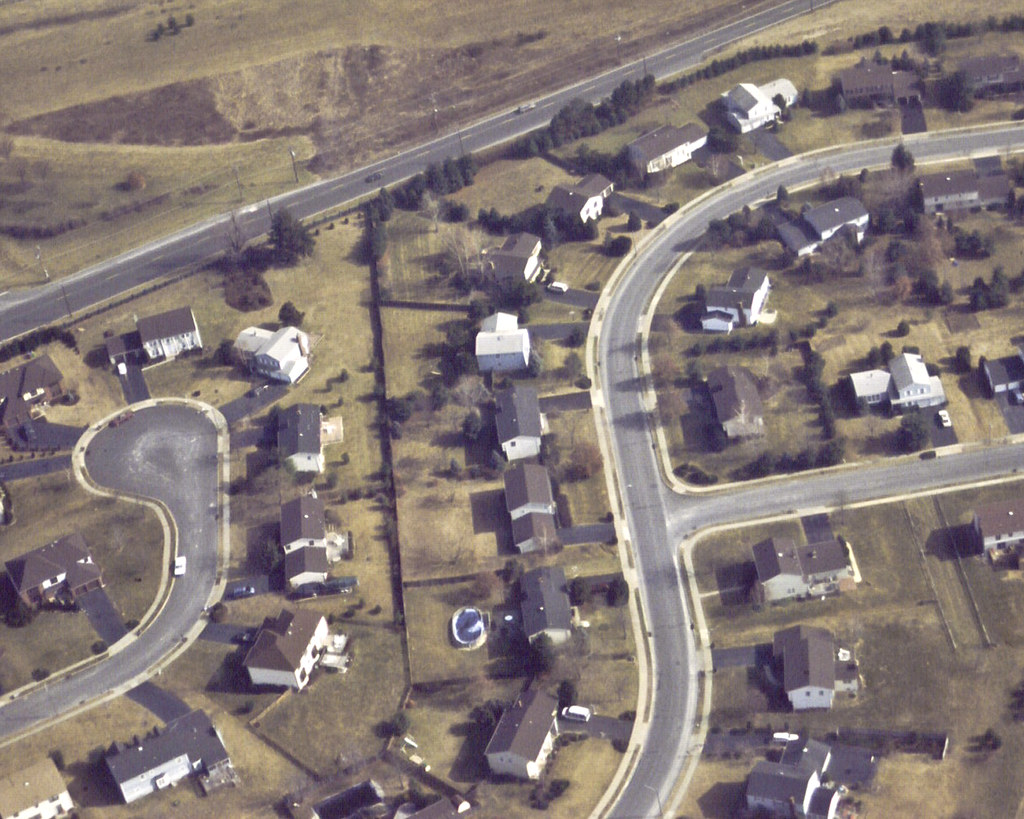
10x Faster Today but 10x Harder to Maintain Tomorrow: the Cul-De-Sac problem

I’ve been digging into what it means to be a site reliability engineer (SRE) and thinking about my experience trying to automate infrastructure in a way to scales dramatically better.  I’m not thinking about scale in number of nodes, but in operator efficiency.  The primary way to create that efficiency is limit site customization and to improve reuse.  Those changes need to start before the first install.

As an industry, we must address the “day 2” problem in collaboratively developed open software before users’ first install.

Recently, RackN asked the question “Shouldn’t we have Shared Automation for Commodity Infrastructure?” which talked about fact that we, as an industry, keep writing custom automation for what should be commodity servers.  This “snow flaking” happens because there’s enough variation at the data center system level that it’s very difficult to share and reuse automation on an ongoing basis.

Since variation enables innovation, we need to solve this problem without limiting diversity of choice.


Happily, platforms like Kubernetes are designed to hide these infrastructure variations for developers.  That means we can expect a productivity explosion for the huge number of applications that can narrowly target platforms.  Unfortunately, that does nothing for the platforms or infrastructure bound applications.  For this lower level software, we need to accept that operations environments are heterogeneous.


I realized that we’re looking at a multidimensional problem after watching communities like OpenStack struggle to evolve operations practice.

It’s multidimensional because we are building the operations practice simultaneously with the software itself.  To make things even harder, the infrastructure and dependencies are also constantly changing.  Since this degree of rapid multi-factor innovation is the new normal, we have to plan that our operations automation itself must be as upgradable.

If we upgrade both the software AND the related deployment automation then each deployment will become a cul-de-sac after day 1.

For open communities, that cul-de-sac challenge limits projects’ ability to feed operational improvements back into the user base and makes it harder for early users to stay current.  These challenges limit the virtuous feedback cycles that help communities grow.  

The solution is to approach shared project deployment automation as also being continuously deployed.

This is a deceptively hard problem.

This is a hard problem because each deployment is unique and those differences make it hard to absorb community advances without being constantly broken.  That is one of the reasons why company opt out of the community and into vendor distributions. While Vendors are critical to the ecosystem, the practice ultimately limits the growth and health of the community.

Our approach at RackN, as reflected in open Digital Rebar, is to create management abstractions that isolate deployment variables based on system level concerns.  Unlike project generated templates, this approach absorbs heterogeneity and brings in the external information that often complicate project deployment automation.  

We believe that this is a general way to solve the broader problem and invite you to participate in helping us solve the Day 2 problems that limit our open communities.

How scared do we need to be for Ops collaboration & investment?

Note: Yesterday RackN posted Are you impatient enough to be an SRE?  and then the CIA wikileaks news hit… perhaps the right question is “Are you scared enough to automate deeply yet?” 

Cia leak (1)As an industry, the CIA hacking release yesterday should be driving discussions about how to make our IT infrastructure more robust and fluid. It is not simply enough to harden because both the attack and the platforms are evolving to quickly.

We must be delivering solutions with continuous delivery and immutability assumptions baked in.

A more fluid IT that assumes constant updates and rebuilding from sources (immutable) is not just a security posture but a proven business benefit. For me, that means actually building from the hardware up where we patch and scrub systems regularly to shorten the half-life of all attach surfaces. It also means enabling existing security built into our systems that are generally ignored because of configuration complexity. These are hard but solvable automation challenges.

The problem is too big to fix individually: we need to collaborate in the open.

I’ve been really thinking deeply about how we accelerate SRE and DevOps collaboration across organizations and in open communities. The lack of common infrastructure foundations costs companies significant overhead and speed as teams across the globe reimplement automation in divergent ways. It also drags down software platforms that must adapt to each data center as a unique snowflake.

That’s why hybrid automation within AND between companies is an imperative. It enables collaboration.

Making automation portable able to handle the differences between infrastructure and environments is harder; however, it also enables sharing and reuse that creates allows us to improve collectively instead of individually.

That’s been a vision driving us at RackN with the open hybrid Digital Rebar project.  Curious?  Here’s RackN post that inspired this one:

From RackN’s Are you impatient enough to be an SRE?

“Like the hardware that runs it, the foundation automation layer must be commoditized. That means that Operators should be able to buy infrastructure (physical and cloud) from any vendor and run it in a consistent way.  Instead of days or weeks to get infrastructure running, it should take hours and be fully automated from power-on.  We should be able to rehearse on cloud and transfer that automation directly to (and from) physical without modification.  That practice and pace should be the norm instead of the exception.”

Are you impatient enough to be an SRE?

sre-seriesOur focus on SRE series continues… At RackN, we see a coming infrastructure explosion in both complexity and scale. Unless our industry radically rethinks operational processes, current backlogs will escalate and stability, security and sharing will suffer.

SRE minded teams are very impatient about eliminating manual, routine and non-differentiated work.

I’ve been talking to a lot of people about SRE lately in the context of helping Ops get out of the way while coping with increasing load and complexity.  Why are they so impatient? Because they know that ops demand is constantly increasing, there’s no “good enough” when it comes to finding ways to automate tasks and move up stack. Without consistent improvement in automation, teams will get buried (my post about Ops Debt).

The core SRE mantra needs to be “Own Ops, don’t be owned by Ops.”

Yet, outsourcing ops responsibility to a service is equally problematic for an SRE.  They cannot give up responsibility for the integrated system.  In fact, that’s one of the basic reasons why Google’s SRE teams went from just “web site reliability” to full system thinking.  Every aspect of the infrastructure stack needs to be considered when looking at system performance and reliability.  For example, something deep like SSD drive write behavior or GPU BIOS could make a critical difference.  SREs need to be able to root cause issues and black box infrastructure (a.k.a. Cloud) can get in the way.

SRE teams must balance owning the full stack versus focusing on what makes their job unique.

That’s why we have been rethinking about how SRE teams approach infrastructure.  Instead of trying to turn infrastructure into a black box services; we’ve designed the Digital Rebar composable Ops platform that embraces and contains heterogeneity with a high degree of transparency and control.  This is critical because SREs cannot afford to keep reinventing automation at the bottom of the stack.  We must be able to share and leverage best-practices on infrastructure provisioning and platform deployment.  

Like the hardware that runs it, the foundation automation layer must be commoditized.

That means that Operators should be able to buy infrastructure (physical and cloud) from any vendor and run it in a consistent way.  Instead of days or weeks to get infrastructure running, it should take hours and be fully automated from power-on.  We should be able to rehearse on cloud and transfer that automation directly to (and from) physical without modification.  That practice and pace should be the norm instead of the exception.

That’s what we are building at RackN.  Our primary goal is to reuse automation whenever possible.  That was our top design priority for Digital Rebar and it drives our customer engagement models.  If you’d like to hear more, download our SRE white paper.

More information: