What foo is “contribution” to open source? Mik Kersten & Tasktop @ SXSW

Nested

How do we really know who influences most in a software project?  We can easily track code commits, but there are more bits to the project than the commits.

I had the good fortune to attend Mik Kersten’s Code Graph presentation at SXSW last week. Mik started the Eclipse Mylyn project and went on to found Tasktop. Both are built on the very intriguing concepts that software development production (aka work) is organized around tasks.

His premise is that organizing around tasks provides a more manageable and actionable view of a project than a more traditional application life-cycle management (ALM) approaches.  I’m a sucker for any presentation about lean development process that includes references to both DevOps and industrial engineering (I have an MS in IE), but Mik surprised me by taking his code graph concept to a whole ‘nutha level.

The software value chain is much deeper than just the people who write code. Mik’s approach included managers, testers and operators in the interaction graphs for his projects.

By including all of the ALM artifacts in the analysis, you get a much richer picture of the influencers for a project.

For example, the development manager may never show up as a code committer; however, they are hugely influential in which work gets prioritized. If your graph includes who is touching the work assignments and stories then the manager’s influence jumps out immediately. That knowledge would completely change how and who you may interact with a team. It effectively brings a shadow contributor into the light.

The same is true for QA members who are running tests and opening defects and operators who are building deployment scripts. Ideally, it should include users who exercise different parts of the applications capabilities.

Mik’s graphs clearly showed the influence impact of managers because they touched all of the story cards for the project.  The people who own the story cards are the most potent influencers in a project, yet they are invisible in code repositories!

I would love to see an impact graph for a software project that equally reflected the wide range of contributions that people make to its life-cycle.  This type of information helps rebalance the power in a project.

Industrial engineering legend W.E. Demming‘s advice is to look at production as a system.  Finding ways to show everyone’s contributions is an important step towards bringing lean processes fully into software manufacturing.

5 things keeping DevOps from playing well with others (Chef, Crowbar and Upstream Patterns)

Sharing can be hardSince my earliest days on the OpenStack project, I’ve wanted to break the cycle on black box operations with open ops. With the rise of community driven DevOps platforms like Opscode Chef and Puppetlabs, we’ve reached a point where it’s both practical and imperative to share operational practices in the form of code and tooling.

Being open and collaborating are not the same thing.

It’s a huge win that we can compare OpenStack cookbooks. The real victory comes when multiple deployments use the same trunk instead of forking.

This has been an objective I’ve helped drive for OpenStack (with Matt Ray) and it has been the Crowbar objective from the start and is the keystone of our Crowbar 2 work.

This has proven to be a formidable challenge for several reasons:

  1. diverging DevOps patterns that can be used between private, public, large, small, and other deployments -> solution: attribute injection pattern is promising
  2. tooling gaps prevent operators from leveraging shared deployments -> solution: this is part of Crowbar’s mission
  3. under investing in community supporting features because they are seen as taking away from getting into production -> solution: need leadership and others with join
  4. drift between target versions creates the need for forking even if the cookbooks are fundamentally the same -> solution: pull from source approaches help create distro independent baselines
  5. missing reference architectures interfere with having a stable baseline to deploy against -> solution: agree to a standard, machine consumable RA format like OpenStack Heat.

Unfortunately, these five challenges are tightly coupled and we have to progress on them simultaneously. The tooling and community requires patterns and RAs.

The good news is that we are making real progress.

Judd Maltin (@newgoliath), a Crowbar team member, has documented the emerging Attribute Injection practice that Crowbar has been leading. That practice has been refined in the open by ATT and Rackspace. It is forming the foundation of the OpenStack cookbooks.

Understanding, discussing and supporting that pattern is an important step toward accelerating open operations. Please engage with us as we make the investments for open operations and help us implement the pattern.

Installing SSD + Windows8 = Blank Primary Monitor (fixable!)

2012-10-28_12-44-51_691I could not find the solution to this easily, so I’m leaving a breadcrumb trail here… I did not keep the links so I cannot give proper attribution but will try to pay it forward.

Short version: Try HDMI/VGA output if your Win8 primary monitor is blank.  Then update the BIOS.

Long version:

I decided to update my wife’s Dell Inspiron N5110 laptop to an SSD and Windows 8.  Sadly, the machine’s factory config had a very slow HDD and that was impacting the system’s total performance.  Replacing the HDD with an SSD required major surgery to the laptop – it is not for the faint of heart.

After installing the SSD and installing Windows 8 (painless!) the system booted though the splash screen and turned off the display.  Yes, it simply went completely blank.

I stumbled upon a tip that suggested that the system was working but using the HDMI output.  That proved correct.  I was able to complete the configuration using HDMI and/or VGA monitors.

Even after completing and updating the monitor (still blank) was clearly working because the BIOS screens and splash screen worked on the monitor.  Deleting the Video Card from Devices did NOT work.

Ultimately, I found a site that recommended updating the BIOS (was A09, now A11 from 11/2012).  The BIOS update corrected the problem.

I should have known to update the BIOS and firmware before starting the upgrade.  I hope you learn from my experience.

Oh…. the SSD+Win8 made an AMAZING performance difference.  It’s like a brand new 10x faster laptop and an excellent investment.  I’ve become a bit of a Linux appologist; however, I was pleasantly surprised to find Windows 8 to be very usable once I learned the latest hot-key assignments (Search on Win key -> Win+F).

OpenStack Board Voting Starts! Three thoughts about the board and election

1/18 Note: I was re-elected! Thanks everyone for your support.

OpenStack Foundation members, I have three requests for you:

  1. vote (ballots went out by email already and expire on Friday)
  2. vote for me (details below)
  3. pick the board you want, not just the candidates.

And, of course, vote according to our code of conduct: “Members should not attempt to manipulate election results. Open debate is welcome, but vote trading, ballot stuffing and other forms of abuse are not acceptable.”

To vote, you must have been a member for 6 months. Going Mad Panda? Join right now so you can vote next time!

Even if you’re not a voter, you may find my comments useful in understanding OpenStack. Remember, these positions are my own: they do not reflect those of my employer (Dell).

Vote because it’s the strongest voice the community has about OpenStack governance

I’d strongly encourage you to commit code, come to the summit and participate in the lists and chats; however, voting is more. It shows measurable impact. It shows the vitality of the community.

OpenStack is exciting to me because it’s community driven.

I have been a strong and early leader in the community:

Vote for me because of my OpenStack Operations focus

My team at Dell has been laser focused on making OpenStack operable for over 2 years. My team acts like a lean start-up inside of Dell to get products out to market early.

We’ve worked with early operators and ground-breaking ecosystem partners (plus). We’ve helped many people get OpenStack running for real workloads. Consequently, I am highly accessible and accountable to a large number of users, operators and ecosystem vendors. Few other people in the OpenStack community have my breadth of exposure to real OpenStack deployments. My team and I have been dedicated, active participants in OpenStack long before Dell’s grand OpenStack strategy coalesced.

More importantly, I am committed to open source and open operations. The Apache 2 open source Crowbar project established the baseline (and served as the foundation) for other OpenStack deployment efforts. We don’t just talk about open source, we do open source: our team works in the open (my git account).

Vote for a board because diversity of views is important

OpenStack voting allows you to throw up to 8 votes to a single candidate. While you can put all your eggs into a single basket, I recommend considering a broader slate in voting.

We have an impressive and dedicated list of candidates who will do work for the community. I ask that you consider the board as a team. If you want operators, users, diversity, change, less corporate influence or any flavor of the above then think not just about the individual.

Why should I be part of your slate? I am not a blind cheerleader. I have voiced and driven community-focused positions about the board (dev cycle, grizzly >;; folsom, consensus).

One of my core activities has been to work on addressing community concerns about affinity voting. Gold and Platinum members have little incentive to address this issue. While I’d like to see faster action, it requires changing the by-laws. Any by-law changes need to be made carefully and they also require a vote of the electorate. If you want positive change, you need board members, like me, who are persistent and knowledgeable in board dynamics.

What have I done on the Board? Quite a bit…

It would be easy to get lost in a board of 24 members, but I have not. Armed with my previous board experience, I have been a vocal advocate for the community in board meetings without creating disruption or pulling us off topic.

Why re-elect me? For community & continuity

I am a strong and active board member and I work hard to represent all OpenStack constituents: developers, operators, users and ecosystem vendors.

Working on a board is a long-term exercise. Positions and actions I’ve taken today may take months to come to fruition. I would like the opportunity continue that work and see it through.

OpenStack Board Interview Series by Rafael Knuth

Rafael Knuth, Dell Rafael Knuth (@RafaelKnuth with Dell as EMEA Social Media Community Manager) has set an ambitious objective to interview all 24 of the OpenStack Foundation Board members. I had the privilege of being the first interview posted (Japanese version!).

Here’s the series so far:

  1. Rob Hirschfeld (me!) of Dell (my summary)
  2. Boris Renski of Mirantis
  3. Randy Bias of CloudScaling
  4. Jim Curry of Rackspace
  5. Yujie Due of 99cloud
  6. Tim Bell of CERN
  7. Joshua McKenty of Piston
  8. Lew Tucker of Cisco
  9. Alan Clark (Chair) of SUSE  
  10. Joseph George of Dell (added 5/22)

These are excellent interviews and worth reviewing. They give balanced (often critical) views of OpenStack, its progress and challenges.

I update the list as he adds them.

Don’t complicate my cloud! It’s just infrastructure with an API

Getty MazeI’ve been “in cloud” for over 13 years (@dmcrory and I submitted patents using it starting in 2001) and I’m continually amazed at how complicated people want to make it.

For my role at Dell, I’m continually invited to seasons of meetings to define cloud, cloud architecture and cloud strategy. The reason these meetings go on and on is that everyone wants to make cloud complicated when it’s really very simple.

Cloud is infrastructure with an API.

That’s it. Everything else is just a consequence of having infrastructure with an API because API provides the ability to provide remote control.

What else do people try to lump into cloud?  Here are some of my topic cloud obfuscators:

  • (inter)network.  Yes, networks make an API interesting.  They are just an essential component but they are not cloud.  Most technologies are interesting because of networks: can we stop turning everything networked into cloud?  Thanks to nonsensical mega-dollar marketing campaigns, I despair this is a moot point.
  • as-a-service.  That’s another way of saying “accessible via an API.”  We have many flavors of Platform, Data, Application, Love or whatever as a Service.  That means they have a API.  Infrastructure as a Service (IaaS) is a cloud.
  • virtualization.  VMs were the first good example of hardware with an API; however, we had virtual containers (on Mainframes!) long before we had “cloud.”    They make cloud easier but they are not cloud.
  • pay-as-you-go (service pricing).  This is a common cloud requirement but it’s really a business model.  If someone builds a private cloud then it is still a cloud.

  • multi-tenant.  Another common requirement where we expect a cloud to be able to isolate users.  I agree that this is a highly desirable attribute of a good API implementation; however, it’s not essential to a cloud.  For example, most public clouds do not have true network isolation model.
  • elastic demand.  IMHO, another word for API driven provisioning.
  • live migration.  This is a cool feature often implemented on top of virtualization, but it’s not cloud.  We were doing live migrate with shared storage and clusters before anyone heard of cloud.   I don’t think this is cloud at all but someone out there does so I included it in the list.
  • security.  Totally important consideration and required for deployments large and small, but not presence/lack does not make something cloud.

We start talking about these points and then forget the whole API thing.  These items are important, but they do not make it “a cloud.”  When Dave McCrory and I first discussed API Infrastructure as “cloud,” it was driven by the fact that you could hide the actual infrastructure behind the API.  The critical concept was that the API allowed a you to manage a server anywhere from anywhere.

When Amazon offered the first EC2 service, it had to be a cloud because the servers were remote. It was not a cloud because it was on the internet; plenty of other companies were offering hosted servers. It was a cloud because their offering allowed required operators to use and API to interact with the infrastructure.  I remember that EC2’s lack of UI (and SLA) causing many to predict it would be a failure; instead, it sparked a revolution.

I’m excited now because we’re entering a new generation of cloud where Infrastructure APIs include networking and storage in addition to compute.  Mix in some of the interesting data and network services and we’re going to have truly dynamic and powerful clouds.  More importantly, we going to have some truly amazing applications.

What do you think?  Is API a sufficient definition of cloud in your opinion?

PS: Yes, if you have a physical server/network/store that is completely controllable by an API then you’ve got a cloud on your hands.

double Block Head with OpenStack+Equallogic & Crowbar+Ceph

Block Head

Whew….Yesterday, Dell announced TWO OpenStack block storage capabilities (Equallogic & Ceph) for our OpenStack Essex Solution (I’m on the Dell OpenStack/Crowbar team) and community edition.  The addition of block storage effectively fills the “persistent storage” gap in the solution.  I’m quadrupally excited because we now have:

  1. both open source (Ceph) and enterprise (Equallogic) choices
  2. both Nova drivers’ code is in the open at part of our open source Crowbar work

Frankly, I’ve been having trouble sitting on the news until Dell World because both features have been available in Github before the announcement (EQLX and Ceph-Barclamp).  Such is the emerging intersection of corporate marketing and open source.

As you may expect, we are delivering them through Crowbar; however, we’ve already had customers pickup the EQLX code and apply it without Crowbar.

The Equallogic+Nova Connector

block-eqlx

If you are using Crowbar 1.5 (Essex 2) then you already have the code!  Of course, you still need to have the admin information for your SAN – we did not automate the configuration of the storage system, but the Nova Volume integration.

We have it under a split test so you need to do the following to enable the configuration options:

  1. Install OpenStack as normal
  2. Create the Nova proposal
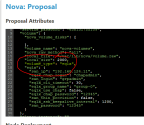
  3. Enter “Raw” Attribute Mode
  4. Change the “volume_type” to “eqlx”
  5. Save
  6. The Equallogic options should be available in the custom attribute editor!  (of course, you can edit in raw mode too)

Want Docs?  Got them!  Check out these > EQLX Driver Install Addendum

Usage note: the integration uses SSH sessions.  It has been performance tested but not been tested at scale.

The Ceph+Nova Connector

block-ceph

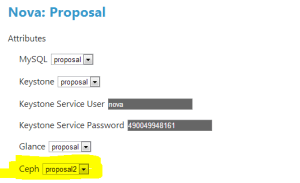
The Ceph capability includes a Ceph barclamp!  That means that all the work to setup and configure Ceph is done automatically done by Crowbar.  Even better, their Nova barclamp (Ceph provides it from their site) will automatically find the Ceph proposal and link the components together!

Ceph has provided excellent directions and videos to support this install.

The Atlantic magazine explains why Lean process rocks (and saves companies $$)

GearsI’m certain that the Atlantic‘s Charles Fishman was not thinking software and DevOps when he wrote the excellent article about “The Insourcing Boom.”  However, I strongly recommend reading this report for anyone who is interested in a practical example of the inefficiencies of software lean process (If you are impatient, jump to page 2 and search for toaster).

It’s important to realize that this article is not about software! It’s an article about industrial manufacturing and the impact that lean process has when you are making stuff.  It’s about how US companies are using Lean to make domestic plants more profitable than Asian ones.  It turns out that how you make something really matters – you can’t really optimize the system if you treat major parts like a black box.

When I talk about Agile and Lean, I am talking about proven processes being applied broadly to companies that want to make profit selling stuff. That’s what this article is about

If you are making software then you are making stuff! Your install and deploy process is your assembly line. Your unreleased code is your inventory.

This article does a good job explaining the benefits of being close to your manufacturing (DevOps) and being flexible in deployment (Agile) and being connected to customers (Lean).  The software industry often acts like it’s inventing everything from scratch. When it comes to manufacturing processes, we can learn a lot from industry.

Unlike software, industry has real costs for scrap and lost inventory. Instead of thinking “old school” perhaps we should be thinking of it as the school of hard knocks.

My Dilemma with Folsom – why I want to jump to G

When your ship sailsThese views are my own.  Based on 1×1 discussions I’ve had in the OpenStack community, I am not alone.

If you’ve read my blog then you know I am a vocal and active supporter of OpenStack who is seeking re-election to the OpenStack Board.  I’m personally and professionally committed to the project’s success. And, I’m confident that OpenStack’s collaborative community approach is out innovating other clouds.

A vibrant project requires that we reflect honestly: we have an equal measure of challenges: shadow free fall Dev, API vs implementation, forking risk and others.  As someone helping users deploy OpenStack today, I find my self straddling between a solid release (Essex) and a innovative one (Grizzly). Frankly, I’m finding it very difficult to focus on Folsom.

Grizzly excites me and clearly I’m not alone.  Based on pace of development, I believe we saw a significant developer migration during feature freeze free fall.

In Grizzly, both Cinder and Quantum will have progressed to a point where they are ready for mainstream consumption. That means that OpenStack will have achieved the cloud API trifecta of compute-store-network.

  • Cinder will get beyond the “replace Nova Volume” feature set and expands the list of connectors.
  • Quantum will get to parity with Nova Network, addresses overlapping VM IPs and goes beyond L2 with L3 feature enablement like  load balancing aaS.
  • We are having a real dialog about upgrades while the code is still in progress
  • And new projects like Celio and Heat are poised to address real use problems in billing and application formation.

Everything I hear about Folsom deployment is positive with stable code and significant improvements; however, we’re too late to really influence operability at the code level because the Folsom release is done.  This is not a new dilemma.  As operators, we seem to be forever chasing the tail of the release.

The perpetual cycle of implementing deployment after release is futile, exhausting and demoralizing because we finish just in time for the spotlight to shift to the next release.

I don’t want to slow the pace of releases.  In Agile/Lean, we believe that if something is hard then we do should it more.  Instead, I am looking at Grizzly and seeing an opportunity to break the cycle.  I am looking at Folsom and thinking that most people will be OK with Essex for a little longer.

Maybe I’m a dreamer, but if we can close the deployment time gap then we accelerate adoption, innovation and happy hour.  If that means jilting Folsom at the release altar to elope with Grizzly then I can live with that.

Interview Transcript about OpenStack, Foundation, Dell & Crowbar

Rafael Knuth, Dell Rafael Knuth (@RafaelKnuth with Dell as EMEA Social Media Community Manager) has set an ambitious objective to interview all 24 of the OpenStack Foundation Board members.  I have the privilege of being the first interview posted (Japanese version!).   Here’s the whole series.

This is not puff interview – We spent an hour together and Rafael did not shy away from asking hard questions like “Why did Dell jump into OpenStack?” and “is VMware a threat to OpenStack?”  Rather than posting the whole transcript (it’s posted here), I’m including the questions (as a teaser) below.   There is some real meat in these answers about OpenStack, Dell, Crowbar and challenges facing the project.

WARNING: My job is engineering, not marketing.  You may find my answers (which are MY OWN ANSWERS) to be more direct that you are expecting.  If you find yourself needing additional circumlocution then simply close your browser and move on.

Some highlights…

Dell’s interest in OpenStack has been very pragmatic. OpenStack is something we really see a market need for.

Rackspace …  runs on OpenStack pretty much off trunk …  That’s exactly the type of vibrant community we want to see.  At the same time, there is a growing community that wants to use OpenStack distributions with support, certifications and they are fine with being 6 months behind OpenStack off trunk. That’s good, and we want that shadow, we want that combination of pure minded early adopters and less sophisticated OpenStack users both working together.

We are working with different partners to bring OpenStack to different customers in different ways. It is confusing. Your question about Dell Crowbar was right … it is targeted at a certain class of users, and I don’t want enterprise customers who expect a lot of shiny chrome and zero touch. That’s not the target by now for Dell Crowbar. We definitely need that sort of magic decoder page to help customers understand our commercial offering.

Questions from Interview:

  1. Dell is one of the very early contributors to OpenStack. Why is Dell engaging in this project?
  2. How does Dell contribute to OpenStack?
  3. Let’s talk a bit about Dell Crowbar, your team’s deployment mechanism for OpenStack.
  4. Let’s talk a bit about OpenStack raw vs. OpenStack distributions.
  5. What are the biggest barriers to OpenStack adoption as of now?
  6. What does a customer specifically need to do when moving from OpenStack Essex to Folsom for example?
  7. My next question is around proof of concept versus production, Rob. How are customers using OpenStack and can you give examples for both scenarios?
  8. I hear very often two different statements: “Open Stack is an alternative to Amazon.” The other is: “OpenStack is an alternative to VMware … maybe, hopefully in two or three years from now.”  Which of both statements is true?
  9. How do you view VMware joining OpenStack. Is it a threat to OpenStack or does VMware add value to the project?
  10. Let us speak about market adoption. Who are the early adopters of OpenStack? And when do you expect OpenStack to hit the tipping point for mass market adoption?
  11. Rob, for all those interested in Dell’s commercial offering around OpenStack … can you give a brief overview?
  12. Dell TechCenter that provides customers an overview over our OpenStack offering: Dell Crowbar as our DevOps tool in its various shapes and forms, OpenStack distros we support … cloud services we build around OpenStack … hardware capabilities optimized for OpenStack.
  13. What are the challenges for the OpenStack Board of Directors?