OpenStack leaders learning by humility, doing and being good partners

With the next OpenStack Board meeting on Thursday (5/30/13 agenda) and Mark McLoughlin’s notes crossing my desk, I was reminded of still open discussion topics around OpenStack leadership.  Reminder: except for executive sessions, OpenStack Board Meetings are open (check agenda for details).

2013-03-11_20-01-50_458

Many of the people and companies involved in OpenStack are new to open source projects. Before OpenStack, I had no direct experience building a community like we’ve built together with OpenStack or I’ve been leading with Crowbar. There is no Collaborative Open Source Communities for Dummies book (I looked).

I am not holding myself, OpenStack or Crowbar up as shining examples of open source perfection. Just the opposite, we’ve had to learn the hard way about what works and what fails. I attribute our successes to humility to accept feedback and willingness to ask for help.

But being successful in the small (like during OpenStack Cactus) is different than where we are heading.  In the small, everyone was an open source enthusiast and eager collaborator.  In the large, we should be asking the question “how will we teach people to join and build an open source community?”

The answer is that collaboration must be modeled by the OpenStack leadership.

At the Summit, I was talking with fellow board director Sean Roberts (Yahoo!) and I think he made this point very simply:

“Being in open source is a partnership. If you don’t bring something to the partnership then you’re a user not a partner. We love users but we need to acknowledge the difference.” (Sean Roberts, OpenStack Director)

OpenStack will succeed by building a large base of users; consequently, we need our leaders to be partners in the community.

We need better Gold Member criteria to help building OpenStack culture

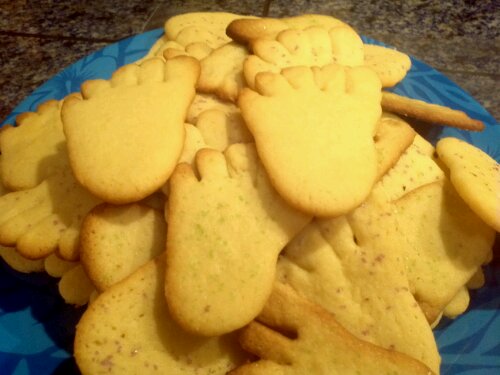
bunny slippersDuring last OpenStack board meeting, we started a dialog that will be continued over the rest of the year.  It concerns how/if we should apply our criteria to measure the contributions of companies that are applying to become Gold members.

I believe that we should see many contribution “footprints” for companies in Foundation leadership positions.  These footprints do not have to be code in github: there are many visible ways to contribute to OpenStack including internal installs, delivered product, community meetups, open source support around code, service to the community through speaking and sponsoring and, of course, code too.

At this point in the OpenStack evolution, there is so much going on that it is easy to leave footprints because there are so many ways to engage.  Footprints are tangible evidence of community leadership and the currency of collaboration.  OpenStack thrives because we are committed to working together, being transparent in our actions and providing service to the project beyond our own needs.

I believe OpenStack Foundation’s new gold members will are great additions to our growing community; however, we need to be increasingly deliberate in accepting new Gold members to make sure that they have a history of demonstrating a culture of open source leadership and contribution.  

These applications deserve careful consideration for several reasons:

  1. there are a limited number of gold level positions (16 of the 24 are now occupied)
  2. there is no practical way to remove a gold member (but only 8 are elected to the board)
  3. there is a perception (by the applicants) that they gain additional credibility through gold membership
  4. gold and platinum members are the leaders of our community so everyone will models their behavior

It is important to remember that there is no limit or barrier (beyond $) to joining at the corporate sponsors level. So, being a gold member means that companies are seeking a broader leadership role in the project.

Over the next months, Simon Anderson (committee chair, Dreamhost) will be leading me and several other board members in an effort to refine of our Gold member review criteria.  I’ll post own list shortly and I’m interested in hearing from you about what type of “footprints” we should be considered in this process.

OpenStack’s next hurdle: Interoperability. Why should you care?

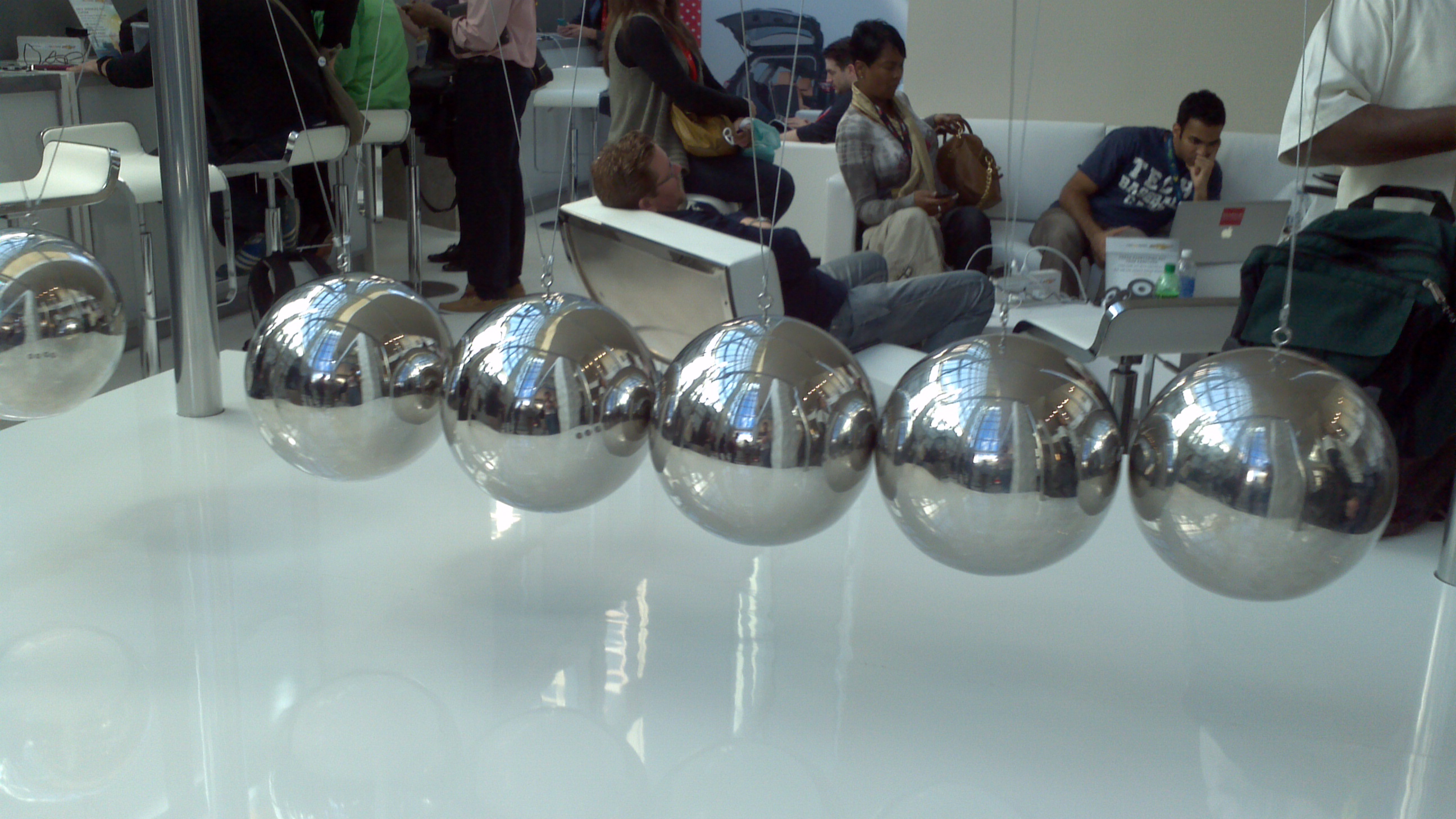
SXSW life size Newton's Cradle

SXSW life size Newton’s Cradle

The OpenStack Board spent several hours (yes, hours) discussing interoperability related topics at the last board meeting.  Fundamentally, the community benefits when uses can operate easily across multiple OpenStack deployments (their own and/or public clouds).

Cloud interoperability: the ability to transfer workloads between systems without changes to the deployment operations management infrastructure.

This is NOT hybrid (which I defined as a workload transparently operating in multiple systems); however it is a prereq to achieve scalable hybrid operation.

Interoperability matters because the OpenStack value proposition is all about creating a common platform.  IT World does a good job laying out the problem (note, I work for Dell).  To create sites that can interoperate, we have to some serious lifting:

At the OpenStack Summit, there are multiple chances to engage on this.   I’m moderating a panel about Interop and also sharing a session about the highly related topic of Reference Architectures with Monty Tayor.

The Interop Panel (topic description here) is Tuesday @ 5:20pm.  If you join, you’ll get to see me try to stump our awesome panelists

  • Jonathan LaCour, DreamHost
  • Troy Toman, Rackspace
  • Bernard Golden,  Enstratius
  • Monty Taylor, OpenStack Board (and HP)
  • Peter Pouliot, Microsoft

PS: Oh, and I’m also talking about DevOps Upgrades Patterns during the very first session (see a preview).

OpenStack Board Voting Starts! Three thoughts about the board and election

1/18 Note: I was re-elected! Thanks everyone for your support.

OpenStack Foundation members, I have three requests for you:

  1. vote (ballots went out by email already and expire on Friday)
  2. vote for me (details below)
  3. pick the board you want, not just the candidates.

And, of course, vote according to our code of conduct: “Members should not attempt to manipulate election results. Open debate is welcome, but vote trading, ballot stuffing and other forms of abuse are not acceptable.”

To vote, you must have been a member for 6 months. Going Mad Panda? Join right now so you can vote next time!

Even if you’re not a voter, you may find my comments useful in understanding OpenStack. Remember, these positions are my own: they do not reflect those of my employer (Dell).

Vote because it’s the strongest voice the community has about OpenStack governance

I’d strongly encourage you to commit code, come to the summit and participate in the lists and chats; however, voting is more. It shows measurable impact. It shows the vitality of the community.

OpenStack is exciting to me because it’s community driven.

I have been a strong and early leader in the community:

Vote for me because of my OpenStack Operations focus

My team at Dell has been laser focused on making OpenStack operable for over 2 years. My team acts like a lean start-up inside of Dell to get products out to market early.

We’ve worked with early operators and ground-breaking ecosystem partners (plus). We’ve helped many people get OpenStack running for real workloads. Consequently, I am highly accessible and accountable to a large number of users, operators and ecosystem vendors. Few other people in the OpenStack community have my breadth of exposure to real OpenStack deployments. My team and I have been dedicated, active participants in OpenStack long before Dell’s grand OpenStack strategy coalesced.

More importantly, I am committed to open source and open operations. The Apache 2 open source Crowbar project established the baseline (and served as the foundation) for other OpenStack deployment efforts. We don’t just talk about open source, we do open source: our team works in the open (my git account).

Vote for a board because diversity of views is important

OpenStack voting allows you to throw up to 8 votes to a single candidate. While you can put all your eggs into a single basket, I recommend considering a broader slate in voting.

We have an impressive and dedicated list of candidates who will do work for the community. I ask that you consider the board as a team. If you want operators, users, diversity, change, less corporate influence or any flavor of the above then think not just about the individual.

Why should I be part of your slate? I am not a blind cheerleader. I have voiced and driven community-focused positions about the board (dev cycle, grizzly >;; folsom, consensus).

One of my core activities has been to work on addressing community concerns about affinity voting. Gold and Platinum members have little incentive to address this issue. While I’d like to see faster action, it requires changing the by-laws. Any by-law changes need to be made carefully and they also require a vote of the electorate. If you want positive change, you need board members, like me, who are persistent and knowledgeable in board dynamics.

What have I done on the Board? Quite a bit…

It would be easy to get lost in a board of 24 members, but I have not. Armed with my previous board experience, I have been a vocal advocate for the community in board meetings without creating disruption or pulling us off topic.

Why re-elect me? For community & continuity

I am a strong and active board member and I work hard to represent all OpenStack constituents: developers, operators, users and ecosystem vendors.

Working on a board is a long-term exercise. Positions and actions I’ve taken today may take months to come to fruition. I would like the opportunity continue that work and see it through.

OpenStack Board Interview Series by Rafael Knuth

Rafael Knuth, Dell Rafael Knuth (@RafaelKnuth with Dell as EMEA Social Media Community Manager) has set an ambitious objective to interview all 24 of the OpenStack Foundation Board members. I had the privilege of being the first interview posted (Japanese version!).

Here’s the series so far:

  1. Rob Hirschfeld (me!) of Dell (my summary)
  2. Boris Renski of Mirantis
  3. Randy Bias of CloudScaling
  4. Jim Curry of Rackspace
  5. Yujie Due of 99cloud
  6. Tim Bell of CERN
  7. Joshua McKenty of Piston
  8. Lew Tucker of Cisco
  9. Alan Clark (Chair) of SUSE  
  10. Joseph George of Dell (added 5/22)

These are excellent interviews and worth reviewing. They give balanced (often critical) views of OpenStack, its progress and challenges.

I update the list as he adds them.

Interview Transcript about OpenStack, Foundation, Dell & Crowbar

Rafael Knuth, Dell Rafael Knuth (@RafaelKnuth with Dell as EMEA Social Media Community Manager) has set an ambitious objective to interview all 24 of the OpenStack Foundation Board members.  I have the privilege of being the first interview posted (Japanese version!).   Here’s the whole series.

This is not puff interview – We spent an hour together and Rafael did not shy away from asking hard questions like “Why did Dell jump into OpenStack?” and “is VMware a threat to OpenStack?”  Rather than posting the whole transcript (it’s posted here), I’m including the questions (as a teaser) below.   There is some real meat in these answers about OpenStack, Dell, Crowbar and challenges facing the project.

WARNING: My job is engineering, not marketing.  You may find my answers (which are MY OWN ANSWERS) to be more direct that you are expecting.  If you find yourself needing additional circumlocution then simply close your browser and move on.

Some highlights…

Dell’s interest in OpenStack has been very pragmatic. OpenStack is something we really see a market need for.

Rackspace …  runs on OpenStack pretty much off trunk …  That’s exactly the type of vibrant community we want to see.  At the same time, there is a growing community that wants to use OpenStack distributions with support, certifications and they are fine with being 6 months behind OpenStack off trunk. That’s good, and we want that shadow, we want that combination of pure minded early adopters and less sophisticated OpenStack users both working together.

We are working with different partners to bring OpenStack to different customers in different ways. It is confusing. Your question about Dell Crowbar was right … it is targeted at a certain class of users, and I don’t want enterprise customers who expect a lot of shiny chrome and zero touch. That’s not the target by now for Dell Crowbar. We definitely need that sort of magic decoder page to help customers understand our commercial offering.

Questions from Interview:

  1. Dell is one of the very early contributors to OpenStack. Why is Dell engaging in this project?
  2. How does Dell contribute to OpenStack?
  3. Let’s talk a bit about Dell Crowbar, your team’s deployment mechanism for OpenStack.
  4. Let’s talk a bit about OpenStack raw vs. OpenStack distributions.
  5. What are the biggest barriers to OpenStack adoption as of now?
  6. What does a customer specifically need to do when moving from OpenStack Essex to Folsom for example?
  7. My next question is around proof of concept versus production, Rob. How are customers using OpenStack and can you give examples for both scenarios?
  8. I hear very often two different statements: “Open Stack is an alternative to Amazon.” The other is: “OpenStack is an alternative to VMware … maybe, hopefully in two or three years from now.”  Which of both statements is true?
  9. How do you view VMware joining OpenStack. Is it a threat to OpenStack or does VMware add value to the project?
  10. Let us speak about market adoption. Who are the early adopters of OpenStack? And when do you expect OpenStack to hit the tipping point for mass market adoption?
  11. Rob, for all those interested in Dell’s commercial offering around OpenStack … can you give a brief overview?
  12. Dell TechCenter that provides customers an overview over our OpenStack offering: Dell Crowbar as our DevOps tool in its various shapes and forms, OpenStack distros we support … cloud services we build around OpenStack … hardware capabilities optimized for OpenStack.
  13. What are the challenges for the OpenStack Board of Directors?

Seeking OpenStack Foundation Board Seat for 2013 (please nominate me)

I am seeking another term on the OpenStack Foundation Board.  Please consider nominating me for this position.
The following is the profile information I provided as part of the nomination process.  If you are looking for insights into where OpenStack is going then these question (especially the later ones) will be interesting.

Provide Brief Biography of Yourself

I have been involved in Cloud for over 12 years and launch some of the earliest Cloud companies.  My educational background (Duke and LSU) is in computer science and systems engineering (Mechanical/Industrial) with a focus on distributed systems.  I have always found deployment to be vitally important in development – that lead me to found a SaaS start-up in 1999 and had made me a DevOps advocate.  In addition to core cloud technologies, I am an Agile/Lean process evangelist who strongly believes that how you build and deliver is just as important as what you deliver.
Currently, I am a principal engineer at Dell leading our OpenStack Cloud project  and also a founder of the Crowbar project.  In that role, I am in constant contact with OpenStack users, ecosystem developers and vendors world-wide; consequently, I have a very broad perspective on use and technical needs for OpenStack and related Cloud technologies.

What is your relationship to OpenStack, and why is its success important to you? What would you say is your biggest contribution to OpenStack’s success to date?

I have been involved in OpenStack at the earliest stages and was a key influencer in Dell’s decision to be an initial sponsor.  Further, I formulated Dell’s operations/deployment focused Lean strategy that helped create an early focus on OpenStack operations.   This support was a critical catalyst to building market momentum and we continue help drive operations and user focused requirements for OpenStack.  Providing a very open and community driven DevOps focus has been my biggest contribution (see Crowbar).
I also serve the community in many ways.  In addition to being elected to the 2012 Board, I founded the Austin OpenStack User Group (next meeting 12/6!), have been spoken at every Summit, co-Chaired the Operations Track at the Grizzly Summit and create community awareness of OpenStack through my blog, corporate work, and social media activity.
I have invested considerable time in OpenStack and made professional commitments to its success.  It’s not just about software and an awesome community – I am personally invested in OpenStack winning.

Describe your experience with other non profits or serving as a board member. How does your experience prepare you for the role of a board member?

I am currently serving on the OpenStack Foundation Board and have been an active advocate for a collaborative process and open communication (http://wp.me/pF6d2-vc, http://wp.me/pF6d2-w9).  I hope continue on the board so that we can stay focused on the critical issues at hand.

I have over four years of serving as Secretary for my city’s public Texas 4-B Commercial Development Corporation which governed by state open meetings standards.  This work has proven directly relevant to the OpenStack foundation because the open governance requirements map very well to our communities transparency expectations.

What do you see as the Board’s role in OpenStack’s success?

The board’s job is to ensure that community and collaboration remain OpenStack’s core strength as an open source project.  As adoption and footprint increases there is enormous pressure on the community to try and serve both general and very specialized interests.  Most critically, we must find ways to balance competing financial interests within the community.
The board must ensure that OpenStack provides commercial opportunity because I believe that incent continued investment; however, we cannot let profit drive the community away from our open source values.
I believe the Board must monitor the community’s progress to ensure we maintain this balance.  It is our responsibility to make adjustments, influence changes and take responsibility for driving an innovative and collaborative culture.

What do you think the top priority of the Board should be in 2013?

There are two inter-related top priorities for the Board: we must help deliver guidelines for which projects are truly “core” OpenStack and help move towards a certifiable API specification for OpenStack (instead of implementation).   While distinct, I believe both items must be solved together.  These changes are essential to foster innovation and adoption of OpenStack.
While these issues will occupy the Board (and Technical/User committees) for 2013, my personal priority for OpenStack in general remains focused on operators and users.  I believe we have to make substantial progress on upgrades, migration and operational readiness.  These issues continue to create a serious barrier to adoption.

Impressions from OpenStack Foundation board meeting 10/15

20121018-115319.jpgI spent the first day of the OpenStack summit doing my service as a Foundation board member. While you need to wait for a summary by Jonathan Bryce, the Foundation Executive Director, and/or the official minutes to get the details of our actions, I think that it’s reasonable to share my impressions.

In some ways, the chemistry of the board is as important as our actions at this point. We are still working thorough start up issues and, more importantly, learning how to work together. The board is not only big, 24 members, it is also has many companies that often compete (power of we).

Here are my top 5 impressions:

    1. Transparency. The bylaws are crafted to ensure a openness and our meetings are broadcast to the maximum extent possible. Even with that background, there is a consistent self-check and discussion about increasing transparency so that the community is included.
    2. Humor. It’s a great sign of progress that we are laughing together because it shows that we trust and respect each other.
    3. Frustration. Recognition that we have important decisions to make and a degree of impatience to make them. Boards are subtle: we spend a lot of time setting up the right structures that allow us to make hard decisions quickly. Also, grumbling that we’d overlapped the board meeting and the summit.
    4. Consensus. This something I committed to help build. I feel that our actions reflect both healthy discussion as individuals and desire to work together as a board.
    5. Leadership. Looking back from our first meeting, it is clear that Jonathan and Alan have fully assumed their roles. I’m also seeing how the Foundation team (Mark, Lauren, Stephano) are smoothly supporting operations even though we’re really just weeks from the Foundation launch.

I hope that gives you some insights into the board meeting and that more of you can join the broadcast for the next ones (2012 schedule TBD) including a joint tech and foundation meeting

Wednesday morning at the summit was “breakfast with the board.” Look for some notes from that too soon.

OpenStack Summit: Let’s talk DevOps, Fog, Upgrades, Crowbar & Dell

If you are coming to the OpenStack summit in San Diego next week then please find me at the show! I want to hear from you about the Foundation, community, OpenStack deployments, Crowbar and anything else.  Oh, and I just ordered a handful of Crowbar stickers if you wanted some CB bling.

Matt Ray (Opscode), Jason Cannavale (Rackspace) and I were Ops track co-chairs. If you have suggestions, we want to hear. We managed to get great speakers and also some interesting sessions like DevOps panel and up streaming deploy working sessions. It’s only on Monday and Tuesday, so don’t snooze or you’ll miss it.

My team from Dell has a lot going on, so there are lots of chances to connect with us:

At the Dell booth, Randy Perryman will be sharing field experience about hardware choices. We’ve got a lot of OpenStack battle experience and we want to compare notes with you.

I’m on the board meeting on Monday so likely occupied until the Mirantis party.

See you in San Diego!

PS: My team is hiring for Dev, QA and Marketing. Let me know if you want details.