New Media = multiple audiences, simulateously

Danah Boyd‘s insights about the social impact of social media constantly astonish me.  Here recent social steganography post has interesting implications for all of us operating in the topsy-turvey mixed-up world of professional personal branding.

I was interested to think of how differently we process public information and easily ignore parts that don’t make sense to us.  Perhaps a blended word, “confuscation,”  would be an easier word to grok than steganography?

Factoring multiple reader’s perspectives into writing (or presenting) is a crucial part of my daily job.  As my team works to include cloud strategy within Dell, understanding the listener’s frame of reference is essential to communicating the message.  For me, this means framing cloud services & software into units & hardware concepts.

In many ways, I think we have a greater challenge overcoming unintended steganography then learning how to enhance it.  Perhaps as we get more deliberate at it, we’ll become better at limiting the unintended confuscation.

Juxtaposition: Dave McCrory joins Dell Cloud Team & Quest acquires Surgient

Rarely in my life have I seen true juxtaposition as in the last few weeks.  Mearly hours after my long time friend and cloud conspirator, Dave McCrory, joined our team at Dell; the company that we founded, Surgient, was aquired by Quest software.  Neither of us had been there for years and had been looking for ways to work together again.  Apparently the cosmos required that we could not join forces while our first effort together was still standing.

Cloud Walker

Our cloud team at Dell is full of people who like to both dream and do.  Now that we added Dave, I am expecting BIGGER things.  We’re actively planning coordinated blogging about some of the issues and inspirations that are driving our plans.   Those topics include Dev-Ops, PaaSvsIaaS, and the real “private” cloud.

Dave, welcome back to the party!

Here’s what Dave posted:

A lot has occurred since my last blog post. I am continuing the development of my technology and working in the Cloud, however I have chosen to do this with a great team at Dell. I was approached a while back about this opportunity and as I dug deeper and saw the potential I began to buy in. Finally after meeting the great team of experts involved behind the scenes I decided to join them.
I have worked with some of the team members before including Rob Hirschfeld. Rob and I founded both ProTier (note that PODS ran on VMware’s ESX) and co-founded Surgient together (interestingly Surgient announced its acquisition by Quest Software last week). Rob and I have created a great deal of IP (Intellectual Property) in the past together, including the First Patent around Cloud Computing (This was filed as a Provisional Patent in 2001 and a Full Patent in 2002). Our time at Dell should produce some new and great work in the Applied Architectures and Intellectual Property sides.

Microsoft & Dell partner for Azure hosting

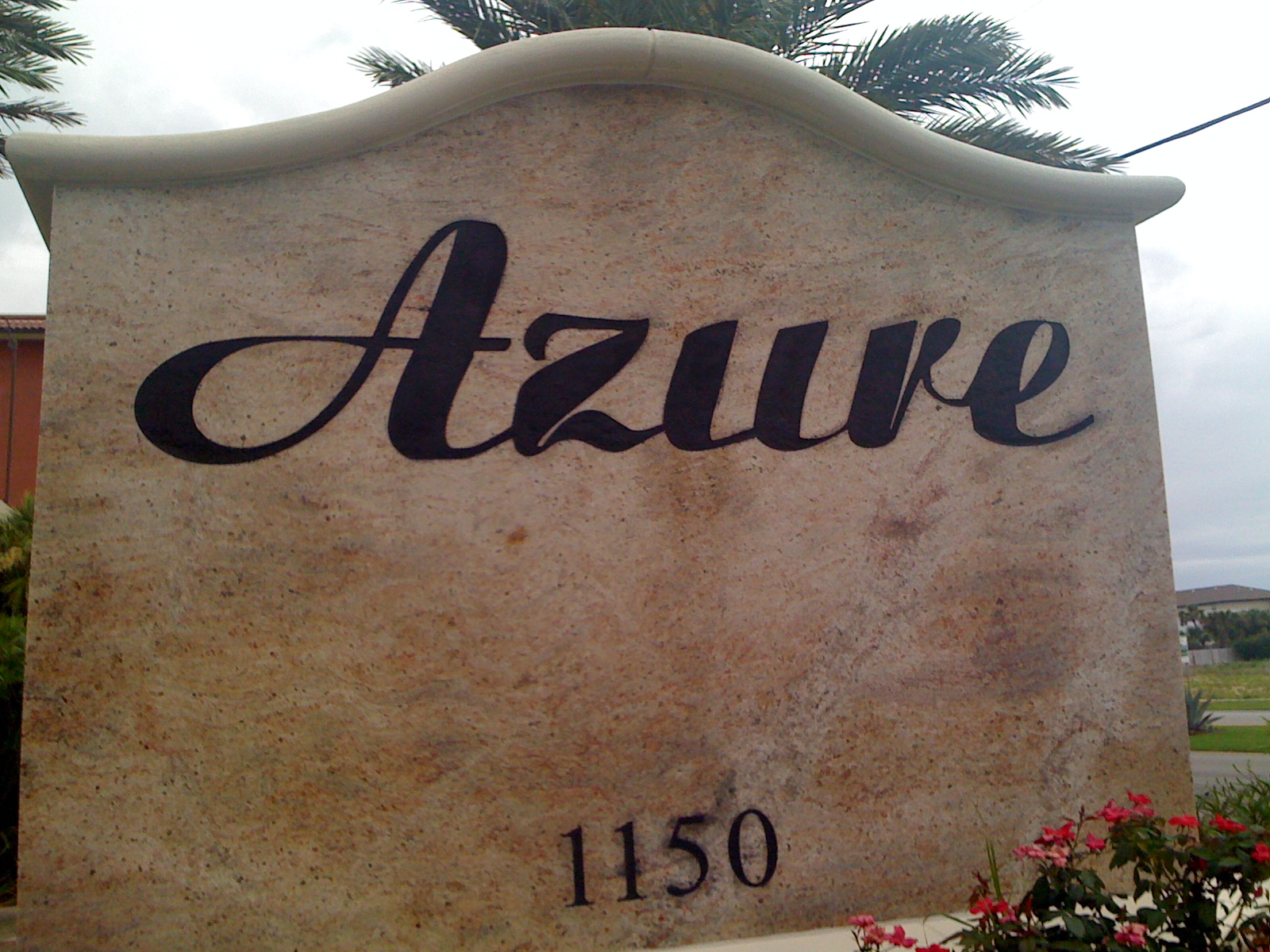
Vacation rental in Fort Walton Beach, FLA

Interesting juxtaposition, last week I was vacationing at the Azure condos in Florida and this week Dell is making a strategic announcement to develop a Dell-powered Microsoft Windows Azure Platform Appliance, as well as Azure based services delivered by Dell Services.

Press Release: http://content.dell.com/us/en/corp/d/press-releases/2010-07-12-dell-microsoft-cloud-azure-appliance.aspx

This is a project that I’m involved in, so watch for updates as details emerge.

Speaking at RedHat Summit / JBoss World 2010

I’ve been enlisted by my employer, Dell, to speak about cloud software architecture JBoss World 2010 in Boston the week of June 21st.

My talk will expand on the “RAIN” posts that I’ve written before with some practical examples on our we are using Joyent to create applications using these models.

Here’s the abstract:

The need for hyper-scale and the lack of SLAs on public clouds has forced architects to stripe their applications across multiple servers. Similar to disk RAID striping, application striping creates redundancy using an array of inexpensive nodes (RAIN). This technique enables applications to have dramatic performance bursts while improving fault tolerance and reducing costs.

In this session, Rob will review how to use JBoss Enterprise Middleware to create a RAIN configuration using technologies available through the Dell Cloud Solution for Web Applications and on Joyent public cloud hosting. He will review the essential role of the virtual load balancer using Zeus ZXTM. Rob will also show specific architectures that can be implemented quickly and explain how ZXTM can deliver scale-out ready SQL read-write splitting without recoding.

Network World on Ubuntu Cloud

My team at Dell is working on solutions around this cloud strategy.  I like the approach that Canonical & Ecalyptus are taking concerning the use of open source (KVM), ad hoc API standards (Amazon), and flexible storage configurations (DAS or SAN).

Looking at usage trends, stateless server designs (as we get closer to PaaS) will allow us to rethink how we architect hypervisor based clouds.  Of course, this requires us to rethink application architectures and the OS choices that we make to run them. 

Thanks for BartonGeorge.net for the link  that got this thought started.  Network World says…

“Ubuntu Enterprise Cloud provides tight integration between Ubuntu and Ecalyptus and a series of CLI tools (made even more simple by apps like HybridFox with gives them a GUI) that follows along Amazon’s construction. Work done for Ubuntu Enterprise Cloud ends up being somewhat reusable if you’re transporting your work to Amazon.”

Dell goes to the Clouds (hardware & Joyent)

As a Dell employee, I’ve had the privilege of being on the front lines of Dell’s cloud strategy.  Until today, I have not been able to post about the exciting offerings that we’ve been brewing.

Two related components have been occupying my days.  The first is the new cloud optimized hardware and the second is the agreement to offer private clouds using Joyent’s infrastructure. Over the next few weeks, I’ll be exploring some of the implications of these technologies.  I’ve already been exploring them in previous posts.

Cloud optimized hardware grew out of lesson learned in Dell’s custom mega-volume hardware business (that’s another story!).  This hardware is built for applications and data centers that embrace scale out designs.  These customers build applications that are so fault tolerant that they can focus on power, density, and cost optimizations instead of IT hardening.  It’s a different way of looking at the data center because they see the applications and the hardware as a whole system.

To me, that system view is the soul of cloud computing.

The Dell-Joyent relationship is a departure from the expected.  As a founder of Surgient, I’m no stranger to hypervisor private clouds; however, the Joyent takes a fundamentally different approach.  Riding on top of OpenSolaris’ paravirtualization, this cloud solution virtually eliminates the overhead and complexity that seem to be the default for other virtualization solutions.  I especially like Joyent’s application architectures and their persistent vision on how to build scale-out applications from the ground up.

To me, scale should be baked into the heart of cloud applications.

So when I look at Dell’s offings, I think we’ve captured the heart and soul of true cloud computing.