Unknown's avatar

About Rob H

A Baltimore transplant to Austin, Rob thinks about ways of building scale infrastructure for the clouds using Agile processes. He sat on the OpenStack Foundation board for four years. He co-founded RackN enable software that creates hyperscale converged infrastructure.

May 12 – Weekly Recap of All Things Site Reliability Engineering (SRE)

Welcome to the weekly post of the RackN blog recap of all things SRE. If you have any ideas for this recap or would like to include content please contact us at info@rackn.com or tweet Rob (@zehicle) or RackN (@rackngo)

SRE Items of the Week

RobatOpenStack

OpenStack on Kubernetes: Will it blend? (OpenStack Summit Session) w/ Rob Hirschfeld

OpenStack and Kubernetes: Combining the Best of Both Worlds (OpenStack Summit Session) w/ Rob Hirschfeld

OpenStack Summit Boston Day 1 Notes by Rob Hirschfeld
https://robhirschfeld.com/2017/05/09/openstack-boston-day-1-notes/

Contrary to pundit expectations, OpenStack did not roll over and die during the keynotes yesterday.

In fact, I saw the signs of a maturing project seeing real use and adoption. More critically, OpenStack leadership started the event with an acknowledgement of being part of, not owning, the vibrant open infrastructure community. READ MORE

_______
Immutable Infrastructure Webinar

Attendees:

  • Greg Althaus, Co-Founder and CTO, RackN
  • Erica Windisch, Founder and CEO, Piston 
  • Christopher MacGown, Advisor, IOpipe
  • Riyaz Faizullabhoy,  Security Engineer, Docker
  • Sheng Liang, Founder and CEO Rancher Labs
  • Moderated by Stephen Spector, HPE, Cloud Evangelist

_______
SREies Part1: Configuration Management by Krishelle Hardson-Hurley

SREies is a series on topics related to my job as a Site Reliability Engineer (SRE). About a month ago, I wrote an article about what it means to be an SRE which included a compatibility quiz and resource list to those who were intrigued by the role. If you are unfamiliar with SRE, I would suggest starting there before moving on.

In this series, I will extend my description to include more specific summaries of concepts that I have learned during my first six months at Dropbox. In this edition, I will be discussing Configuration Management. READ MORE

UPCOMING EVENTS

Rob Hirschfeld and Greg Althaus are preparing for a series of upcoming events where they are speaking or just attending. If you are interested in meeting with them at these events please email info@rackn.com.

Interop ITX : May 15 – 19, 2017 in Las Vegas, NV

Gluecon : May 24 – 25, 2017 in Denver, CO

  • Surviving Day 2 in Open Source Hybrid Automation – May 23, 2017 : Rob Hirschfeld and Greg Althaus

OTHER NEWSLETTERS

SRE Weekly (@SREWeekly)Issue #71

OpenStack Boston Day 1 Notes

Contrary to pundit expectations, OpenStack did not roll over and die during the keynotes yesterday.

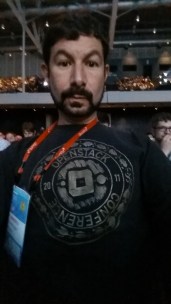
20170508_093339

In my 2011 Boston Summit shirt.

In fact, I saw the signs of a maturing project seeing real use and adoption. More critically, OpenStack leadership started the event with an acknowledgement of being part of, not owning, the vibrant open infrastructure community.

Continued Growth in Core Areas

Practical reasons for running dedicated infrastructure (compliance, control and cost) make OpenStack relevant for companies and governments with significant budgets. There is also a healthy shared infrastructure (aka public cloud) market living in the shadow of the big 3 players. It’s still unclear how this ecosystem will make money for the vendors.

What do customers buy? Should the Core be free?

My personal experience is that most customers are reluctant to (but grudgingly do) buy distros for the core open technology. They are much more willing to pay for adjacencies like security, storage and networking.

Emerging Challenges from Adjacent Technologies

Containers and Kubernetes are making a significant impact on the OpenStack community. At points, the OpenStack keynote was more about Kubernetes than OpenStack. It’s also clear that customers want to use containers as an abstraction layer to make infrastructure less visible or locked-in. That opens the market for using servers directly (bare metal) or other clouds. That portability is likely to help OpenStack more than hurt it because customers can exit workloads from the Big 3 players.

Friction for adoption remains a critical hurdle.

Containers, which are cloud first platforms, have much less friction than IaaS platforms. IaaS platforms, even managed ones, require physical infrastructure with the matching complexity and investment.

OpenStack: an open infrastructure software community

Overall, the summit remains an amazing community space for open infrastructure software and cloud alternatives to the Big 3 players. The Foundation’s pivot to embrace Kubernetes and foster several other open technologies helps maintain the central enthusiasm for open source infrastructure that gave birth to the platform in the first place.

A healthy pragmatic vibe

The summit may not have the same heady taking-on-the-world feeling as the early days; instead, it has a healthy pragmatic vibe. Considering how frothy this space remains, that may be a welcome relief.

What are your impressions? I’m looking forward to hearing from you!

May 5 – Weekly Recap of All Things Site Reliability Engineering (SRE)

Welcome to the weekly post of the RackN blog recap of all things SRE. If you have any ideas for this recap or would like to include content please contact us at info@rackn.com or tweet Rob (@zehicle) or RackN (@rackngo)

SRE Items of the Week

RackN Announcement
[PRESS RELEASE] RackN Ends DevOps Gridlock in Data Center  

Today we announced the availability of Digital Rebar Provision, the industry’s first cloud-native physical provisioning utility.  We’ve had this in the Digital Rebar community for a few weeks before offering support and response has been great! READ MORE
_
______

Cloud Native PHYSICAL PROVISIONING? Come on! Really?!
 By Rob Hirschfeld

Today, RackN announce very low entry level support for Digital Rebar Provisioning – the RESTful Cobbler PXE/DHCP replacement.  Having a company actually standing behind this core data center function with support is a big deal; however…

We’re making two BIG claims with Provision: breaking DevOps bottlenecks and cloud native physical provisioning.  We think both points are critical to SRE and Ops success because our current approaches are not keeping pace with developer productivity and hardware complexity. READ MORE

RackN @ DevOpsDays Austin

IMG_0810

Slides from Rob Hirschfeld’s talk – The Server Cage Match

SRE vs DevOps vs Cloud Native: The Server Cage Match by Rob Hirschfeld

I don’t believe in DevOps shaming. Our community seems compelled to correct use of DevOps as an adjective for tools, teams and teapots. The frustration is reasonable: DevOps clearly taps into head space for both devs and operators who see a brighter automated future together. For example, check out this excellent DevOps discourse by Cindy Sridharan.

As an industry, we crave artificial conflict so it’s natural to try and distill site reliability engineering (SRE), DevOps and cloud native into warring factions when they are not. They all share a focus on Lean process. READ MORE

SRE News

What is DevOps? By Cindy Sridharan @copyconstruct  
https://medium.com/@cindysridharan/what-is-devops-5b0181fdb953

It happened again this week.

At this Wednesday’s Prometheus meetup I was hosting, I asked one of the attendees what he did for work.

He looked at me briefly before he barked one word in reply — DevOps — and then promptly made a beeline for the pizza at the back of the room. READ MORE
________

An Influx of Kubernetes Installers Raises Questions Around Conformance
https://thenewstack.io/kubernetes-installer-explosion-natural-enthusiasm/

For the Kubecon Europe last month, industry observer Joseph Jacks pulled together a list of over SIXTY (yes, 60) Kubernetes installers and services. This wealth of variation that made itself known as the conference, happily, kicked off a conformance effort to ensure that users get a consistent experience. I’m a strong believer that clear conformance builds ecosystems and have deep experience working on that from my OpenStack DefCore efforts.

In short, conformance is not a vendor issue: it’s a user experience and ecosystem issue.  READ MORE

UPCOMING EVENTS

Rob Hirschfeld and Greg Althaus are preparing for a series of upcoming events where they are speaking or just attending. If you are interested in meeting with them at these events please email info@rackn.com.

OpenStack Summit : May 8 – 11, 2017 in Boston, MA  

  • OpenStack and Kubernetes. Combining the best of both worlds – Kubernetes Day

Interop ITX : May 15 – 19, 2017 in Las Vegas, NV during    Open Source IT Summit – Tuesday, May 16, 9:00 – 5:00pm  

  • 3:15 – 4:05pm OpenStack and Kubernetes
  • 4:05 – 5:00pm Kubernetes for All

Gluecon : May 24 – 25, 2017 in Denver, CO

  • Surviving Day 2 in Open Source Hybrid Automation – May 23, 2017 : Rob Hirschfeld and Greg Althaus

OTHER NEWSLETTERS

SRE Weekly (@SREWeekly)Issue #70

Cloud Native PHYSICAL PROVISIONING? Come on! Really?!

We believe Cloud Native development disciplines are essential regardless of the infrastructure.

imageToday, RackN announce very low entry level support for Digital Rebar Provisioning – the RESTful Cobbler PXE/DHCP replacement.  Having a company actually standing behind this core data center function with support is a big deal; however…

We’re making two BIG claims with Provision: breaking DevOps bottlenecks and cloud native physical provisioning.  We think both points are critical to SRE and Ops success because our current approaches are not keeping pace with developer productivity and hardware complexity.

I’m going to post more about Provision can help address the political struggles of SRE and DevOps that I’ve been watching in our industry.   A hint is in the release, but the Cloud Native comment needs to be addressed.

First, Cloud Native is an architecture, not an infrastructure statement.

There is no requirement that we use VMs or AWS in Cloud Native.  From that perspective, “Cloud” is a useful but deceptive adjective.  Cloud Native is born from applications that had to succeed in hands-off, lower SLA infrastructure with fast delivery cycles on untrusted systems.  These are very hostile environments compared to “legacy” IT.

What makes Digital Rebar Provision Cloud Native?  A lot!

The following is a list of key attributes I consider essential for Cloud Native design.

Micro-services Enabled: The larger Digital Rebar project is a micro-services design.  Provision reflects a stand-alone bundling of two services: DHCP and Provision.  The new Provision service is designed to both stand alone (with embedded UX) and be part of a larger system.

Swagger RESTful API: We designed the APIs first based on years of experience.  We spent a lot of time making sure that the API conformed to spec and that includes maintaining the Swagger spec so integration is easy.

Remote CLI: We build and test our CLI extensively.  In fact, we expect that to be the primary user interface.

Security Designed In: We are serious about security even in challenging environments like PXE where options are limited by 20 year old protocols.  HTTPS is required and user or bearer token authentication is required.  That means that even API calls from machines can be secured.

12 Factor & API Config: There is no file configuration for Provision.  The system starts with command line flags or environment variables.  Deeper configuration is done via API/CLI.  That ensures that the system can be fully managed by remote and configured securely becausee credentials are required for configuration.

Fast Start / Golang:  Provision is a totally self-contained golang app including the UX.  Even so, it’s very small.  You can run it on a laptop from nothing in about 2 minutes including download.

CI/CD Coverage: We committed to deep test coverage for Provision and have consistently increased coverage with every commit.  It ensures quality and prevents regressions.

Documentation In-project Auto-generated: On-boarding is important since we’re talking about small, API-driven units.  A lot of Provisioning documentation is generated directly from the code into the actual project documentation.  Also, the written documentation is in Restructured Text in the project with good indexes and cross-references.  We regenerate the documentation with every commit.

We believe these development disciplines are essential regardless of the infrastructure.  That’s why we made sure the v3 Provision (and ultimately every component of Digital Rebar as we iterate to v3) was built to these standards.

What do you think?  Is this Cloud Native?  What did we miss?

RackN Ends DevOps Gridlock in Data Center [Press Release]

Today we announced the availability of Digital Rebar Provision, the industry’s first cloud-native physical provisioning utility.  We’ve had this in the Digital Rebar community for a few weeks before offering support and response has been great!

DR ProvisionBy releasing their API-driven provisioning tool as a stand-alone component of the larger Digital Rebar suite, RackN helps DevOps teams break automation bottlenecks in their legacy data centers without disrupting current operations. The stand-alone open utility can be deployed in under 5 minutes and fits into any data center design. RackN also announced a $1,000 starter support and consulting package to further accelerate transition from tools like Cobbler, MaaS or Stacki to the new Golang utility.

“We were seeing SREs suffering from high job turnover,” said Rob Hirschfeld, RackN founder and CEO. “When their integration plans get gridlocked by legacy tooling they quickly either lose patience or political capital. Digital Rebar Provision replaces the legacy tools without process disruption so that everyone can find shared wins early in large SRE initiatives.”

The first cloud-native physical provisioning utility

Data center provisioning is surprisingly complex because it’s caught between cutting edge hardware and arcane protocols and firmware requirements that are difficult to disrupt.  The heart of the system is a fickle combination of specific DHCP options, a firmware bootstrap environment (known as PXE), a very lightweight file transfer protocol (TFTP) and operating system specific templating tools like preseed and kickstart.  Getting all these pieces to work together with updated APIs without breaking legacy support has been elusive.

By rethinking physical ops in cloud-native terms, RackN has managed to distill out a powerful provisioning tool for DevOps and SRE minded operators who need robust API/CLI, Day 2 Ops, security and control as primary design requirements. By bootstrapping foundational automation with Digital Rebar Provision, DevOps teams lay a foundation for data center operations that improves collaboration between operators and SRE teams: operators enjoy additional control and reuse and SREs get a doorway into building a fully automated process.

A pragmatic path without burning downing the data center

“I’m excited to see RackN providing a pragmatic path from physical boot to provisioning without having to start over and rebuild my data center to get there.” said Dave McCrory, an early cloud and data gravity innovator.  “It’s time for the industry to stop splitting physical and cloud IT processes because snowflaked, manual processes slow everyone down.  I can’t imagine an easier on-ramp than Digital Rebar Provision”

The RackN Digital Rebar is making it easy for Cobbler, Stacki, MaaS and Forman users to evaluate our RESTful, Golang, Template-based PXE Provisioning utility.  Interested users can evaluate the service in minutes on a laptop or engage with RackN for a more comprehensive trail with expert support.  The open Provision service works both independently and as part of Digital Rebar’s full life-cycle hybrid control.

Scontactee specific features at http://rackn.com/provision/drsa.

Want help starting on this journey?  Contact us and we can help.

Cloud-first Physical Provisioning? 10 ways that the DR is in to fix your PXE woes.

image

Why has it been so hard to untie from Cobbler? Why can’t we just REST-ify these 1990s Era Protocols? Dealing with the limits of PXE, DHCP and TFTP in wide-ranging data centers is tricky and Cobbler’s manual pre-defined approach was adequate in legacy data centers.

Now, we have to rethink Physical Ops in Cloud-first terms. DevOps and SRE minded operators services that have need real APIs, day-2 ops, security and control as primary design requirements.

The Digital Rebar team at RackN is hunting for Cobbler, Stacki, MaaS and Forman users to evaluate our RESTful, Golang, Template-based PXE Provisioning utility. Deep within the Digital Rebar full life-cycle hybrid control was a cutting-edge bare metal provisioning utility. As part of our v3 roadmap, we carved out the Provisioner to also work as a stand-alone service.

Here’s 10 reasons why DR Provisioning kicks aaS:

  1. Swagger REST API & CLI. Cloud-first means having a great, tested API. Years of provisioning experience went into this 3rd generation design and it shows. That includes a powerful API-driven DHCP.
  2. Security & Authenticated API. Not an afterthought, we both HTTPS and user authentication for using the API. Our mix of basic and bearer token authentication recognizes that both users and automation will use the API. This brings a new level of security and control to data center provisioning.
  3. Stand-alone multi-architecture Golang binary. There are no dependencies or prerequisites, plus upgrades are drop in replacements. That allows users to experiment isolated on their laptop and then easily register it as a SystemD service.
  4. Nested Template Expansion. In DR Provision, Boot Environments are composed of reusable template snippets. These templates can incorporate global, profile or machine specific properties that enable users to set services, users, security or scripting extensions for their environment.
  5. Configuration at Global, Group/Profile and Node level. Properties for templates can be managed in a wide range of ways that allows operators to manage large groups of servers in consistent ways.
  6. Multi-mode (but optional) DHCP. Network IP allocation is a key component of any provisioning infrastructure; however, DHCP needs are highly site dependant. DR Provision works as a multi-interface DHCP listener and can also resolve addresses from DHCP forwarders. It can even be disabled if your environment already has a DHCP service that can configure a the “next boot” provider.
  7. Dynamic Provisioner templates for TFTP and HTTP. For security and scale, DR Provision builds provisioning files dynamically based on the Boot Environment Template system. This means that critical system information is not written to disk and files do not have to be synchronized. Of course, when you need to just serve a file that works too.
  8. Node Discovery Bootstrapping. Digital Rebar’s long-standing discovery process is enabled in the Provisioner with the included discovery boot environment. That process includes an integrated secure token sequence so that new machines can self-register with the service via the API. This eliminates the need to pre-populate the DR Provision system.
  9. Multiple Seeding Operating Systems. DR Provision comes with a long list of Boot Environments and Templates including support for many Linux flavors, Windows, ESX and even LinuxKit. Our template design makes it easy to expand and update templates even on existing deployments.
  10. Two-stage TFTP/HTTP Boot. Our specialized Sledgehammer and Discovery images are designed for speed with optimized install cycles the improve boot speed by switching from PXE TFTP to IPXE HTTP in a two stage process. This ensures maximum hardware compatibility without creating excess network load.

Digital Rebar Provision is a new generation of data center automation designed for operators with a cloud-first approach. Data center provisioning is surprisingly complex because it’s caught between cutting edge hardware and arcane protocols embedded in firmware requirements that are still very much alive.

We invite you to try out Digital Rebar Provision yourself and let us know what you think. It only takes a few minutes. If you want more help, contact RackN for a $1000 Quick Start offer.

How about a CaaPuccino? Krish and Rob discuss containers, platforms, hybrid issues around Kubernetes and OpenStack.

CaaPuccino: A frothy mix of containers and platforms.

Check out Krish Subramanian’s (@krishnan) Modern Enterprise podcast (audio here) today for a surprisingly deep and thoughtful discussion about how frothy new technologies are impacting Modern Enterprise IT. Of course, we also take some time to throw some fire bombs at the end. You can use my notes below to jump to your favorite topics.

The key takeaways are that portability is hard and we’re still working out the impact of container architecture.

The benefit of the longer interview is that we really dig into the reasons why portability is hard and discuss ways to improve it. My personal SRE posts and those on the RackN blog describe operational processes that improve portability. These are real concerns for all IT organizations because mixed and hybrid models are a fact of life.

If you are not actively making automation that works against multiple infrastructures then you are building technical debt.

Of course, if you just want the snark, then jump forward to 24:00 minutes in where we talk future of Kubernetes, OpenStack and the inverted intersection of the projects.

Krish, thanks for the great discussion!

Rob’s Podcast Notes (39 minutes)

2:37: Rob intros about Digital Rebar & RackN

4:50: Why our Kubernetes is JUST UPSTREAM

5:35: Where are we going in 5 years > why Rob believes in Hybrid

  • Should not be 1 vendor who owns everything
  • That’s why we work for portability
  • Public cloud vision: you should stop caring about infrastructure
  • Coming to an age when infrastructure can be completely automated
  • Developer rebellion against infrastructure

8:36: Krish believes that Public cloud will be more decentralized

  • Public cloud should be part of everyone’s IT plan
  • It should not be the ONLY thig

9:25: Docker helps create portability, what else creates portability? Will there be a standard

  • Containers are a huge change, but it’s not just packaging
  • Smaller units of work is important for portability
  • Container schedulers & PaaS are very opinionated, that’s what creates portability
  • Deeper into infrastructure loses portability (RackN helps)
  • Rob predicts that Lambda and Serverless creates portability too

11:38: Are new standards emerging?

  • Some APIs become dominate and create de facto APIs
  • Embedded assumptions break portability – that’s what makes automation fragile
  • Rob explains why we inject configuration to abstract infrastructure
  • RackN works to inject attributes instead of allowing scripts to assume settings
  • For example, networking assumptions break portability
  • Platforms force people to give up configuration in ways that break portability

14:50: Why did Platform as a Service not take off?

  • Rob defends PaaS – thinks that it has accomplished a lot
  • Challenge of PaaS is that it’s very restrictive by design
  • Calls out Andrew Clay Shafer’s “don’t call it a PaaS” position
  • Containers provide a less restrictive approach with more options.

17:00: What’s the impact on Enterprise? How are developers being impacted?

  • Service Orientation is a very important thing to consider
  • Encapsulation from services is very valuable
  • Companies don’t own all their IT services any more – it’s not monolithic
  • IT Service Orientation aligns with Business Processes
    Rob says the API economy is a big deal
  • In machine learning, a business’ data may be more valuable than their product

19:30: Services impact?

  • Service’s have a business imperative
  • We’re not ready for all the impacts of a service orientation
  • Challenge is to mix configuration and services
  • Magic of Digital Rebar is that it can mix orchestration of both

22:00: We are having issues with simple, how are we going to scale up?

  • Barriers are very low right now

22:30: Will Kubernetes help us solve governance issues?

  • Kubernetes is doing a go building an ecosystem
  • Smart to focus on just being Kubernetes
  • It will be chaotic as the core is worked out

24:00: Do you think Kubernetes is going in the right direction?

  • Rob is bullish for Kubernetes to be the dominant platform because it’s narrow and specific
  • Google has the right balance of control
  • Kubernetes really is not that complex for what it does
  • Mesos is also good but harder to understand for users
  • Swarm is simple but harder to extend for an ecosystem
  • Kubernetes is a threat to Amazon because it creates portability and ecosystem outside of their platform
  • Rob thinking that Kubernetes could create platform services that compete with AWS services like RDS.
  • It’s likely to level the field, not create a Google advantage

27:00: How does Kubernetes fit into the Digital Rebar picture?

  • We think of Kubernetes as a great infrastructure abstraction that creates portability
  • We believe there’s a missing underlay that cannot abstract the infrastructure – that’s what we do.
  • OpenStack deployments broken because every data center is custom and different – vendors create a lot of consulting without solving the problem
  • RackN is creating composability UNDER Kubernetes so that those infrastructure differences do not break operation automation
  • Kubernetes does not have the constructs in the abstraction to solve the infrastructure problem, that’s a different problem that should not be added into the APIs
  • Digital Rebar can also then use the Kubernetes abstractions?

30:20: Can OpenStack really be managed/run on top of Kubernetes? That seems complex!

  • There is a MESS in the message of Kubernetes under OpenStack because it sends the message that Kubernetes is better at managing application than OpenStack
  • Since OpenStack is just an application and Kubernetes is a good way to manage applications
  • When OpenStack is already in containers, we can use Kubernetes to do that in a logical way
  • “I’m super impressed with how it’s working” using OpenStack Helm Packs (still needs work)
  • Physical environment still has to be injected into the OpenStack on Kubernetes environment

35:05 Does OpenStack have a future?

  • Yes! But it’s not the big “data center operating system” future that we expected in 2010. Rob thinks it a good VM management platform.
  • Rob provides the same caution for Kubernetes. It will work where the abstractions add value but data centers are complex hybrid beasts
  • Don’t “square peg a data center round hole” – find the best fit
  • OpenStack should have focused on the things it does well – it has a huge appetite for solving too many problems.

Why IBM’s hybrid “no-single-way” is a good plan

I got to spend a few days hearing IBM’s cloud plans at IBM Interconnect including a presentation, dinner and guest blogging.  Read below for links to that content.

As part of their CloudMinds group, we’re encouraged to look at the big picture of the conference and there’s a lot to take in. IBM has serious activity around machine learning, cognitive, serverless, functional languages, block chain, platform and infrastructure as a service. Frankly, that’s a confusing array of technologies.
Does this laundry list of technologies fit into a unified strategy? No, and that’s THE POINT.

Anyone who thinks they can predict a definitive right mix of technologies to solve customer problems is not paying attention to the pace of innovation. IBM is listening to their customers and hearing that needs are expanding not consolidating. In this type of market, limiting choice hurts customers.

That means that a hybrid strategy with overlapping offerings serves their customers interests.

IBM has the luxury and scale of being able to chase multiple technologies to find winners. Of course, there’s a danger of hanging on to losers too long too. So far, it looks like they are doing a good job of riding that sweet spot. Their agility here may be the only way that they can reasonably find a chink in Amazon’s cloud armour.

While the hybrid story is harder to tell, it’s the right one for this market.

Four Posts For Deeper Reading

The posts below cover a broad range of topics! Chris Ferris and I did some serious writing about collaboration and my DevOps/Hybrid post has been getting some attention. It’s all recommended reading so I’ve included some highlights.

#CloudMinds tackle the future of cognitive in Las Vegas huddle

Rob is part of the IBM CloudMinds group that meets occasionally to discuss rising cloud, infrastructure and technology challenges.

“Cognitive cannot and will not exist without trust. Humans will not trust cognitive unless we can show that our cognitive solutions understand them.”

How open communities can hurt, and help, interoperability

“The days of using open software passively from vendors are past, users need to have a voice and opinion about project governance. This post is a joint effort with Rob Hirschfeld, RackN, and Chris Ferris, IBM, based on their IBM Interconnect 2017 “Open Cloud Architecture: Think You Can Out-Innovate the Best of the Rest?” presentation.”

When DevOps and hybrid collide (2017 trend lines)

“We’ve clearly learned that DevOps automation pays back returns in agility and performance. Originally, small-batch, lean thinking was counter-intuitive. Now it’s time to make similar investments in hybrid automation so that we can leverage the most innovation available in IT today.”

Open Source Collaboration: The Power of No & Interoperability

“Users and operators can put significant pressure on project leaders and vendors to ensure that the platforms are interoperable. “

LinuxKit and Three Concerns with Physical Provisioning of Immutable Images

DR ProvisionAt Dockercon this week, Docker announced an immutable operating system called LinuxKit which is powered by a Packer-like utility called Moby that RackN CTO, Greg Althaus, explains in the video below.

For additional conference notes, check out Rob Hirschfeld’s Dockercon retro blog post.

Three Concerns with Immutable O/S on Physical

With a mix of excitement and apprehension, the RackN team has been watching physical deployment of immutable operating systems like CoreOS Container Linux and RancherOS.  Overall, we like the idea of a small locked (aka immutable) in-memory image for servers; however, the concept does not map perfectly to hardware.

Note: if you want to provision these operating systems in a production way, we can help you!

These operating systems work on a “less is more” approach that strips everything out of the images to make them small and secure.  

This is great for cloud-first approaches where VM size has a material impact in cost.  It’s particularly matched for container platforms where VMs are constantly being created and destroyed.  In these cases, the immutable image is easy to update and saves money.

So, why does that not work as well on physical?

First:  HA DHCP?!  It’s not as great a map for physical systems where operating system overhead is pretty minimal.  The model requires orchestrated rebooting of your hardware.  It also means that you need a highly available (HA) PXE Provisioning infrastructure (like we’re building with Digital Rebar).

Second: Configuration. That means that they must rely on having cloud-init injected configuration.  In a physical environment, there is no way to create cloud-init like injections without integrating with the kickstart systems (a feature of Digital Rebar Provision).  Further, hardware has a lot more configuration options (like hard drives and network interfaces) than VMs.  That means that we need a robust and system-by-system way to manage these configurations.

Third:  No SSH.  Yes another problem with these minimal images is that they are supposed to eliminate SSH.   Ideally, their image and configuration provides everything required to run the image without additional administration.  Unfortunately, many applications assume post-boot configuration.  That means that people often re-enable SSH to use tools like Ansible.  If it did not conflict with the very nature of the “do-not configure-the-server” immutable model, I would suggest that SSH is a perfectly reasonable requirement for operators running physical infrastructure.

In Summary, even with those issues, we are excited about the positive impact this immutable approach can have on data center operations.

With tooling like Digital Rebar, it’s possible to manage the issues above.  If this appeals to you, let us know!

Hey Dockercon, let’s get Physical!

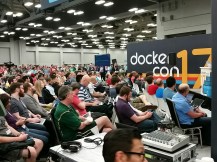
IMG_20170419_121918Overall, Dockercon did a good job connecting Docker users with information.  In some ways, it was a very “let’s get down to business” conference without the open source collaboration feel of previous events.  For enterprise customers and partners, that may be a welcome change.

Unlike past Dockercons, the event did not have major announcements or a lot of non-Docker ecosystem buzz.  That said, I miss that the event did not have major announcements or a lot of non-Docker ecosystem buzz.

One item that got me excited was an immutable operating system called LinuxKit which is powered by a Packer-like utility called Moby (ok, I know it does more but that’s still fuzzy to me).

RackN CTO, Greg Althaus, was able to turn around a working LinuxKit Kubernetes demo (VIDEO) overnight.  This short video explains Moby & LinuxKit plus uses the new Digital Rebar Provision in an amazing integration.

Want to hear more about immutable operating systems?  Check out our post on RackN’s site about three challenges of running things like LinuxKit, CoreOS Container Linux and RancherOS on metal.

Oh, and YES, that was my 15-year-old daughter giving a presentation at Dockercon about workplace diversity.  I’ll link the video when they’ve posted them.

https://www.slideshare.net/KateHirschfeld/slideshelf