OpenCrowbar Design Principles: Late Binding [Series 3 of 6]

This is part 3 of 6 in a series discussing the principles behind the “ready state” and other concepts implemented in OpenCrowbar.  The content is reposted from the OpenCrowbar docs repo.

2013-09-13_18-56-39_197Ops Late Binding

In terms of computer science languages, late binding describes a class of 4th generation languages that do not require programmers to know all the details of the information they will store until the data is actually stored. Historically, computers required very exact and prescriptive data models, but later generation languages embraced a more flexible binding.

Ops is fluid and situational.

Many DevOps tooling leverages eventual consistency to create stable deployments. This iterative approach assumes that repeated attempts of executing the same idempotent scripts do deliver this result; however, they are do not deliver predictable upgrades in situations where there are circular dependencies to resolve.

It’s not realistic to predict the exact configuration of a system in advance –

  • the operational requirements recursively impact how the infrastructure is configured
  • ops environments must be highly dynamic
  • resilience requires configurations to be change tolerant

Even more complex upgrade where the steps cannot be determined in advanced because the specifics of the deployment direct the upgrade.

Late Binding is a  foundational topic for Crowbar that we’ve been talking about since mid-2012.  I believe that it’s an essential operational consideration to handle resiliency and upgrades.  We’ve baked it deeply into OpenCrowbar design.

Continue Reading > post 4

OpenCrowbar Design Principles: The Ops Challenge [Series 2 of 6]

This is part 2 of 6 in a series discussing the principles behind the “ready state” and other concepts implemented in OpenCrowbar.  The content is reposted from the OpenCrowbar docs repo.

The operations challenge

A deployment framework is key to solving the problems of deploying, configuring, and scaling open source clusters for cloud computing.

2012-09-21_13-51-00_331Deploying an open source cloud can be a complex undertaking. Manual processes, can take days or even weeks working to get a cloud fully operational. Even then, a cloud is never static, in the real world cloud solutions are constantly on an upgrade or improvement path. There is continuous need to deploy new servers, add management capabilities, and track the upstream releases, while keeping the cloud running, and providing reliable services to end users. Service continuity requirements dictate a need for automation and orchestration. There is no other way to reduce the cost while improving the uptime reliability of a cloud.

These were among the challenges that drove the development of the OpenCrowbar software framework from it’s roots as an OpenStack installer into a much broader orchestration tool. Because of this evolution, OpenCrowbar has a number of architectural features to address these challenges:

  • Abstraction Around OrchestrationOpenCrowbar is designed to simplify the operations of large scale cloud infrastructure by providing a higher level abstraction on top of existing configuration management and orchestration tools based on a layered deployment model.
  • Web ArchitectureOpenCrowbar is implemented as a web application server, with a full user interface and a predictable and consistent REST API.
  • Platform Agnostic ImplementationOpenCrowbar is designed to be platform and operating system agnostic. It supports discovery and provisioning from a bare metal state, including hardware configuration, updating and configuring BIOS and BMC boards, and operating system installation. Multiple operating systems and heterogeneous operating systems are supported. OpenCrowbar enables use of time-honored tools, industry standard tools, and any form of scriptable facility to perform its state transition operations.
  • Modular ArchitectureOpenCrowbar is designed around modular plug-ins called Barclamps. Barclamps allow for extensibility and customization while encapsulating layers of deployment in manageable units.
  • State Transition Management EngineThe core of OpenCrowbar is based on a state machine (we call it the Annealer) that tracks nodes, roles, and their relationships in groups called deployments. The state machine is responsible for analyzing dependencies and scheduling state transition operations (transitions).
  • Data modelOpenCrowbar uses a dedicated database to track system state and data. As discovery and deployment progresses, system data is collected and made available to other components in the system. Individual components can access and update this data, reducing dependencies through a combination of deferred binding and runtime attribute injection.
  • Network AbstractionOpenCrowbar is designed to support a flexible network abstraction, where physical interfaces, BMC’s, VLANS, binding, teaming, and other low level features are mapped to logical conduits, which can be referenced by other components. Networking configurations can be created dynamically to adapt to changing infrastructure.

Continue Reading > post 3

OpenCrowbar Design Principles: Reintroduction [Series 1 of 6]

While “ready state” as a concept has been getting a lot of positive response, I forget that much of the innovation and learning behind that concept never surfaced as posts here.  The Anvil (2.0) release included the OpenCrowbar team cataloging our principles in docs.  Now it’s time to repost the team’s work into a short series over the next three days.

In architecting the Crowbar operational model, we’ve consistently twisted adapted traditional computer science concepts like late binding, simulated annealing, emergent behavior, attribute injection and functional programming to create a repeatable platform for sharing open operations practice (post 2).

Functional DevOps aka “FuncOps”

Ok, maybe that’s not going to be the 70’s era hype bubble name, but… the operational model behind Crowbar is entering its third generation and its important to understand the state isolation and integration principles behind that model is closer to functional than declarative programming.

Parliament is Crowbar’s official FuncOps sound track

The model is critical because it shapes how Crowbar approaches the infrastructure at a fundamental level so it makes it easier to interact with the platform if you see how we are approaching operations. Crowbar’s goal is to create emergent services.

We’ll expore those topics in this series to explain Crowbar’s core architectural principles.  Before we get into that, I’d like to review some history.

The Crowbar Objective

Crowbar delivers repeatable best practice deployments. Crowbar is not just about installation: we define success as a sustainable operations model where we continuously improve how people use their infrastructure. The complexity and pace of technology change is accelerating so we must have an approach that embraces continuous delivery.

Crowbar’s objective is to help operators become more efficient, stable and resilient over time.

Background

When Greg Althaus (github @GAlhtaus) and Rob “zehicle” Hirschfeld (github @CloudEdge) started the project, we had some very specific targets in mind. We’d been working towards using organic emergent swarming (think ants) to model continuous application deployment. We had also been struggling with the most routine foundational tasks (bios, raid, o/s install, networking, ops infrastructure) when bringing up early scale cloud & data applications. Another key contributor, Victor Lowther (github @VictorLowther) has critical experience in Linux operations, networking and dependency resolution that lead to made significant contributions around the Annealing and networking model. These backgrounds heavily influenced how we approached Crowbar.

First, we started with best of field DevOps infrastructure: Opscode Chef. There was already a remarkable open source community around this tool and an enthusiastic following for cloud and scale operators . Using Chef to do the majority of the installation left the Crowbar team to focus on

crowbar_engineKey Features

  • Heterogeneous Operating Systems – chose which operating system you want to install on the target servers.
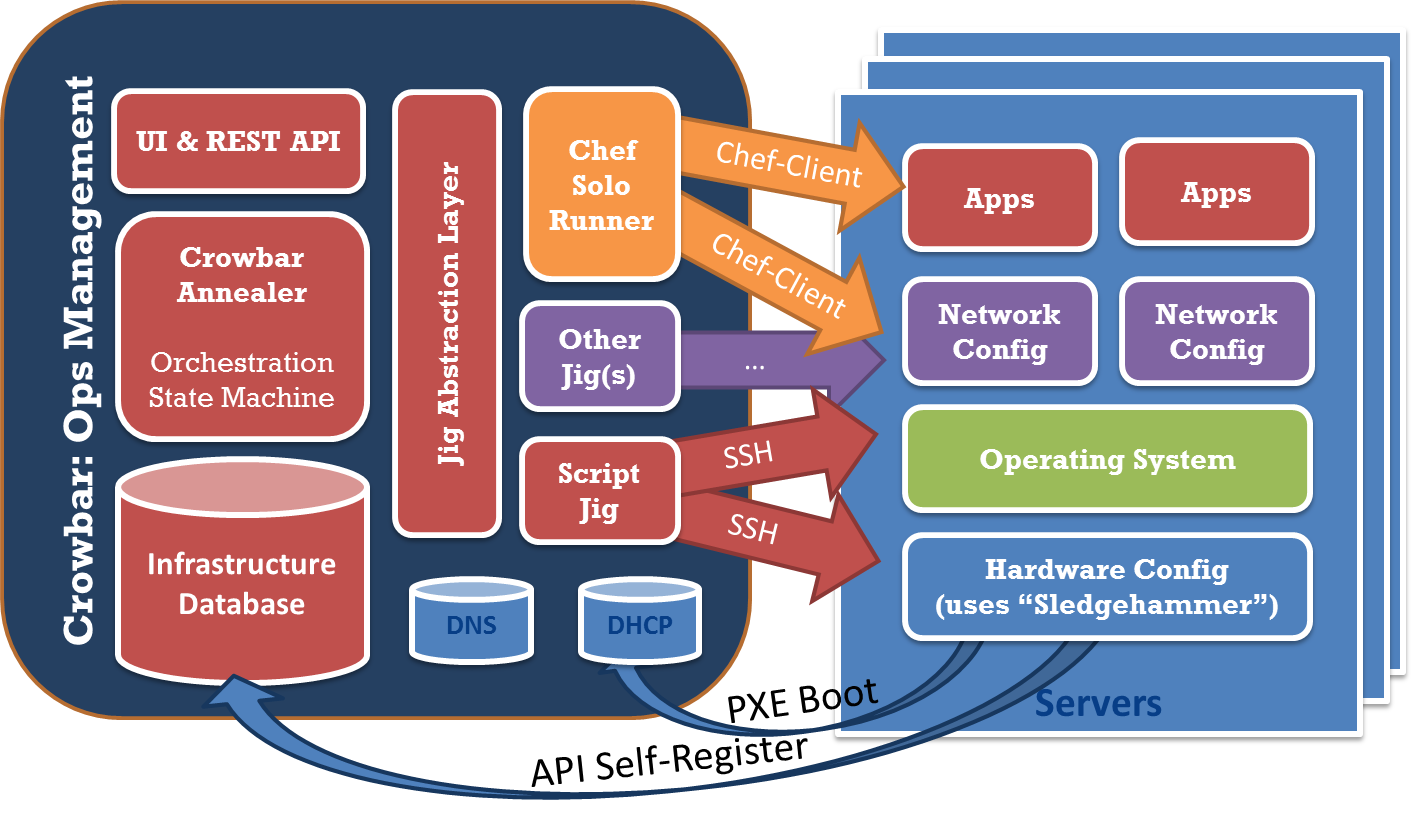
  • CMDB Flexibility (see picture) – don’t be locked in to a devops toolset. Attribute injection allows clean abstraction boundaries so you can use multiple tools (Chef and Puppet, playing together).
  • Ops Annealer –the orchestration at Crowbar’s heart combines the best of directed graphs with late binding and parallel execution. We believe annealing is the key ingredient for repeatable and OpenOps shared code upgrades
  • Upstream Friendly – infrastructure as code works best as a community practice and Crowbar use upstream code
  • without injecting “crowbarisms” that were previously required. So you can share your learning with the broader DevOps community even if they don’t use Crowbar.
  • Node Discovery (or not) – Crowbar maintains the same proven discovery image based approach that we used before, but we’ve streamlined and expanded it. You can use Crowbar’s API outside of the PXE discovery system to accommodate Docker containers, existing systems and VMs.
  • Hardware Configuration – Crowbar maintains the same optional hardware neutral approach to RAID and BIOS configuration. Configuring hardware with repeatability is difficult and requires much iterative testing. While our approach is open and generic, the team at Dell works hard to validate a on specific set of gear: it’s impossible to make statements beyond that test matrix.
  • Network Abstraction – Crowbar dramatically extended our DevOps network abstraction. We’ve learned that a networking is the key to success for deployment and upgrade so we’ve made Crowbar networking flexible and concise. Crowbar networking works with attribute injection so that you can avoid hardwiring networking into DevOps scripts.
  • Out of band control – when the Annealer hands off work, Crowbar gives the worker implementation flexibility to do it on the node (using SSH) or remotely (using an API). Making agents optional means allows operators and developers make the best choices for the actions that they need to take.
  • Technical Debt Paydown – We’ve also updated the Crowbar infrastructure to use the latest libraries like Ruby 2, Rails 4, Chef 11. Even more importantly, we’re dramatically simplified the code structure including in repo documentation and a Docker based developer environment that makes building a working Crowbar environment fast and repeatable.

OpenCrowbar (CB2) vs Crowbar (CB1)?

Why change to OpenCrowbar? This new generation of Crowbar is structurally different from Crowbar 1 and we’ve investing substantially in refactoring the tooling, paying down technical debt and cleanup up documentation. Since Crowbar 1 is still being actively developed, splitting the repositories allow both versions to progress with less confusion. The majority of the principles and deployment code is very similar, I think of Crowbar as a single community.

Continue Reading > post 2

Open Operations [4/4 series on Operating Open Source Infrastructure]

This post is the final in a 4 part series about Success factors for Operating Open Source Infrastructure.

tl;dr Note: This is really TWO tightly related posts: 
  part 1 is OpenOps background. 
  part 2 is about OpenStack, Tempest and DefCore.

2012-01-11_17-42-11_374One of the substantial challenges of large-scale deployments of open source software is that it is very difficult to come up with a best practice, or a reference implementation that can be widely explained or described by the community.

Having a best practice deployment is essential for the growth of the community because it enables multiple people to deploy the software in a repeatable, stable way. This, in turn, fosters community growth so that more people can adopt software in a consistent way. It does little good if operators have no consistent pattern for deployment, because that undermines the developers’ abilities to extend, the testers’ abilities to ensure quality, and users’ ability to repeat the success of others.

Fundamentally, the goal of an open source project, from a user’s perspective, is that they can quickly achieve and repeat the success of other people in the community.

When we look at these large-scale projects we really try to create a pattern of success that can be repeated over and over again. This ensures growth of the user base, and it also helps the developer reduce time spent troubleshooting problems.

That does not mean that every single deployment should be identical, but there is substantial value in having a limited number of success patterns. Customers can then be assured not only of quick time to value with these projects., They can also get help without having everybody else in the community attempt to untangle how one person created a site-specific. This is especially problematic if someone created an unnecessarily unique scenario. That simply creates noise and confusion in the environment., Noise is a huge cost for the community, and needs to be eliminated nor an open source project to flourish.

This isn’t any different from in proprietary software but most of these activities are hidden. A proprietary project vendor can make much stronger recommendations and install guidance because they are the only source of truth in that project. In an open source project, there are multiple sources of truth, and there are very few people who are willing to publish their exact reference implementation or test patterns. Consequently, my team has taken a strong position on creating a repeatable reference implementation for Openstack deployments, based on extensive testing. We have found that our test patterns and practices are grounded in successful customer deployments and actual, physical infrastructure deployments. So, they are very pragmatic, repeatable, and sustained.

We found that this type of testing, while expensive, is also a significant value to our customers, and something that they appreciate and have been willing to pay for.

OpenStack as an Example: Tempest for Reference Validation

The Crowbar project incorporated OpenStack Tempest project as an essential part of every OpenStack deployment. From the earliest introduction of the Tempest suite, we have understood the value of a baselining test suite for OpenStack. We believe that using the same tests the developers use for a single node test is a gate for code acceptance against a multi-node deployment, and creates significant value both for our customers and the OpenStack project as a whole.  This was part of my why I embraced the suggestion of basing DefCore on tests.

While it is important to have developer tests that gate code check-ins, the ultimate goal for OpenStack is to create scale-out multi-node deployments. This is a fundamental design objective for OpenStack.

With developers and operators using the same test suite, we are able to proactively measure the success of the code in the scale deployments in a way that provides quick feedback for the developers. If Tempest tests do not pass a multi-node environment, they are not providing significant value for developers to ensure that their code is operating against best practice scenarios. Our objective is to continue to extend the Tempest suite of tests so that they are an accurate reflection of the use cases that are encountered in a best practice, referenced deployment.

Along these lines, we expect that the community will continue to expand the Tempest test suite to match actual deployment scenarios reflected in scale and multi-node configurations. Having developers be responsible for passing these tests as part of their day-to-day activities ensures that development activities do not disrupt scale operations. Ultimately, making proactive gating tests ensures that we are creating scenarios in which code quality is continually increasing, as is our ability to respond and deploy the OpenStack infrastructure.

I am very excited and optimistic that the expanding the Tempest suite holds the key to making OpenStack the most stable, reliable, performance cloud implementation available in the market. The fact that this test suite can be extended in the community, and contributed to by a broad range of implementations, only makes that test suite more valuable and more likely to fully encompass all use cases necessary for reference implementations.

Networking in Cloud Environments, SDN, NFV, and why it matters [part 2 of 2]

scott_jensen2Scott Jensen is an Engineering Director and colleague of mine from Dell with deep networking and operations experience.  He had first hand experience deploying OpenStack and Hadoop and has a critical role in defining Dell’s Reference Architectures in those areas.  When I saw this writeup about cloud networking (first post), I asked if it would be OK to post it here and share it with you.

GUEST POST 2 OF 2 BY SCOTT JENSEN:

So what is different about Cloud and how does it impact on the network

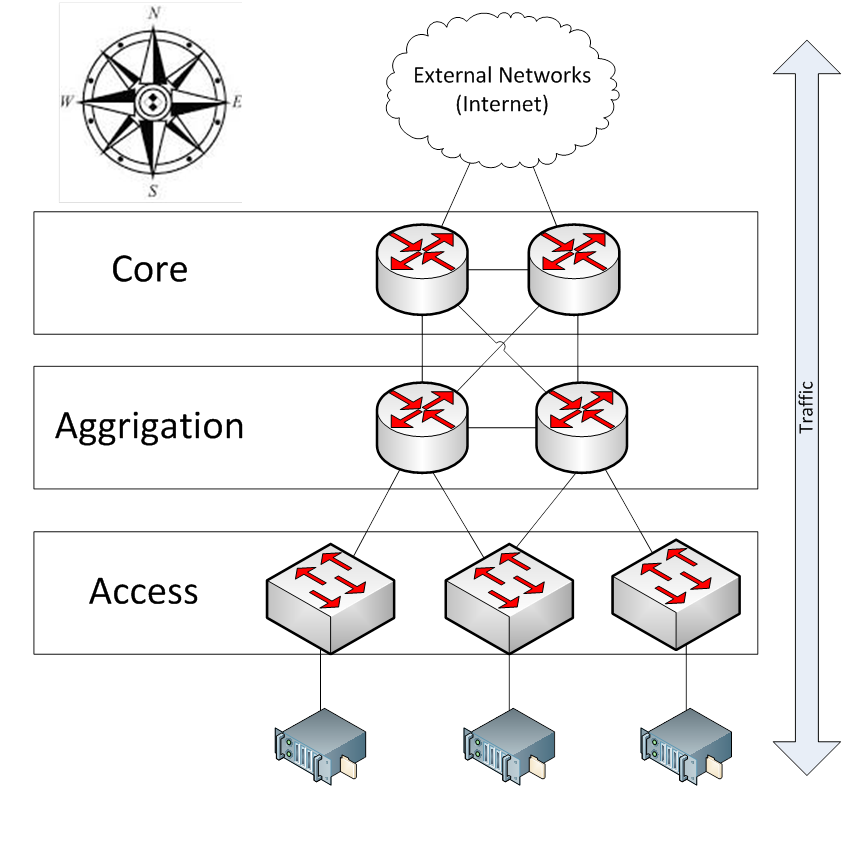
In a traditional data center this was not all that difficult (relatively).  You knew what was going to running on what system (physically) and could plan your infrastructure accordingly.  The majority of the traffic moved in a North/South direction. Or basically from outside the infrastructure (the internet for example) to inside and then responded back out.  You knew that if you had to design a communication channel from an application server to a database server this could be isolated from the other traffic as they did not usually reside on the same system.

scj-net1

Virtualization made this more difficult.  In this model you are sharing systems resources for different applications.  From the networks point of view there are a large number of systems available behind a couple of links.  Live Migration puts another wrinkle in the design as you now have to deal with a specific system moving from one physical server to another.  Network Virtualization helps out a lot with this.  With this you can now move virtual ports from one physical server to another to ensure that when one virtual machine moves from a physical server to another that the network is still available.  In many cases you managed these virtual networks the same as you managed your physical network.  As a matter of fact they were designed to emulate the physical as much as possible.  The virtual machines still looked a lot like the physical ones they replaced and can be treated in vary much the same way from a traffic flow perspective.  The traffic still is primarily a North/South pattern.

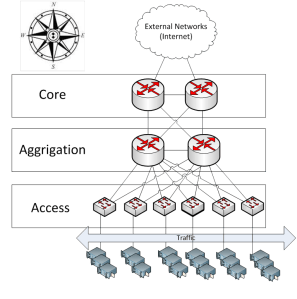
Cloud, however, is a different ball of wax.  Think about the charistics of the Cattle described above.  A cloud application is smaller and purpose built.  The majority of its traffic is between VMs as different tiers which were traditionally on the same system or in the same VM are now spread across multiple VMs.  Therefore its traffic patterns are primarily East/West.  You cannot forget that there is a North/South pattern the same as what was in the other models which is typically user interaction.  It is stateless so that many copies of itself can run in tandem allowing it to elastically scale up and down based on need and as such they are appearing and disappearing from the network.  As these VMs are spawned on the system they may be right next to each other or on different servers or potentially in different Data Centers.  But it gets even better.   scj-net2

Cloud architectures are typically multi-tenant.  This means that multiple customers will utilize this infrastructure and need to be isolated from each other.  And of course Clouds are self-service.  Users/developers can design, build and deploy whenever they want.  Including designing the network interconnects that their applications need to function.  All of this will cause overlapping IP address domains, multiple virtual networks both L2 and L3, requirements for dynamically configuring QOS, Load Balancers and Firewalls.  Lastly in our list of headaches is not the least.  Cloud systems tend to breed like rabbits or multiply like coat hangers in the closet.  There are more and more systems as 10 servers become 40 which becomes 100 then 1000 and so on.


So what is a poor Network Engineer to do?

First get a handle on what this Cloud thing is supposed to be for.  If you are one of the lucky ones who can dictate the use of the infrastructure then rock on!  Unfortunately, that does not seem to be the way it goes for many.  In the case where you just cannot predict how the infrastructure will be used I am reminded of the phrase “there is not replacement for displacement”.  Fast links, non-blocking switches, Network Fabrics are all necessary for the physical network but will not get you there.  Sense as a network administrator you cannot predict the traffic patterns who can?  Well the developer and the application itself.  This is what SDN is all about.  It allows a programmatic interface to what is called an overlay network.  A series of tunnels/flows which can build virtual networks on top of the physical network giving that pesky application what it was looking for.  In some cases you may want to make changes to the physical infrastructure.  For example change the configuration of the Firewall or Load Balancer or other network equipment.  SDN vendors are creating plug-ins that can make those types of configurations.  But if this is not good enough for you there is NFV.  The basic idea here is that why have specialized hardware for your core network infrastructure when we can run them virtualized as well?  Let’s run those in VM’s as well, hook them into the virtual network and SDN to configure them and we now can virtualize the routers, load balancers, firewalls and switches.  These technologies are in very much a state of flux right now but they are promising none the less.  Now if we could just virtualize the monitoring and troubleshooting of these environments I’d be happy.


Ops Validation using Development Tests [3/4 series on Operating Open Source Infrastructure]

This post is the third in a 4 part series about Success factors for Operating Open Source Infrastructure.

turning upIn an automated configuration deployment scenario, problems surface very quickly. They prevent deployment and force resolution before progress can be made. Unfortunately, many times this appears to be a failure within the deployment automation. My personal experience has been exactly the opposite: automation creates a “fail fast” environment in which critical issues are discovered and resolved during provisioning instead of sleeping until later.

Our ability to detect and stop until these issues are resolved creates exactly the type of repeatable, successful deployment that is essential to long-term success. When we look at these deployments, the most important success factors are that the deployment is consistent, known and predictable. Our ability to quickly identify and resolve issues that do not match those patterns dramatically improves the long-term stability of the system by creating an environment that has been benchmarked against a known reference.

Benchmarking against a known reference is ultimately the most significant value that we can provide in helping customers bring up complex solutions such as Openstack and Hadoop. Being successful with these deployments over the long term means that you have established a known configuration, and that you have maintained it in a way that is explainable and reference-able to other places.

Reference Implementation

The concept of a reference implementation provides tremendous value in deployment. Following a pattern that is a reference implementation enables you to compare notes, get help and ultimately upgrade and change deployment in known, predictable ways. Customers who can follow and implement a vendors’ reference, or the community’s reference implementation, are able to ask for help on the mailing lists, call in for help and work with the community in ways that are consistent and predictable.

Let’s explore what a reference implementation looks like.

In a reference implementation you have a consistent, known state of your physical infrastructure that has been implemented based upon a RA. That implementation follows a known best practice using standard gear in a consistent, known configuration. You can therefore explain your configuration to a community of other developers, or other people who have similar configuration, and can validate that your problem is not the physical configuration. Fundamentally, everything in a reference implementation is driving towards the elimination of possible failure cause. In this case, we are making sure that the physical infrastructure is not causing problems (getting to a ready state), because other people are using a similar (or identical) physical infrastructure configuration.

The next components of a reference implementation are the underlying software configurations for operating system management monitoring network configuration, IP networking stacks. Pretty much the entire component of the application is riding on. There are a lot of moving parts and complexity in this scenario, witha high likelihood of causing failures. Implementing and deploying the software stacks in an automated way, has enabled us to dramatically reduce the potential for problems caused by misconfiguration. Because the number of permutations of software in the reference stack is so high, it is essential that successful deployment tightly manages what exactly is deployed, in such a way that they can identify, name, and compare notes with other deployments.

Achieving Repeatable Deployments

In this case, our referenced deployment consists of the exact composition of the operating system, infrastructure tooling, and capabilities for the deployment. By having a reference capability, we can ensure that we have the same:

  • Operating system
  • Monitoring
  • Configuration stacks
  • Security tooling
  • Patches
  • Network stack (including bridges and VLAN, IP table configurations)

Each one of these components is a potential failure point in a deployment. By being able to configure and maintain that configuration automatically, we dramatically increase the opportunities for success by enabling customers to have a consistent configuration between sites.

Repeatable reference deployments enable customers to compare notes with Dell and with others in the community. It enables us to take and apply what we have learned from one site to another. For example, if a new patch breaks functionality, then we can quickly determine how that was caused. We can then fix the solution, add in the complimentary fix, and deploy it at that one site. If we are aware that 90% of our other sites have exactly the same configuration, it enables those other sites to avoid a similar problem. In this way, having both a pattern and practice referenced deployment enables the community to absorb or respond much more quickly, and be successful with a changing code base. We found that it is impractical to expect things not to change.

The only thing that we can do is build resiliency for change into these deployments. Creating an automated and tested referenceable deployment is the best way to cope with change.


OpenCrowbar.Anvil released – hammering out a gold standard in open bare metal provisioning

OpenCrowbarI’m excited to be announcing OpenCrowbar’s first release, Anvil, for the community.  Looking back on our original design from June 2012, we’ve accomplished all of our original objectives and more.
Now that we’ve got the foundation ready, our next release (OpenCrowbar Broom) focuses on workload development on top of the stable Anvil base.  This means that we’re ready to start working on OpenStack, Ceph and Hadoop.  So far, we’ve limited engagement on workloads to ensure that those developers would not also be trying to keep up with core changes.  We follow emergent design so I’m certain we’ll continue to evolve the core; however, we believe the Anvil release represents a solid foundation for workload development.
There is no more comprehensive open bare metal provisioning framework than OpenCrowbar.  The project’s focus on a complete operations model that comprehends hardware and network configuration with just enough orchestration delivers on a system vision that sets it apart from any other tool.  Yet, Crowbar also plays nicely with others by embracing, not replacing, DevOps tools like Chef and Puppet.
Now that the core is proven, we’re porting the Crowbar v1 RAID and BIOS configuration into OpenCrowbar.  By design, we’ve kept hardware support separate from the core because we’ve learned that hardware generation cycles need to be independent from the operations control infrastructure.  Decoupling them eliminates release disruptions that we experienced in Crowbar v1 and­ makes it much easier to use to incorporate hardware from a broad range of vendors.
Here are some key components of Anvil
  • UI, CLI and API stable and functional
  • Boot and discovery process working PLUS ability to handle pre-populating and configuration
  • Chef and Puppet capabilities including Birk Shelf v3 support to pull in community upstream DevOps scripts
  • Docker, VMs and Physical Servers
  • Crowbar’s famous “late-bound” approach to configuration and, critically, networking setup
  • IPv6 native, Ruby 2, Rails 4, preliminary scale tuning
  • Remarkably flexible and transparent orchestration (the Annealer)
  • Multi-OS Deployment capability, Ubuntu, CentOS, or Different versions of the same OS
Getting the workloads ported is still a tremendous amount of work but the rewards are tremendous.  With OpenCrowbar, the community has a new way to collaborate and integration this work.  It’s important to understand that while our goal is to start a quarterly release cycle for OpenCrowbar, the workload release cycles (including hardware) are NOT tied to OpenCrowbar.  The workloads choose which OpenCrowbar release they target.  From Crowbar v1, we’ve learned that Crowbar needed to be independent of the workload releases and so we want OpenCrowbar to focus on maintaining a strong ops platform.
This release marks four years of hard-earned Crowbar v1 deployment experience and two years of v2 design, redesign and implementation.  I’ve talked with DevOps teams from all over the world and listened to their pains and needs.  We have a long way to go before we’re deploying 1000 node OpenStack and Hadoop clusters, OpenCrowbar Anvil significantly moves the needle in that direction.
Thanks to the Crowbar community (Dell and SUSE especially) for nurturing the project, and congratulations to the OpenCrowbar team getting us this to this amazing place.


Reference Deployments are Critical [2/4 series on Operating Open Source Infrastructure]

This post is the second in a 4 part series about Success factors for Operating Open Source Infrastructure.

plansWhen we look at reference deployments, there are several things that make a good referenced deployment; and ones that are useful by the community.

First, a referenced deployment needs to be specific and useful. They have to be identified as solving a specific problem using the software. And they have to have a specific configuration that can be described in a way that creates a workable scenario for that. There may be multiple useful reference implementations. And in that case, each one needs to be identified as the – by the expected behavior. For example, our deployments include a compute centric configuration that has hardware configurations and network configurations adapted to compute focused applications.

They also have storage focused applications that are specifically targeted at enabling cheap and deep storage nodes for that type of situation. Both configurations are important and valid but they require different implementations, different details and different reference architectures. As long as it is clear that there are multiple patterns, the community is perfectly able to absorb and use these patterns.

Establishment of a widely adopted best practice is a central success criteria for any project.

Best practices ensure that deployers of the technology cannot only purchase implementations that will be successful, but they can also compare notes to work with their community. A significant adoption curve happens after the establishment of these best practices because at that point, the risk of purchase dramatically drops, and the ability to support radically increases. The next thing that’s important in the establishment of these technologies is that that reference implementation or the reference architecture has a way to be configured in a repeatable way.

Very often, this takes the form of deployment books from manuals. While useful in small deployments, in a hyperscale deployment the books really have diminishing value. This is because the level of human error – the chance of making a fundamental mistake during configuration – increases exponentially with the number of nodes, because each node is tightly interconnected with other nodes within the system.

My team at Dell launched the Crowbar project as a way to reduce or mitigate this effort substantially. We recognized that the number one cause of delays and impacts in time to value in a hyperscale deployment is configuration and set-up. Any simple mistake made during configuration, even down to ordering of the gear, or physical defects within the infrastructure, will create dramatic delays in troubleshooting and diagnosing those issues. By automating the process, we have ensured that we can bootstrap the system quickly.

The goal of automated best practice is to bootstrap in a conforming and repeatable way. This enables the community to work together immediately towards return on investment, and greatly reduces the risk of problems caused by human error. For example, it’s typical within a site for us to find that network configurations do not match the specifications. In many cases, we find issues with the core networking infrastructure not matching the way it was originally designed. We also find failures on physical infrastructure, disk failures, system mismatches,and unanticipated configuration. Any one of these problems with a human setup might be missed or overlooked.

Validated reference architectures, while valuable, are no longer sufficient.   Automated reference configurations have become the key to successfully delivered solutions.

Interested in more?  Read part 3


Success Factors of Operating Open Source Infrastructure [Series Intro]

2012-10-28_14-13-24_502Building a best practices platform is essential to helping companies share operations knowledge.   In the fast-moving world of open source software, sharing documentation about what to do is not sufficient.  We must share the how to do it also because the operations process is tightly coupled to achieving ongoing success.

Further, since change is constant, we need to change our definition of “stability” to reflect a much more iterative and fluid environment.

Baseline testing is an essential part of this platform. It enables customers to ensure not only fast time to value, but the tests are consistently conforming with industry best practices, even as the system is upgraded and migrates towards a continuous deployment infrastructure.

The details are too long for a single post so I’m going to explore this as three distinct topics over the next two weeks.

  1. Reference Deployments talks about needed an automated way to repeat configuration between sites.
  2. Ops Validation using Development Tests talks about having a way to verify that everyone uses a common reference platform
  3. Shared Open Operatons / DevOps (pending) talks about putting reference deployment and common validation together to create a true open operations practice.

OpenStack, Hadoop, Ceph, Docker and other open source projects are changing the landscape for information technology. Customers seeking to become successful with these evolving platforms must look beyond the software bits, and consider both the culture and operations.  The culture is critical because interacting with the open source projects community (directly or through a proxy) can help ensure success using the software. Operations are critical because open source projects expect the community to help find and resolve issues. This results in more robust and capable products. Consequently, users of open source software must operate in a more fluid environment.

My team at Dell saw this need as we navigated the early days of OpenStack.  The Crowbar project started because we saw that the community needed a platform that could adapt and evolve with the open source projects that our advanced customers were implementing. Our ability to deliver an open operations platform enables the community to collaborate, and to skip over routine details to refocus on shared best practices.

My recent focus on the OpenStack DefCore work reinforces these original goals.  Using tests to help provide a common baseline is a concrete, open and referenceable way to promote interoperability.  I hope that this in turn drives a dialog around best practices and shared operations because those help mature the community.

Why I’m learning open source best practice from Middle School Students

Engineering in open source projects is a different skillset than most of us have ever been trained for; happily, there is a rising cohort of engineers and scientists who have been learning to work in exactly the ways that industry is now demanding.   Here’s the background…

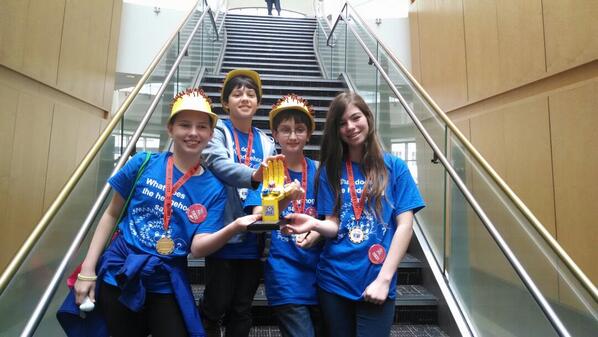
hedge_teamI’ve been helping mentor two FIRST Robotics teams (FLL & FTC) this season and had the privilege to accompany the FLL team (which includes my daughter) to the FIRST World Festival where a global mix of students from 6 to 18 competed, collaborated and celebrated for a wide range of awards and recognition.  The experience is humbling – these students are taking on challenges (for fun) that would scare off most adults.

While I could go on and on about my experience and the FIRST mission, I’d rather share some of what my 12 year old daughter wrote to her coach after the competition:

Thank you Coach for all of the lessons and advice you have shared with me this season. I really appreciate all of the time and effort you have put into making this team the best we could be. You have taught us so much and we will definitely walk away from this season with the new skills and experiences. You were an amazing coach and not only did you help and support us, you also gave us the freedom to be independent so we can learn skills like leadership, time management and meeting with busy schedules. I loved being on this team and I hope this will not be the last of the Hedgehogs.

FIRST designs the program so that these experiences are the norm, not the exception.

Here are some of the critical open source engineering skills I observed first hand at all levels of the competition.

  • Collaboration: at all levels, participants are strongly rewarded for collaborating, mentoring and working together.   Team simply cannot advance without mastering this skill.
  • Consensus: judges actively test and watch for consensus behavior.  This is actively coached and encouraged because the teams quickly learn to appreciate a diversity of strengths.
  • Risk Taking with Delivery: the very nature of competition encourages teams to think big and balance risk with delivery.
  • Celebration: this has to be experienced but the competitions are often compared to rock concerts.  Everyone is involved and every aspect is celebrated.   FIRST is a culture.
  • Situational Judgment: this competition is fast and intense so participants learn to think on their feet.  This type of experience is amazingly valuable and hard to get in class room settings.

In my experience, everyone in open source needs more practice and experience DOING open source work.  I suggest getting involved in these programs as a mentor, judge or volunteer because it’s the most effective hands-on open source training I can imagine.