We believe Cloud Native development disciplines are essential regardless of the infrastructure.
 Today, RackN announce very low entry level support for Digital Rebar Provisioning – the RESTful Cobbler PXE/DHCP replacement. Having a company actually standing behind this core data center function with support is a big deal; however…
We’re making two BIG claims with Provision: breaking DevOps bottlenecks and cloud native physical provisioning. We think both points are critical to SRE and Ops success because our current approaches are not keeping pace with developer productivity and hardware complexity.
I’m going to post more about Provision can help address the political struggles of SRE and DevOps that I’ve been watching in our industry. A hint is in the release, but the Cloud Native comment needs to be addressed.
First, Cloud Native is an architecture, not an infrastructure statement.
There is no requirement that we use VMs or AWS in Cloud Native. From that perspective, “Cloud” is a useful but deceptive adjective. Cloud Native is born from applications that had to succeed in hands-off, lower SLA infrastructure with fast delivery cycles on untrusted systems. These are very hostile environments compared to “legacy” IT.
What makes Digital Rebar Provision Cloud Native? A lot!
The following is a list of key attributes I consider essential for Cloud Native design.
Micro-services Enabled: The larger Digital Rebar project is a micro-services design. Provision reflects a stand-alone bundling of two services: DHCP and Provision. The new Provision service is designed to both stand alone (with embedded UX) and be part of a larger system.
Swagger RESTful API: We designed the APIs first based on years of experience. We spent a lot of time making sure that the API conformed to spec and that includes maintaining the Swagger spec so integration is easy.
Remote CLI: We build and test our CLI extensively. In fact, we expect that to be the primary user interface.
Security Designed In: We are serious about security even in challenging environments like PXE where options are limited by 20 year old protocols. HTTPS is required and user or bearer token authentication is required. That means that even API calls from machines can be secured.
12 Factor & API Config: There is no file configuration for Provision. The system starts with command line flags or environment variables. Deeper configuration is done via API/CLI. That ensures that the system can be fully managed by remote and configured securely becausee credentials are required for configuration.
Fast Start / Golang: Provision is a totally self-contained golang app including the UX. Even so, it’s very small. You can run it on a laptop from nothing in about 2 minutes including download.
CI/CD Coverage: We committed to deep test coverage for Provision and have consistently increased coverage with every commit. It ensures quality and prevents regressions.
Documentation In-project Auto-generated: On-boarding is important since we’re talking about small, API-driven units. A lot of Provisioning documentation is generated directly from the code into the actual project documentation. Also, the written documentation is in Restructured Text in the project with good indexes and cross-references. We regenerate the documentation with every commit.
We believe these development disciplines are essential regardless of the infrastructure. That’s why we made sure the v3 Provision (and ultimately every component of Digital Rebar as we iterate to v3) was built to these standards.
What do you think? Is this Cloud Native? What did we miss?
 By releasing their API-driven provisioning tool as a stand-alone component of the larger Digital Rebar suite, RackN helps DevOps teams break automation bottlenecks in their legacy data centers without disrupting current operations. The stand-alone open utility can be deployed in under 5 minutes and fits into any data center design. RackN also announced a


 Check out
  As part of their CloudMinds group, we’re encouraged to look at the big picture of the conference and there’s a lot to take in. IBM has serious activity around machine learning, cognitive, serverless, functional languages, block chain, platform and infrastructure as a service. Frankly, that’s a confusing array of technologies.
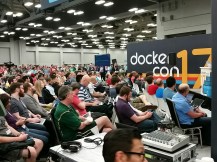 Overall, Dockercon did a good job connecting Docker users with information. In some ways, it was a very “let’s get down to business” conference without the open source collaboration feel of previous events. For enterprise customers and partners, that may be a welcome change.
 highly recommend catching
  Rob Hirschfeld