Our Vision for Crowbar – taking steps towards closed loop operations

When Greg Althaus and I first proposed the project that would become Dell’s Crowbar, we had already learned first-hand that there was a significant gap in both the technologies and the processes for scale operations. Our team at Dell saw that the successful cloud data centers were treating their deployments as integrated systems (now called DevOps) in which configuration of many components where coordinated and orchestrated; however, these approaches feel short of the mark in our opinion. We wanted to create a truly integrated operational environment from the bare metal through the networking up to the applications and out to the operations tooling.

Our ultimate technical nirvana is to achieve closed-loop continuous deployments. We want to see applications that constantly optimize new code, deployment changes, quality, revenue and cost of operations. We could find parts but not a complete adequate foundation for this vision.

The business driver for Crowbar is system thinking around improved time to value and flexibility. While our technical vision is a long-term objective, we see very real short-term ROI. It does not matter if you are writing your own software or deploying applications; the faster you can move that code into production the sooner you get value from innovation. It is clear to us that the most successful technology companies have reorganized around speed to market and adapting to pace of change.

System flexibility & acceleration were key values when lean manufacturing revolution gave Dell a competitive advantage and it has proven even more critical in today’s dynamic technology innovation climate.

We hope that this post helps define a vision for Crowbar beyond the upcoming refactoring. We started the project with the idea that new tools meant we could take operations to a new level.

While that’s a great objective, we’re too pragmatic in delivery to rest on a broad objective. Let’s take a look at Crowbar’s concrete strengths and growth areas.

Key strength areas for Crowbar

  1. Late binding – hardware and network configuration is held until software configuration is known.  This is a huge system concept.
  2. Dynamic and Integrated Networking – means that we treat networking as a 1st class citizen for ops (sort of like software defined networking but integrated into the application)
  3. System Perspective – no Application is an island.  You can’t optimize just the deployment, you need to consider hardware, software, networking and operations all together.
  4. Bootstrapping (bare metal) – while not “rocket science” it takes a lot of careful effort to get this right in a way that is meaningful in a continuous operations environment.
  5. Open Source / Open Development / Modular Design – this problem is simply too complex to solve alone.  We need to get a much broader net of environments and thinking involved.

Continuing Areas of Leadership

  1. Open / Lean / Incremental Architecture – these are core aspects of our approach.  While we have a vision, we also are very open to ways that solve problems faster and more elegantly than we’d expected.
  2. Continuous deployment – we think the release cycles are getting faster and the only way to survive is the build change into the foundation of operations.
  3. Integrated networking – software defined networking is cool, but not enough.  We need to have semantics that link applications, networks and infrastructure together.
  4. Equilivent physical / virtual – we’re not saying that you won’t care if it’s physical or virtual (you should), we think that it should not impact your operations.
  5. Scale / Hybrid – the key element to hybrid is scale and to hybrid is scale.  The missing connection is being able to close the loop.
  6. Closed loop deployment – seeking load management, code quality, profit, and cost of operations as factor in managed operations.


Crowbar 2.0 Objectives: Scalable, Heterogeneous, Flexible and Connected

The seeds for Crowbar 2.0 have been in the 1.x code base for a while and were recently accelerated by SuSE.  With the Dell | Cloudera 4 Hadoop and Essex OpenStack-powered releases behind us, we will now be totally focused bringing these seeds to fruition in the next two months.

Getting the core Crowbar 2.0 changes working is not a major refactoring effort in calendar time; however, it will impact current Crowbar developers by changing improving the programming APIs. The Dell Crowbar team decided to treat this as a focused refactoring effort because several important changes are tightly coupled. We cannot solve them independently without causing a larger disruption.

All of the Crowbar 2.0 changes address issues and concerns raised in the community and are needed to support expanding of our OpenStack and Hadoop application deployments.

Our technical objective for Crowbar 2.0 is to simplify and streamline development efforts as the development and user community grows. We are seeking to:

  1. simplify our use of Chef and eliminate Crowbar requirements in our Opscode Chef recipes.
    1. reduce the initial effort required to leverage Crowbar
    2. opens Crowbar to a broader audience (see Upstreaming)
  2. provide heterogeneous / multiple operating system deployments. This enables:
    1. multiple versions of the same OS running for upgrades
    2. different operating systems operating simultaneously (and deal with heterogeneous packaging issues)
    3. accommodation of no-agent systems like locked systems (e.g.: virtualization hosts) and switches (aka external entities)
    4. UEFI booting in Sledgehammer
  3. strengthen networking abstractions
    1. allow networking configurations to be created dynamically (so that users are not locked into choices made before Crowbar deployment)
    2. better manage connected operations
    3. enable pull-from-source deployments that are ahead of (or forked from) available packages.
  4. improvements in Crowbar’s core database and state machine to enable
    1. larger scale concerns
    2. controlled production migrations and upgrades
  5. other important items
    1. make documentation more coupled to current features and easier to maintain
    2. upgrade to Rails 3 to simplify code base, security and performance
    3. deepen automated test coverage and capabilities

Beyond these great technical targets, we want Crowbar 2.0 is to address barriers to adoption that have been raised by our community, customers and partners. We have been tracking concerns about the learning curve for adding barclamps, complexity of networking configuration and packaging into a single ISO.

We will kick off to community part of this effort with an online review on 7/16 (details).

PS: why a refactoring?

My team at Dell does not take on any refactoring changes lightly because they are disruptive to our community; however, a convergence of requirements has made it necessary to update several core components simultaneously. Specifically, we found that desired changes in networking, operating systems, packaging, configuration management, scale and hardware support all required interlocked changes. We have been bringing many of these changes into the code base in preparation and have reached a point where the next steps require changing Crowbar 1.0 semantics.

We are first and foremost an incremental architecture & lean development team – Crowbar 2.0 will have the smallest footprint needed to begin the transformations that are currently blocking us. There is significant room during and after the refactor for the community to shape Crowbar.

Crowbar Celebrates 1st Anniversary

Nearly a year ago at OSCON 2011, my team at Dell opened sourced “Crowbar, an OpenStack installer.” That first Github commit was a much more limited project than Crowbar today: there was no separation into barclamps, no distinct network configuration, one operating system option and the default passwords were all “openstack.” We simply did not know if our effort would create any interest.

The response to Crowbar has been exciting and humbling. I most appreciate those who looked at Crowbar and saw more than a bare metal installer. They are the ones who recognized that we are trying to solve a bigger problem: it has been too difficult to cope with change in IT operations.

During this year, we have made many changes. Many have been driven by customer, user and partner feedback while others support Dell product delivery needs. Happily, these inputs are well aligned in intent if not always in timing.

  • Introduction of barclamps as modular components
  • Expansion into multiple applications (most notably OpenStack and Apache Hadoop)
  • Multi-Operating System
  • Working in the open (with public commits)
  • Collaborative License Agreements

Dell‘s understanding of open source and open development has made a similar transformation. Crowbar was originally Apache 2 open sourced because we imagined it becoming part of the OpenStack project. While that ambition has faded, the practical benefits of open collaboration have proven to be substantial.

The results from this first year are compelling:

  • For OpenStack Diablo, coordination with the Rackspace Cloud Builder team enabled Crowbar to include the Keystone and Dashboard projects into Dell’s solution
  • For OpenStack Essex, the community focused work we did for the March Essex Hackday are directly linked to our ability to deliver Dell’s OpenStack-Powered Essex solution over two months earlier than originally planned.
  • For Apache Hadoop distributions for 3.x and 4.x with implementation of Cloudera Manager and eco system components.
  • We’ve amassed hundreds of mail subscribers and Github followers
  • Support for multiple releases of RHEL, Centos & Ubuntu including Ubuntu 12.04 while it was still in beta.
  • SuSE does their own port of Crowbar to SuSE with important advances in Crowbar’s install model (from ISO to package).

We stand on the edge of many exciting transformations for Crowbar’s second year. Based on the amount of change from this year, I’m hesitant to make long term predictions. Yet, just within next few months there are significant plans based on Crowbar 2.0 refactor. We have line of site to changes that expand our tool choices, improve networking, add operating systems and become more even production ops capable.

That’s quite a busy year!

OSED OMG: OpenStack Essex Deploy Day!! A day-long four-session two-track International Online Conference

Curious about OpenStack? Know it, but want to tune your Ops chops? JOIN US on Thursday 5/31 (or Friday 6/1 if you are in Asia)!

Already know the event logistics? Skip back to my OSED observations post.

Some important general notes:

  1. We are RECORDING everything and will link posts from the event page.
  2. There is HOMEWORK if you want to get ahead by installing OpenStack yourself.
  3. For last minute updates about the event, I recommend that you join the Crowbar Listserver.

Content Logistics work like this.

  1. Everything will be available ONLINE. We are also coordinating many physical sites as rally points.
  2. Introductory: FOUR 3-hour sessions for people who do not have OpenStack or Crowbar experience. These sessions will show how to install OpenStack using Crowbar, discuss DevOps and showcase companies that are in the OpenStack ecosystem. They are planned to have 2 European slots (afternoon & evening), 3 US slots (morning, afternoon & evening), and 1 Asian slot (morning).
  3. Expert: ON-GOING deep technical sessions for engineers who have OpenStack and/or Crowbar experience. There will be one main screen and voice channel in which we are planning to highlight and discuss these topics in blocks throughout the day. We have a long list of topics to discuss and will maintain an ongoing Google Hangout for each topic. Depending on interest, we will jump back and forth to different hangouts.

Intro/Overview Session Logistics work like this

We’re planning FOUR introductory sessions throughout the day (read ahead?). Each session should be approximately 3 hours. The first hour of the sessions will be about OpenStack Essex and installing it using Crowbar. After some Q&A, we’re going to highlight the OpenStack ecosystem. The schedule for the ecosystem is in flux and will likely shift even during the event.

The Session start times for Overview & Ecosystem content

Region EDT Session 1 Session 2 Session 3 Session 4
Europe (-5) -5 3pm 6pm * *
Americas Eastern 0 10am 1pm 4pm *
Americas Central +1 9am Noon 3pm *
Americas Mtn +2 * 11am 2pm 7pm
Americas West +3 * 10am 1pm 6pm
Asia (Toyko) +10 * * * 6/1 10 am

* There are no planned live venues at this time/region. You are always welcome to join online!

Experts Track Logistics

Note: we expect experts to have already installed OpenStack (see homework page). Ideally, an expert has already setup a build environment.

We have a list of topics (Essex, Quantum, Networking, Pull from Source, Documentation, etc) that we plan to cover on a 30-60 minute rotation.

We will cover the OpenStack Essex deploy at the start of each planned session (9am, Noon, 3pm & 8pm EDT). Before we cover the OpenStack deploy, we’ll spend 10 minutes setting (and posting) the agenda for the next three hours based on attendee input.

Even if we are not talking about a topic on the main channel, we will keep a dialog going on topic specific Google hangouts. The links to the hangouts will be posted with the Expert track agenda.

We need an OpenStack Reference Deployment (My objectives for Deploy Day)

I’m overwhelmed and humbled by the enthusiasm my team at Dell is seeing for the OpenStack Essex Deploy day on 5/31 (or 6/1 for Asia). What started as a day for our engineers to hack on Essex Cookbooks with a few fellow Crowbarians has morphed into an international OpenStack event spanning Europe, Americas & Asia.

If you want to read more about the event, check out my event logistics post (link pending).

I do not apologize for my promotion of the Dell-lead open source Crowbar as the deployment tool for the OpenStack Essex Deploy. For a community to focus on improving deployment tooling, there must be a stable reference infrastructure. Crowbar provides a fast and repeatable multi-node environment with scriptable networking and packaging.

I believe that OpenStack benefits from a repeatable multi-node reference deployment. I’ll go further and state that this requires DevOps tooling to ensure consistency both within and between deployments.

DevStack makes trunk development more canonical between different developers. I hope that Crowbar will help provide a similar experience for operators so that we can truly share deployment experience and troubleshooting. I think it’s already realistic for Crowbar deployments to a repeatable enough deployment that they provide a reference for defect documentation and reproduction.

Said more plainly, it’s a good thing if a lot of us use OpenStack in the same way so that we can help each out.

My team’s choice to accelerate releasing the Crowbar barclamps for OpenStack Essex makes perfect sense if you accept our rationale for creating a community baseline deployment.

Crowbar is Dell-lead, not Dell specific.

One of the reasons that Crowbar is open source and we do our work in the open (yes, you can see our daily development in github) is make it safe for everyone to invest in a shared deployment strategy. We encourage and welcome community participation.

PS: I believe the same is true for any large scale software project. Watch out for similar activity around Apache Hadoop as part of our collaboration with Cloudera!

Quick turn OpenStack Essex on Crowbar (BOOM, now we’re at v1.4!)

Don’t blink if you’ve been watching the Crowbar release roadmap!
My team at Dell is about to turn another release of Crowbar. Version 1.3 released 5/14 (focused on Cloudera Apache Hadoop) and our original schedule showed several sprints of work on OpenStack Essex. Upon evaluation, we believe that the current community developed Essex barclamps are ready now.

The healthy state of the OpenStack Essex deployment is a reflection of 1) the quality of Essex and 2) our early community activity in creating deployments based Essex RC1 and Ubuntu Beta1.

We are planning many improvements to our OpenStack Essex and Crowbar Framework; however, most deployments can proceed without these enhancements.  This also enables participants in the 5/31 OpenStack Essex Deploy Day.

By releasing a core stable Essex reference deployment, we are accelerating field deployments and enabling the OpenStack ecosystem. In terms of previous posts, we are eliminating release interlocks to enable more downstream development. Ultimately, we hope that we are also creating a baseline OpenStack deployment.

We are also reducing the pressure to rush more disruptive Crowbar changes (like enabling high availability, adding multiple operating systems, moving to Rails 3, fewer crowbarisms in cookbooks and streamlining networking). With this foundational Essex release behind us (we call it an MVP), we can work on more depth and breadth of capability in OpenStack.

One small challenge, some of the changes that we’d expected to drop have been postponed slightly. Specifically, markdown based documentation (/docs) and some new UI pages (/network/nodes, /nodes/families). All are already in the product under but not wired into the default UI (basically, a split test).

On the bright side, we did manage to expose 10g networking awareness for barclamps; however, we have not yet refactored to barclamps to leverage the change.

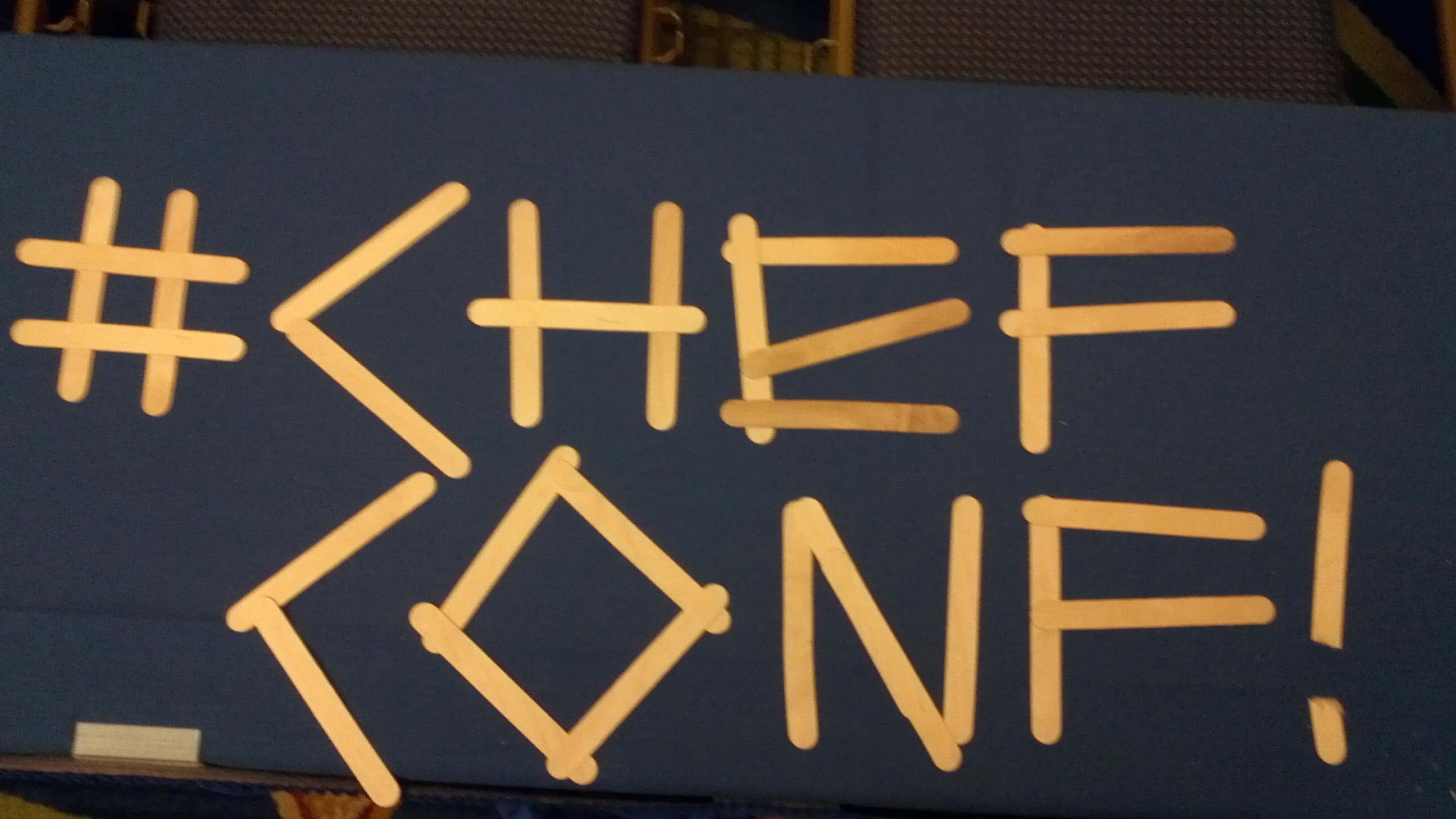
Hungry for Operational Excellence? ChefConf 2012 satisfies!

Since my team at Dell sponsored the inaugural ChefConf, we had the good fortune to get a handful of passes and show up at the event in force.  I was also tapped for a presentation (Chef+Crowbar gets Physical+OpenStack Cloud) and Ignite session (Crowbar history).

I live demo’ed using a single command window with knife to manage both physical and cloud infrastructure.    That’s freaking cool!  (and thanks to Matt Ray for helping to get this working)

It’s no surprise that I’m already a DevOps advocate and Opscode enthusiast, there were aspects of the conference that are worth reiterating:

  • Opscode is part of the cadre of leaders redefining how we operate infrastructure.  The energy is amazing.
  • The acknowledgement of the “snowflake” challenge where all Ops environments are alike, but no two are the same.
  • A tight integration between Operations and lean delivery because waterfall deployments are not sustainable
  • Opscode’s vision is rooted in utility.  You can be successful without design and then excel when you add it.  I find that refreshing.
  • There was a fun, friendly (“hug driven development?!”) and laid back vibe.  This group laughed A LOT.
  • For a first conference, Opscode did a good job with logistics and organization.
  • I saw that the back rooms and hallways are buzzing with activity.  This means that people are making money with the technology.

Crowbar + Chef installs & manages OpenStack Essex (Live Demo, 45 minutes):


Ignite Talk about Dell Crowbar History (5 minutes)

Seven Cloud Success Criteria to consider before you pick a platform

From my desk at Dell, I have a unique perspective.   In addition to a constant stream of deep customer interactions about our many cloud solutions (even going back pre-OpenStack to Joyent & Eucalyptus), I have been an active advocate for OpenStack, involved in many discussions with and about CloudStack and regularly talk shop with Dell’s VIS Creator (our enterprise focused virtualization products) teams.  And, if you go back ten years to 2002, patented the concept of hybrid clouds with Dave McCrory.

Rather than offering opinions in the Cloud v. Cloud fray, I’m suggesting that cloud success means taking a system view.

Platform choice is only part of the decision: operational readiness, application types and organization culture are critical foundations before platform.

Over the last two years at Dell, I found seven points outweigh customers’ choice of platform.

  1. Running clouds requires building operational expertise both at the application and infrastructure layers.  CloudOps is real.
  2. Application architectures matter for cloud deployment because they can redefine the SLA requirements and API expectations
  3. Development community and collaboration is a significant value because sharing around open operations offers significant returns.
  4. We need to build an accelerating pace of innovation into our core operating principles
  5. There are still significant technology gaps to fill (networking & storage) and we will discover new gaps as we go
  6. We can no longer discuss public and private clouds as distinct concepts.   True hybrid clouds are not here yet, but everyone can already see their massive shadow.
  7. There is always more than one right technological answer.  Avoid analysis paralysis by making incrementally correct decisions (committing, moving forward, learning and then re-evaluating).

Four alternatives to Process Interlock

Note: This is the third and final part of 3 part series about the “process interlock dilemma.”

In post 1, I’ve spelled out how evil Process Interlock causes well intentioned managers to add schedule risk and opportunity cost even as they appear to be doing the right thing. In post 2, I offered some alternative outcomes when process interlock is avoided. In this post, I attempt to provide alternatives to the allure of process interlock. We must have substitute interlocks types to replace our de facto standard because there are strong behavioral and traditional reasons to keep broken processes. In other words, process Interlock feels good because it gives you the illusion that your solution is needed and vital to other projects.

If your product is vital to another team then they should be able to leverage what you have, not what you’re planning to have.

We should focus on delivered code instead of future promises. I am not saying that roadmaps and projections are bad – I think they are essential. I am saying that roadmaps should be viewed as potential not as promises.

  1. No future commits (No interlock)

    The simplest way to operate without any process interlock is to never depend on other groups for future deliveries. This approach is best for projects that need to move quickly and have no tolerance for schedule risk. This means that your project is constrained to use the “as delivered” work product from all external groups. Depending on needs, you may further refine this as only rely on stable and released work.

    For example, OpenStack Cactus relied on features that were available in the interim 10.10 Ubuntu version. This allowed the project to advance faster, but also limited support because the OS this version was not a long term support (LTS) release.

  2. Smaller delivery steps (MVP interlock)

    Sometimes a new project really needs emerging capabilities from another project. In those cases, the best strategy is to identify a minimum viable feature set (or “product”) that needs to be delivered from the other project. The MVP needs to be a true minimum feature set – one that’s just enough to prove that the integration will work. Once the MVP has been proven, a much clearer understanding of the requirements will help determine the required amount of interlock. My objective with an MVP interlock is to find the true requirements because IMHO many integrations are significantly over specified.

    For example, the OpenStack Quantum project (really, any incubated OpenStack projects) focuses on delivering the core functionality first so that the ecosystem and other projects can start using it as soon as possible.

  3. Collaborative development (Shared interlock)

    A collaborative interlock is very productive when the need for integration is truly deep and complex. In this scenario, the teams share membership or code bases so that the needs of each team is represented in real time. This type of transparency exposes real requirements and schedule risk very quickly. It also allows dependent teams to contribute resources that accelerate delivery.

    For example, our Crowbar OpenStack team used this type of interlock with the Rackspace OpenStack team to ensure that we could get Diablo code delivered and deployed as fast as possible.

  4. Collaborative requirements (Fractal interlock)

    If you can’t collaborate or negotiate an MVP then you’re forced into working at the requirements level instead of development collaboration. You can think of this as a sprint-roadmap fast follow strategy because the interlocked teams are mutually evolving design requirements.

    I call this approach Fractal because you start at big concepts (road maps) and drill down to more and more detail (sprints) as the monitored project progresses. In this model, you interlock on a general capability initially and then work to refine the delivery as you learn more. The goal is to avoid starting delays or injecting false requirements that slow delivery.

    For example, if you had a product that required power from hamsters running in wheels then you’d start saying that you needed a small fast running animal. Over the next few sprints, you’d likely refine that down to four legged mammals and then to short tailed high energy rodents. Issues like nocturnal or bites operators could be addressed by the Hamster team or by the Wheel team as the issues arose. It could turn out that the right target (a red bull sipping gecko) surfaces during short tail rodent design review. My point is that you can avoid interlocks by allowing scope to evolve.

Breaking Process Interlocks delivers significant ROI

I have been trying to untangle both the cause and solution of process interlock for a long time. My team at Dell has an interlock-averse culture and it accelerates our work delivery. I write about this topic because I have real world experience that eliminating process interlocks increases

  1. team velocity
  2. collaboration
  3. quality
  4. return on investment

These are significant values that justify adoption of these non-interlock approachs; however, I have a more selfish motivation.

We want to work with other teams that are interlock-averse because the impacts multiply. Our team is slowed when others attempt to process interlock and accelerated when we are approached in the ways I list above.

I suspect that this topic deserves a book rather than a three part blog series and, perhaps, I will ultimately create one. Until then, I welcome your comments, suggestions and war stories.

How Good beats Great and avoids Process Interlock failure

Note: This is part 2 of a 3 part series about the “process interlock dilemma.”

This post addresses how to solve the Process Interlock dilemma I identified in part 1. It is critical to understand the failure of Process Interlock comes because the interlocks turn assumptions into facts. We must accept that any forward looking schedule is a guess. If your guesses are accurate then your schedule should be accurate. That type of insight and $5 will get you a Venti Carmel Frappuccino.

The problem of predicting the future and promising to deliver on that schedule results in one of two poor outcomes.

  1. The better poor outcome is that you are accurate and committed to a schedule.

    To keep on the schedule, you must focus on the committed deliverables. While this sounds ideal, there an opportunity cost to staying focused. Opportunity cost means that while your team is busy delivering on schedule, it is not doing work to pursue other opportunities. In a perfect world, your team picked the most profitable option before it committed the schedule. If you don’t live in a perfect world then it’s likely that while you are working on deliver you’ve learned about another opportunity. You may make your schedule but miss a more lucrative opportunity.

  2. The worse poor outcome is that you are not accurate and committed to a schedule.

    In that case, you miss both the opportunity you thought you had and the ones that you could not pursue while staying dedicated to your planning assumptions.

Let’s go back to our G.Mordler example and look at some better outcomes:

The “we’re going to try outcome.”

The Trans Ma’am team, Alpha, Omega and the supplier all get together and realize that the current design is not shippable; however, they realize that each team’s roadmaps converge within target time. To reduce interlocks, Omega takes Alpha in the low power form and begins integration. During integration, Omega identifies that Alpha can produce sufficient power for short periods of time travel but causes the exhaust vent of the power module to melt. Alpha determines that a change to the cooling system will address the problem. In consulting with their supplier, Alpha asks them to stop design on the new supply and adjust the current design as needed. The resulting time drive does not meet GM’s initial design for 4 hour time jumps, but is sufficient for lead footed mommies to retroactively avoid speeding tickets. GM decides it can still market the limited design.

The “we’re not ready outcome.

The Trans Ma’am team, Alpha and Omega all get together and realize that the current design is not shippable in their current state. While they cannot commit each realizes that there is a different market for their products: Alpha pursues dog poop power generation for high rises condo towers (aka brown energy) and Omega finds military applications for time travel nuclear submarines. In the experience gained from delivering products to these markets, Alpha improves power delivery by 20% and Omega improves efficiency by 20%. These modest mutual improvements allow Alpha to meet Omega’s requirement. While the combined product is too late for the target date, GM is able to incorporate the design into next design cycle.

While neither outcome delivers the desired feature at the original schedule, both provide better ROI for the company. One of the most common problems with process interlock is that we lost sight of ROI in our desire to meet an impractical objective.

Process interlock is a classic case of point optimization driving down system-wide performance.

If you’re interested in this effect, I recommend reading Eli Goldratt’s The Goal.

In the part, I’ve discussed some ways to escape from Process Interlock. I’ll talk about four alternative approaches in part 3 (to be published 3/16).