Final OpenStack Voting Push, we’re still short [update: we made it]

20121014-132246.jpgThere are still a LOT (more than 75%) of OpenStack community members who have not voted.  If you are in that number, please cast your ballot.

[NOTE 1/16: We made it!  OpenStack reach quorum at 7pm on Thursday – 20 hours before the polls close]

Have you voted and tired of these messages?  Your bylaws vote (yes or no) means nothing if we do not reach quorum.  So, contact your OpenStack friends and make sure they voted.

If you think you should have gotten a ballot, but can’t find it.  Please contact ‘secretary@openstack.org’ to check it out.

While inactive members have been removed from the system, there are some people whose ballots did not arrive (like mine) and had to ask for it to be resent.

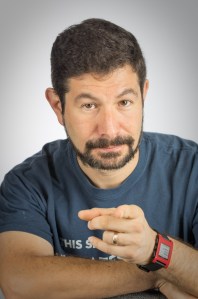
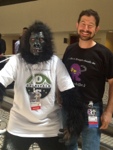
PS: Yes, that is Niki Acosta with me in Boston.


OpenStack PSA: Individual members we need more help – Please Vote!

1/17 Update: We did it!  We reached quorum and approved all the changes!  Also, I am honored to have been re-elected to the Board.  Thank you for the support.

I saw the latest report and we’ve still got a LONG WAY TO GO to get to the quorum that we need.  Don’t let your co-worker or co-contributor be the one missing vote!

Note: If you thing you should have gotten a ballot email but did not.  Contact the OpenStack Election Secretary for assistance.  OpenStack voting is via YOUR PERSONALIZED EMAIL only – you cannot use someone else’s ballot.

Here’s the official request that we’ve been forwarding in the community

OpenStack Individual Members we need your help – Please Vote!

Untitled drawingIncluded on the upcoming individual elections ballot is set of proposed bylaw changes [note: I am also seeking re-election]. To be enacted, these changes require approval by the individual members. At least 25% of the Individual Members must participate in this election in order for the vote to take effect which is why we are reaching out to you. The election will start Monday January 12, 2015 and run thru Friday January 16, 2015.

The unprecedented growth, community size and active nature of the OpenStack community have precipitated the need for OpenStack Bylaw updates. The updates will enable our community to adapt to our continued rapid growth, change and diversity, while reflecting our success and market leadership. Although the proposed changes only effect a small set of verbiage in the bylaws, the changes eliminate some of the hard coded values and naive initial assumptions that found their way into the bylaws when they were initially created in 2013. Those initial assumptions did not anticipate that by 2015 we would have such a large, active community of over 17,000 individual members, over 430 corporate members, and a large diverse set of OpenStack based products and services.

Through many months of community iterative discussion and debate, the DefCore team and board have unanimously accepted a set of changes that are now placed before you for your approval. The changes replace the original hard coded “core” definition with a process for determining the software elements required for use of the OpenStack commercial trademark. Processes which will also account for future revisions and determinations for Core and Trademark Policy.

Note: Another change sets the quorum level at a more reasonable 10%, so these PSAs should not be required in the future.

Complete details on the proposed changes are located at:
https://wiki.openstack.org/wiki/Governance/Foundation/2014ProposedBylawsAmendment

Complete details on the 2015 Board Election are located at:
http://www.openstack.org/election/2015-individual-director-election/

Online Meetup Today (1/13): Build a rock-solid foundation under your OpenStack cloud

Reminder: Online meetup w/ Crowbar + OpenStack DEMO TODAY

HFoundation Rawere’s the notice from the site (with my added Picture)

Building cloud infrastructure requires a rock-solid foundation. 

In this hour, Rob Hirschfeld will demo automated tooling, specifically OpenCrowbar, to prepare and integrate physical infrastructure to ready state and then use PackStack to install OpenStack.


The OpenCrowbar project started in 2011 as an OpenStack installer and had grown into a general purpose provisioning and infrastructure orchestration framework that works in parallel with multiple hardware vendors, operating systems and devops tools.  These tools create a fast, durable and repeatable environment to install OpenStack, Ceph, Kubernetes, Hadoop or other scale platforms.


Rob will show off the latest features and discuss key concepts from the Crowbar operational model including Ready State, Functional Operations and Late Binding. These concepts, built into Crowbar, can be applied generally to make your operations more robust and scalable.

Voting time for OpenStack! Your help needed to push Bylaws & DefCore forward.

1/17 Update: We did it!  We reached quorum and approved all the changes!  Also, I am honored to have been re-elected to the Board.  Thank you for the support!

What does OpenStack mean to you?

Vote Now!To me, it’s more than infrastructure software: it’s a community of people and companies working together in revolutionary way.  To make that work, we need people who invest time to bring together diverse interests and perspectives.

I have worked hard to provide neutral and inclusive view points on the OpenStack board.  The critical initiatives I focused on [DefCore, Gold Membership, Product Managers] need focused leadership to progress.  I have proven my commitment to those efforts and would be honored to be re-elected [see my platforms for 2012, 2013 & 2014].

But more important than voting for me, is that we reach a 25% quorum!

Why?  Because there are critical changes to the OpenStack bylaws on the ballot.

What type of changes?  Basically, the changes allow OpenStack governance to keep up with the pace of our evolution.    These are pragmatic changes that have been thoroughly discussed in the community.  They enable OpenStack to:

  • set a smarter quorum – past elections only achieved half the required turn out to changes the bylaws
  • enable the DefCore process – current core is defined as simply using code in select projects.
  • improve governance of required committees
  • tweak release language to match current practice,

To hit 25%, we need everyone, not just the typical evangelists to encourage voting.  We need you to help spread the word and get others to do the same.

I’m counting on you, please help. 

Research showing that Short Lived Servers (“mayflies”) create efficiency at scale [DATA REQUESTED]

Last summer, Josh McKenty and I extended the puppies and cattle metaphor to limited life cattle we called “mayflies.” It was an attempt to help drive the cattle mindset (I think of it as social engineering, or maybe PsychOps) by forcing churn. I’ve come to think of it a step in between cattle and chaos monkeys (see Adrian Cockcroft).

While our thoughts were on mainly ops patterns, I’ve heard that there could be a real operational benefit from encouraging this behavior. The increased turn over in the environment improves scheduler optimization, planned load drains and coping with platform/environment migration.

Now we have a chance to quantify this benefit: a college student (disclosure: he’s my son) has created a data center emulation to see if Mayflies help with utilization. His model appears to work.

Now, he needs some real world data, here’s his request for assistance [note: he needs data by 1/20 to be included in this term]:

Hello!

I am Alexander Hirschfeld, a freshman at Rose-Hulman Institute of Technology. I am working on an independent study about Mayflies, a new idea in virtual machine management in cloud computing. Part of this management is load balancing and resource allocation for virtual machines across a collection of servers. The emulation that I am working on needs a realistic set of data to be the most accurate when modeling the results of using the methods outlined by the theory of mayflies.

Mayflies are an extension of the puppies verses cattle approach to machines, they are the extreme version of cattle as they have a known limited lifespan, such as 7 days. This requires the users of the cloud to build inherently more automated and fault-resistant applications. If you could send me a collection of the requests for new virtual machines(per standard unit of time and their requested specs/size), as well as an average lifetime for the virtual machines (or a graph or list of designated/estimated life times), and a basic summary of the collection of servers running the virtual machines(number, ram, cores), I would be better able to understand how Mayflies can affect a cloud.

Thanks,
Alexander Hirschfeld, twitter: @d-qoi

Needless to say, I’m really excited about the progress on demonstrating some the impact of this practice and am looking forward to posting about his results in the near future.

If you post in the comments, I will make sure you are connected to Alex.
OpenCrowbar v2.1 Video Tour from Metal to OpenStack and beyond

With the OpenCrowbar v2.1 out, I’ve been asked to update the video library of Crowbar demos.  Since a complete tour is about 3 hours, I decided to cut it down into focused demos that would allow you to start at an area of interest and work backwards.

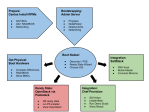
I’ve linked all the videos below by title.  Here’s a visual table on contents:

Video Progression

Crowbar v2.1 demo: Visual Table of Contents [click for playlist]

The heart of the demo series is the Annealer and Ready State (video #3).

  1. Prepare Environment
  2. Bootstrap Crowbar
  3. Add Nodes ♥ Ready State (good starting point)
  4. Boot Hardware
  5. Install OpenStack (Juno using PackStack on CentOS 7)
  6. Integrate with Chef & Chef Provisioning
  7. Integrate with SaltStack

I’ve tried to do some post-production so limit dead air and focus on key areas.  As always, I value content over production values so feedback is very welcome!

10 pounds of OpenStack cloud in a 5 pound bag? Do we need a bigger bag?

Yesterday, I posted about cloud distruptors that are pushing the boundaries of cloud. The same forces pull at OpenStack where we are working to balance between including all aspects of running workloads and focusing on a stable foundation.

Note: I am seeking re-election to the 2015 OpenStack Board.  Voting starts 1/12.

For weeks, I’ve been reading and listening to people inside and outside the community.  There is considerable angst about the direction of OpenStack.  We need to be honest and positive about challenges without simply throwing stones in our hall of mirrors.

Closing 2014, OpenStack has gotten very big, very fast.  We’ve exploded scope, contributions and commercial participants.  Unfortunately, our process infrastructure (especially the governance by-laws) simply have not kept pace.  It’s not a matter of scaling processes we’ve got; many of the challenges created by growth require new approaches and thinking (Thierry’s post).

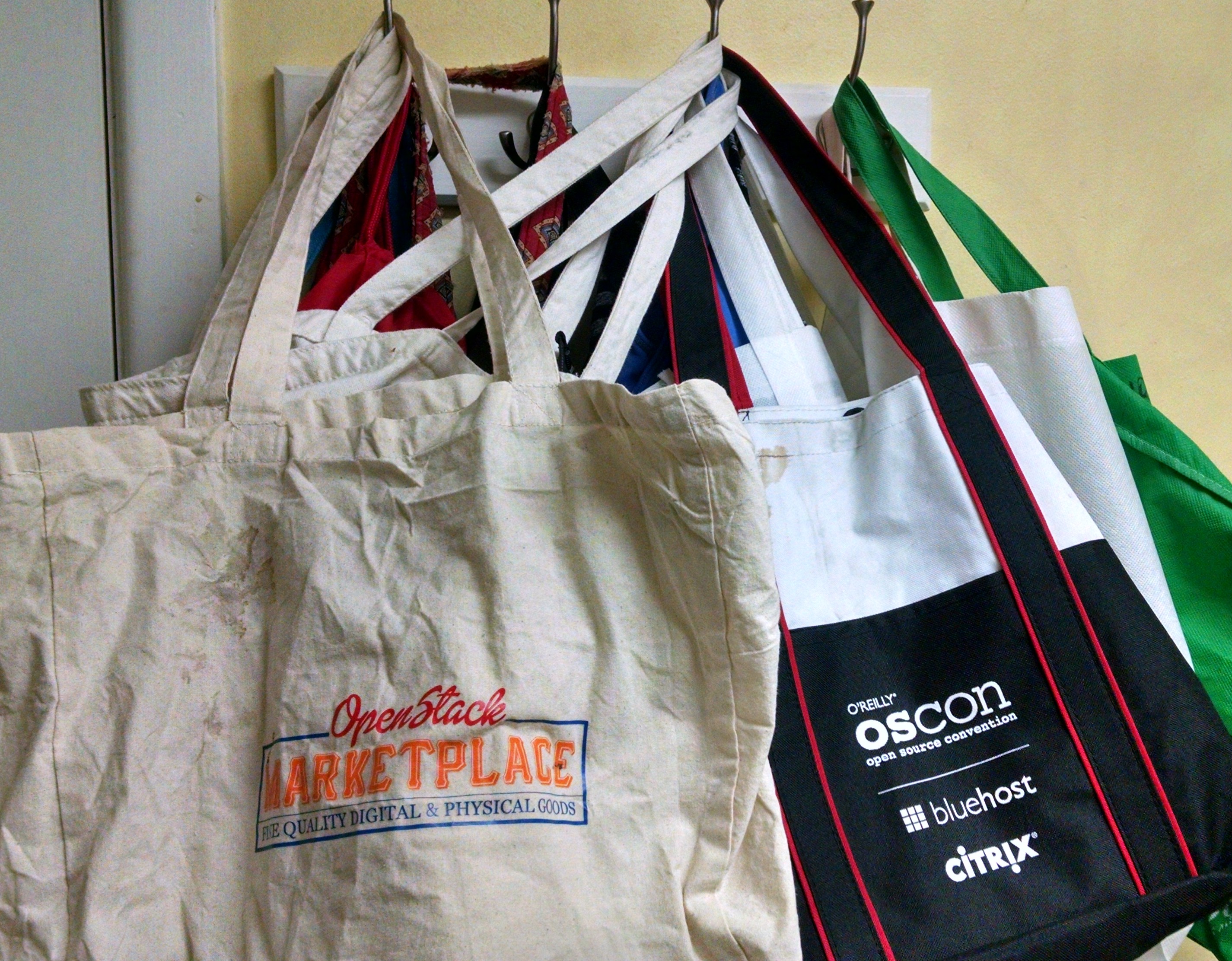
OpenStack BagIn 2015, we’re trying to put 10 pounds of OpenStack in a 5 pound bag.  That means we have to either a) shed 5 pounds or b) get a bigger bag.  In classic OpenStack style, we’re sort of doing both: identifying a foundational base while expanding to allow more subprojects.

To my ear, most users, operators and business people would like to see the focus being on the getting the integrated release scope solid.  So, in spirit of finding 5 pounds to shave, I’ve got five “shovel ready” items that should help:

  1. Prioritizing stability as our #1 feature.  Accomplishing this will require across the broad alignment of the vendor’s product managers to hold back on their individual priorities in favor of community.  We’ve started this effort but it’s going to take time to create the collaboration needed.
  2. Sending a clear signal about the required baseline for OpenStack.  That’s the purpose of DefCore and should be felt as we work on the Icehouse and Juno definitions.
  3. Alignment of the Board DefCore project with Technical Committee’s Levels/Big Tent initiative.  By design, these efforts interconnect.  We need to make sure the work is coordinated so that we send a clearly aligned message to the technical, operator, vendor and user communities.
  4. Accelerate changes from single node gate to something that’s either a) more services focused or b) multi-node.  OpenStack’s scale of community development  requires automation to validate the new contributions do not harm the existing code base (the gate).  The current single-node gate does not reflect the multi-node environments that users target with the code.  While it’s technically challenging to address this mismatch, it’s also essential so we ensure that we’re able to validate multi-node features.
  5. Continue to reduce drama in the open source processes.   OpenStack is infrastructure software that should enable an exciting and dynamic next generation of IT.  I hear people talk about CloudStack as “it’s not as exciting or active a community but their stuff just works.”  That’s what enterprises and operators want.  Drama is great for grabbing headings but not so great for building solid infrastructure.

What is the downside to OpenStack if we cannot accomplish these changes?  Forks.

I already see a clear pattern where vendors are creating their own distros (which are basically shallow forks) to preserve their own delivery cycle.  OpenStack’s success is tied to its utility for the customers of vendors who fund the contributors.  When the cost of being part of the community outweighs the value, those shallow forks may become true independent products.

In the case of potential forks, they allow vendors to create their own bag and pick how many pounds of cloud they want to carry.  It’s our job as a community in 2015 to make sure that we’ve reduced that temptation.

1/9/15 Note: Here’s the original analogy image used for this post

2015, the year cloud died. Meet the seven riders of the cloudocalypse

i can hazAfter writing pages of notes about the impact of Docker, microservice architectures, mainstreaming of Ops Automation, software defined networking, exponential data growth and the explosion of alternative hardware architecture, I realized that it all boils down to the death of cloud as we know it.

OK, we’re not killing cloud per se this year.  It’s more that we’ve put 10 pounds of cloud into a 5 pound bag so it’s just not working in 2015 to call it cloud.

Cloud was happily misunderstood back in 2012 as virtualized infrastructure wrapped in an API beside some platform services (like object storage).

That illusion will be shattered in 2015 as we fully digest the extent of the beautiful and complex mess that we’ve created in the search for better scale economics and faster delivery pipelines.  2015 is going to cause a lot of indigestion for CIOs, analysts and wandering technology executives.  No one can pick the winners with Decisive Leadership™ alone because there are simply too many possible right ways to solve problems.

Here’s my list of the seven cloud disrupting technologies and frameworks that will gain even greater momentum in 2015:

  1. Docker – I think that Docker is the face of a larger disruption around containers and packaging.  I’m sure Docker is not the thing alone.  There are a fleet of related technologies and Docker replacements; however, there’s no doubt that it’s leading a timely rethinking of application life-cycle delivery.
  2. New languages and frameworks – it’s not just the rapid maturity of Node.js and Go, but the frameworks and services that we’re building (like Cloud Foundry or Apache Spark) that change the way we use traditional languages.
  3. Microservice architectures – this is more than containers, it’s really Functional Programming for Ops (aka FuncOps) that’s a new generation of service oriented architecture that is being empowered by container orchestration systems (like Brooklyn or Fleet).  Using microservices well seems to redefine how we use traditional cloud.
  4. Mainstreaming of Ops Automation – We’re past “if DevOps” and into the how. Ops automation, not cloud, is the real puppies vs cattle battle ground.  As IT creates automation to better use clouds, we create application portability that makes cloud disappear.  This freedom translates into new choices (like PaaS, containers or hardware) for operators.
  5. Software defined networking – SDN means different things but the impacts are all the same: we are automating networking and integrating it into our deployments.  The days of networking and compute silos are ending and that’s going to change how we think about cloud and the supporting infrastructure.
  6. Exponential data growth – you cannot build applications or infrastructure without considering how your storage needs will grow as we absorb more data streams and internet of things sources.
  7. Explosion of alternative hardware architecture – In 2010, infrastructure was basically pizza box or blade from a handful of vendors.  Today, I’m seeing a rising tide of alternatives architectures including ARM, Converged and Storage focused from an increasing cadre of sources including vendors sharing open designs (OCP).  With improved automation, these new “non-cloud” options become part of the dynamic infrastructure spectrum.

Today these seven items create complexity and confusion as we work to balance the new concepts and technologies.  I can see a path forward that redefines IT to be both more flexible and dynamic while also being stable and performing.

Want more 2015 predictions?  Here’s my OpenStack EOY post about limiting/expanding the project scope.

Nextcast #14 Transcription on OpenStack & Crowbar > “we can’t hand out trophies to everyone”

Last week, I was a guest on the NextCast OpenStack podcast hosted by Niki Acosta (EMC) [Jeff Dickey could not join].   I’ve taken some time to transcribe highlights.

We had a great discussion nextcastabout OpenStack, Ops and Crowbar.  I appreciate Niki’s insightful questions and an opportunity to share my opinions.  I feel that we covered years of material in just 1 hour and I appreciate the opportunity to appear on the podcast.
Video from full post (youtube) and the audio for download.

Plus, a FULL TRANSCRIPT!  Here’s my Next Cast #14 Short Transcripton

The objective of this transcription is to help navigate the recording, not replace it.  I did not provide complete context for remarks.

  • 04:30 Birth of Crowbar (to address Ops battle scars)
  • 08:00 The need for repeatable Ready State baseline to help community work together
  • 10:30 Should hardware matter in OpenStack? It has to, details and topology matters not vendor.
  • 11:20 OpenCompute – people are trying to open source hardware design
  • 11:50 When you are dealing with hardware, it matters. You have to get it right.
  • 12:40 Customers are hardware heterogeneous by design (and for ops tooling). Crowbar is neutral territory
  • 14:50 It’s not worth telling people they are wrong, because they are not. There are a lot of right ways to install OpenStack
  • 16:10 Sometimes people make expensive choices because it’s what they are comfortable with and it’s not helpful for me to them they a wrong – they are not.
  • 16:30 You get into a weird corner if you don’t tell anyone no. And an equally weird corner if you tell everyone yes.
  • 18:00 Aspirations of having an interoperable cloud was much harder than the actual work to build it
  • 18:30 Community want to say yes, “bring your code” but to operators that’s very frustrating because they want to be able to make substitutions
  • 19:30 Thinking that if something is included then it’s required – that’s not clear
  • 19:50 Interlock Dilemma [see my back reference]
  • 20:10 Orwell Animal Farm reference – “all animals equal but pigs are more equal”
  • 22:20 Rob defines DefCore, it’s not big and scary
  • 22:35 DefCore is about commercial use, not running the technical project
  • 23:35 OpenStack had to make money for the companies are paying for the developers who participate… they need to see ROI
  • 24:00 OpenStack is an infrastructure project, stability is the #1 feature
  • 24:40 You have to give a reason why you are saying no and a path to yes
  • 25:00 DefCore is test driven: quantitative results
  • 26:15 Balance between whole project and parts – examples are Swiftstack (wants Object only) and Dreamhost (wants Compute only)
  • 27:00 DefCore created core components vs platform levels
  • 27:30 No vendor has said they can implement DefCore without some effort
  • 28:10 We have outlets for vendors who do not want to implement the process
  • 28:30 The Board is not in a position to make technical call about what’s in, we had to build a process for community input
  • 29:10 We had to define something that could say, “this is it and we have to move on”
  • 29:50 What we want is for people to start with the core and then bring in the other projects. We want to know what people are adding so we can make that core in time
  • 30:10 This is not a recommendation is a base.
  • 30:35 OpenStack is a bubble – does not help if we just get together to pad each other on the back, we want to have a thriving ecosystem
  • 31:15 Question: “have vendors been selfish”
  • 31:35 Rob rephrased as “does OpenStack have a tragedy of the commons” problem
  • 32:30 We need to make sure that everyone is contributing back upstream
  • 32:50 Benefit of a Benevolent Dictator is that they can block features unless community needs are met
  • 33:10 We have NOT made it clear where companies should be contributing to the community. We are not doing a good job directing community efforts
  • 33:45 Hidden Influencers becomes OpenStack Product group
  • 34:55 Hidden Influencers were not connecting at the summit in a public way (like developers were)
  • 35:20 Developers could not really make big commitments of their time without the buy in from their managers (product and line)
  • 35:50 Subtle selfishness – focusing on your own features can disrupt the whole release where things would flow better if they helped others
  • 37:40 Rob was concerned that there was a lot of drift between developers and company’s product descriptions
  • 38:20 BYLAWS CHANGES – vote! here’s why we need to change
  • 38:50 Having whole projects designated as core sucks – code in core should be slower and less changing. Innovation at the core will break interoperability
  • 39:40 Hoping that core will help product managers understand where they are using the standard and adding values
  • 41:10 All babies are ugly > with core, that’s good. We are looking for the grown ups who can do work and deliver value. Babies are things you nurture and help grow because they have potential.
  • 42:00 We undermine our credibility in the community when we talk about projects that are babies as if they were ready.
  • 43:15 DefCore’s job was to help pick projects. If everyone is core then we look like a youth soccer team where everyone is getting a trophy
  • 44:30 Question: “What do you tell to users to instill confidence in OpenStack”
  • 44:50 first thing: focus on operations and automation. Table stakes (for any cloud) is getting your deployments automated. Puppies vs Cattle.
  • 45:25 People who were successful with early OpenStack were using automated deployments against the APIs.
  • 46:00 DevOps is a fundamental part of cloud computing – if you’re hand-built and not automated then you are old school IT.
  • 46:40 Niki references Gartner “Bimodal IT” [excellent reference, go read it!]
  • 47:20 VMWare is a great crutch for OpenStack. We can use VMWare for the puppies.
  • 47:45 OpenStack is not going to run on every servers (perhaps that’s heresy) but it does not make sense in every workload
  • 48:15 One size does not fit all – we need to be good at what we’re good at
  • 48:30 OpenStack needs to focus on doing something really well. That means helping people who want to bring automated workloads into the cloud
  • 49:20 Core was about sending a signal about what’s ready and people can rely on
  • 49:45 Back in 2011, I was saying OpenStack was ready for people who would make the operational investment
  • 50:30 We use Crowbar because it makes it easier to do automated deployments for infrastructure like Hadoop and Ceph where you want access to the physical media
  • 51:00 We should be encouraging people to use OpenStack for its use cases
  • 51:30 Existential question for OpenStack: are we a suite or product. The community is split here
  • 51:30 In comparing with Amazon, does OpenStack have to implement it or build an ecosystem to compete
  • 53:00 As soon as you make something THE OpenStack project (like Heat) you are sending a message that the alternates are not welcome
  • 54:30 OpenStack ends up in a trap if we pick a single project and make it the way that we are going do something. New implementations are going to surface from WITHIN the projects and we need to ready for that.
  • 55:15 new implementations are coming, we have to be ready for that. We can make ourselves vulnerable to splitting if we do not prepare.
  • 56:00 API vs Implementation? This is something that splits the community. Ultimately we to be an API spec but we are not ready for that. We have a lot of work to do first using the same code base.
  • 56:50 DefCore has taken a balanced approach using our diversity as a strength
  • 57:20 Bylaws did not allow for enough flexibility for what is core
  • 59:00 We need voters for the quorum!
  • 59:30 Rob recommended Rocky Grober (Huawei) and Shamail Tahir (EMC) for future shows

OpenCrowbar 2.1 Released Last Week with new integrations and support

Crowbar 2.1 Release brings commercial support, hardware configs, chef and saltstack

OpenCrowbarLast week, the Crowbar community completed the OpenCrowbar “Broom” release and officially designed it as v2.1.  This release represents 8 months of hardening of the core orchestration engine (including automated testing), the addition of true hardware support (in the optional hardware workload) and preliminary advanced integration with Chef and Saltstack.

Core Features:

  • RAID – Automatically set RAID configuration parameters depending on how the system will be used.
    • Support for LSI controllers
    • Single and Dual RAID configuration
  • BIOS – Automatically set BIOS settings depending on how the system will be used.
    • Configuration setting for Dell PE series systems
  • Out of Band Support–  Configure and manage systems via their OOB interface
    • Support for IPMI and WSMan
  • RPM Installation (it riseth again!) – Install OpenCrowbar via a standard RPM instead of a Docker container

Integrations:

  • SaltStack integration – OpenCrowbar can install SaltStack as a configuration tool to take over after “Ready State”
  • Chef Provisioning (was Chef Metal) – OpenCrowbar driver allows Chef to build clusters on bare metal using the Crowbar API.

Infrastructure:

  • Automated smoke test and code coverage analysis for all pull requests.

And…v2.1 is the first release with commercial support!

RackN (rackn.com) offers consulting and support for the OpenCrowbar v2.1 release.  The company was started by Crowbar founders Greg Althaus, Scott Jensen, Dan Choquette, and myself specifically to productize and extend Crowbar.

Want to try it out?