Building Crowbar post-modularization (15 minute how-to video)

Note: I’m putting build ISOs and Sledgehammer TARs on crowbar.zehicle.com if you don’t want to follow these steps then download the ISO. We are updating the ISO daily, so don’t assume that you have that latest!

To build Crowbar, you need a Linux machine and access to the internet. The video shows how you can use an Ubuntu 10.10 Rackspace Cloud Server.  We build Crowbar inside our firewall on our PCs too. No matter how you do it, Crowbar is full of fuzzily delicious cloud bits.

For up-to-date instructions, see the Crowbar wiki Build ISO page.


So you want to create a Crowbar barclamp? Here’s what you have to know…

My team at Dell has created many barclamps to support OpenStack and Hadoop. One major objective of our recent modularization refactoring was to make it easier to the community to contribute barclamps. The Crowbar CloudOps approach is to build up a full cloud deployment using layers. So each barclamp represents a component of the overall deployment.

Note 9/21/12: Added Video Post showing the steps below.

Note 9/7/13: Reference to Crowbar Docs.

A barclamp is a deployment module that is imported from its own code repository into the Crowbar framework. A barclamp cannot operate without Crowbar, but you do not have to create a unique build of Crowbar in order to create a barclamp.

The first thing to know about barclamps is that most of the work (80%!) is building your Chef cookbooks. If you don’t have a cookbook that deploys your application then stop here and work on that first.

The second thing to know about barclamps is that there are a lot of them that you can study for examples. Check out the Glance barclamp if you have a single server deployment, Nagios if you have a service that needs to be integrated into every node, Nova if you have a complex multi-component system and Provisioner if you want to impact core Crowbar functionality.

We’ve done a lot of work to make it easy to create and install a stub barclamp. Our experience is that building a barclamp is a highly iterative exercise with a lot of testing. Luckily, Crowbar’s primary mission is to help you brush, rinse and repeat. From there, you can customize and extend your barclamp to deploy your application’s full untamed glory.

Before you try to create a new barclamp, you must install Crowbar.

Creating a barclamp

The following steps use the barclamp_model that included under /dell/opt and is described below.

  1. Figure out the name of your barclamp. I’m naming our example “foo barclamp”
    1. Barclamps must have unique names.
    2. Do not use spaces or hyphens.
  2. From the Crowbar server, become the super admin: sudo -i
  3. Create a directory for your barclamp: mkdir /barclamps
  4. Run the barclamp create script: /opt/dell/bin/barclamp_create.rb foo “Zehicle” /barclamps
    1. “foo” is our barclamp name [required]
    2. “Zehicle” is my company name for the copyright information [default is Dell]
    3. “/barclamps” is the path where we are putting the barclamp [default is /opt/dell/barclamps]
    4. Result will be a populated barclamp. In this example: /barclamps/foo

That’s it! If you want to plan ahead then you could use an initialized git repo as the target.

Reminder: In building your barclamp, you’ll need to learn about Chef, how Crowbar extends cookbooks and how barclamps interact. That’s beyond the scope of this post.

Importing a barclamp

Once you created a barclamp, you can import the barclamp into Crowbar & Chef.

Assuming that you already created the foo barclamp in /barclamps, here are the steps:

  1. From the Crowbar server, become the super admin: sudo –i
  2. Run the barclamp install script: /opt/dell/bin/barclamp_install /barclamps/foo
    1. “/barclamps/foo” is the path to your barclamp. If could be anything!
    2. The core barclamps are in /opt/dell/barclamps.
    3. In a vm, you could mount a shared folder to access the barclamp (e.g.: /mnt/hgfs/barclamps)

Your barclamp should now show up in the Crowbar UI! You can also see it in Chef under the Crowbar databag.

While barclamps are generally safe to install multiple times, you can uninstall a barclamp using “barclamp_uninstall.rb /path/to/barclamp”

Barclamp layout

A barclamp has the following core components:

  • crowbar.yml configuration file (documented below)
  • README.txt file (optional, recommended)
  • chef directory containing
    • Cookbooks directory with Chef cookbooks
    • Data_bags directory with Crowbar configuration files
    • Roles directory with Chef roles used by the cookbooks and data_bags
  • crowbar_framework directory
    • app directory with Crowbar model, controller, and view code
    • other optional directories to add components needed by the UI such as images

The barclamp_model has a functional layout that covers most configuration requirements. The string ==BC-MODEL== indicates places where the name of the barclamp must be substituted. It is critical to understand that the name of the barclamp is embedded into the barclamp path and file names! This is needed to avoid file collisions when the barclamp is imported.

Crowbar.yml

The crowbar.yml file is a required configuration file that gives direction to the installer. The file has the following components:

barclamp:
  name: name of your barclamp (required, do not use space or hyphens) 
  display: pretty name of your barclamp [optional for now]
  description: information about your barclamp your barclamp [optional for now]
  version: what you want to consider for versioning [optiona] 
crowbar:
  layout: 1 (use the # one. This is required because it tells the installer what to expect inside your barclamp)
  order: 1000 (if installing multiple barclamps in one pass, order tells the installer the, well, order) 
nav: (remove the nav section, advanced users only) 
locale_additions: (you must add UI localizations here if you have any custom UI components) 
  en: (entries in this file map directly to entries in the config/locales/en.yml file and are added during install) 

Crowbar modularized: latest changes that make clouds even easier to create, update, and maintain

In the last week, my team at Dell completed a major refactoring of Crowbar that significantly improves our ability to bring in community contributions and field customizations.  Today, we merged it into Crowbar’s public repo(s).

From the very first versions, our objective for Crowbar was to create the fastest and most reliable cloud deployments. Along the way, we realized Crowbar’s true potential lay in embracing DevOps as an operational model for maintaining clouds. That meant building up cloud deployments in layers from pieces that we call barclamps (extensions of Chef cookbooks). Our first version, centered on OpenStack Cactus, leveraged barclamps but was still created as a single system. This unified system was a huge step forward in cloud deployments, but did not live up to our CloudOps vision of continuous delivery.

In this version, each Crowbar barclamp is an independent delivery unit that can be integrated before, while or after installing Crowbar.

The core of the change is each barclamp, including the most core ones, are stored in independent code repositories. Putting the code into distinct repos means that each barclamp can have its own life cycle, its own maintainer site and its own dependency tree. This modularization allows customers to manage their Crowbar deployments with a very fine brush: they may choose to customize parts of the system, they could lock components to specific tag and they can bring in barclamps from other vendors.

While the core barclamps are automatically integrated into the Crowbar build using git submodules; other barclamps are installed into the system as needed. This allows you to pull in the suite of OpenStack barclamps at build time or to wait until your Crowbar system is running before installing. Once you install a barclamp, you are able to retrieve an updated barclamp and reapply it to the system.

This feature gives you the ability to 1) choose exactly what you want to include and 2) perform field updates to a live Crowbar system.

Let’s look at some examples:

  1. The Cloud Foundry barclamp can be sourced Cloud Foundry instead of bundled into the Crowbar repository. This allows the team working on the cloud application to take ownership for their own deployment. As a continuous delivery proponent, I believe strongly that the development team should be responsible for ensuring that their code is deployable (refer to my OpenStack “Deployer API” blue print attempting to codify this).
  2. DreamHost, maintainers of Ceph Storage, can maintain their own local barclamp repos for OpenStack that are cloned from our community Swift barclamp. This allows them to innovate and customize OpenStack deployments for their business and choose which updates to merge back to the community.
  3. Rackspace Cloud Builders can work on the most leading edge OpenStack features and maintaining workable deployments on branches. As the code stabilizes, they simply merge in their changes.
  4. Dell BIOS and RAID barclamps only support the PowerEdge C line today. When we offer PowerEdge R support, you will be able to install or update the barclamps to add that capability. If another hardware vendor creates a barclamp for their hardware then you can install that into your existing system.

I believe that these changes to Crowbar are a huge step forwards on our journey of creating a community supportable Open Operations framework. I hope that you are as excited as I am about these changes.

I encourage you to take the first step by trying out Crowbar and, ultimately, writing your own barclamps.

Post Scripts:

  • In addition to the modularization, the updated code includes RHEL as a deployment platform. At present, you must choose to be either RHEL or Ubuntu at build time.
  • We have enhanced the network barclamp to describe connections as more abstract connections, called conduits, between nodes. This is a powerful change, but requires some understanding before you start making changes.
  • We have only begun testing the change as of 9/12, we expect the system to be fully stabilized by 10/3. If you are not willing to deal with bugs then I recommend building the Crowbar “v1.0” tag (or using the ISOs from our July launch).

Technical details of pending Crowbar changes

We’re testing a HUGE batch of changes to Crowbar before we commit them. The changes support the barclamp modularization work and also include the addition of RHEL and network barclamp update.
You may be eager to dig in; however, disruptiveness of these changes means that we are taking extra time to make sure that the build and install still work.

Here’s what you’ll see when we commit the changes:

  • Changes in naming to be more generic
    • Crowbar server user/pass is now crowbar/crowbar (was openstack/openstack)
    • Rails app path now crowbar_framework (was openstack_manager )
  • The pre-split barclamps (/change-image/dell/barclamps/*) have been moved into individual github repos (barclamp-*).
    • Barclamps are pulled into the build using “git submodule”
    • Chef scripts for barclamps are no longer copied and comingled together in the chef directory. They remain in their source directories (default /opt/dell/barclamps)
  • Inside the barclamps, you’ll find
    • A crowbar configuration file to direct the barclamp installer including localization and menu extensions.
    • Path changes to better align with the destination paths (command_line -> bin, app ->crowbar_framework)
    • App views moved under subdirectories
  • Changes to installation scripts
    • Barclamp installation changed to a ruby library so it can do more and be used individually outside of the install process. This allows barclamps to be imported or updated after installation.
    • Changes to create accommodate multiple operating systems
  • Addition of a “redhat-5.6-extra” directory with the RHEL 5.6 installation build components.
    • The RHEL version installs Opcode Chef Server 0.10 (Ubuntu is still 0.9 – community help here?)
  • Crowbar framework Rails app runs under Rainbow instead of Apache.
  • The code for the framework and the barclamp installer has been moved into the crowbar barclamp.
    • The installer bootstraps the crowbar barclamp to install itself.
  • The network barclamp has been substantially changed – that will require additional documentation. Features include
    • Concept of “conduits” that are constructed on nodes to be shared between barclamps
    • Ability to map adapters in a general way to deal with inconsistent enumeration
    • Mapping conduits to adapters allows for new teaming and multiple teaming configurations

We’ll post to the Crowbar listserv when changes. They will be posted to Crowbar HEAD. If you want the current build, we have created a “v1.0” tag.

Crowbar modularization work begins

I shared the following with the Crowbar listserv and wanted to post it for the larger audience.  If you want the latest on Crowbar then subscribe!

We’ve been getting questions and defects (thanks Matt Ray) about how we are going to allow you to update and add barclamps to Crowbar.  We’re working on that exact issue right now – you can watch me on the “modules” branch of the github.

NOTE TO CROWBAR FOLLOWERS: we are moving some items around in the repo!  There are “cactus” and “v1.0” tags in place so you can still build the current trees after we start the refactor.

We’ve got some big plans that I’ll outline on the list and earlier posts.

Right now, we’re working to modularize barclamps so that each one is in its own github repo.   This will allow you to pull in barclamps at build time or live on site. We’re also creating import/update routines that work for live systems to make it easier to develop barclamps.  Once again, that’s on the github modules branch. These will be exposed as rake barclamp:create[“foo”] and rake barclamp:install[“../foo”] type commands and I’ve committed to create some “how to make barclamps” videos.

That work is a prelude for a hard push on OpenStack Diablo before the design conference.  All that work will also be done in the github but the Diablo barclamps will be in independent repos from the Crowbar framework.

If you want to get started early.  80% of a barclamp effort is around the Chef Cookbooks.  Keith Hudgins with DTO did a great job writing up barclamps here: http://kb.dtosolutions.com/wiki/Deploying_the_cloudfoundry_barclamp.  We’re changing some of it to make it much easier and more modular.

WHIR Webinar Notes: Prying Open the Cloud with Dell Crowbar & OpenStack

Panelists: Me (@zehicle) & Joseph B. George (@jbgeorge), Director, Cloud and Big Data Solutions, Dell

Moderator: Liam Eagle (@theWHIR) , Editor-in-Chief, Web Host Industry Review

Wow, this Webinar was an hour of OpenStack insights (see the whole thing). If you don’t have the hour then you can use my time line nodes to jump to what you want to hear.

  • 2:50: Presentation Starts (introductions are over)
  • 3:40: Joseph coins the word “dynormous” for dynamic & large scale clouds
  • 4:40: Customers want to know how they are going to maintain a cloud
  • 4:50: Customers don’t want a 9 month cycle for features, want it faster. DevOps gives us the flexibility to meet our customer needs as quickly as they want to.
  • 7:11: Massive scalability… their (Rackspace & NASA) business is about scale
  • 8:00: Rackspace and NASA started from the beginning to build a community
  • 8:50: We have the data that this has staying power
  • 10:10: We see a lot of companies joining in the community
  • 11:56: Shout out to Opscode Chef
  • 12:40: From bare metal to a fully functioning cloud in under 2 hours. Crowbar allows you to introduce new elements into the environment
  • 13:40: Crowbar leverages our experience with cloud deployments
  • 14:33: Dell was the only provider there from day 1. We have the most experience.
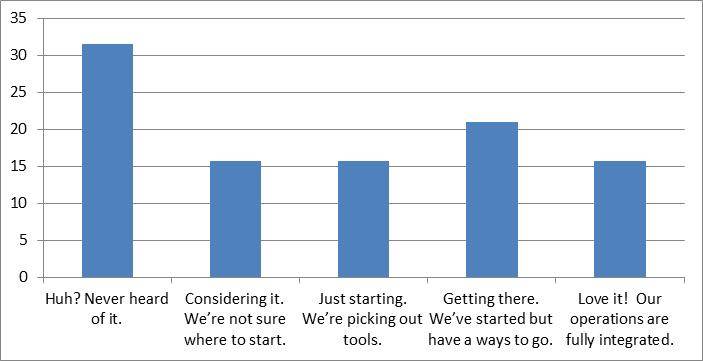
  • 17:27: DevOps Poll
  • 18:40: DevOps is a significant trend that you should consider. Hosters have a lot of operational chops.
  • 19:34: There are a lot of right ways to do cloud. You need to pick what’s best for your business model
  • 20:23: We could get hardware and software, but operational expertise was missing.
  • 21:33: We’re more making the complexity of a cloud go away. We are getting our customers a head start. We are chipping away at the learning curve.
  • 22:05: The cloud is always ready, never finished. Cloud is an ongoing operational environment: DevOps!
  • 23:30: Crowbar bakes a lot of operational experience into the deployment.
  • 25:17: Core tenant of DevOps: there is no single OpenStack image. Cloud is too complex. We build it in layers.
  • 26:26: Before you deploy, you can change the configuration.
  • 27:30: Barclamps are modules that execute a function. We are inviting community participation
  • 28:40: Crowbar process view – Crowbar is a “PXE state machine” is a very simplified description.
  • 29:57: You can go through a tuning cycle where you can get it working, make sure it’s right, flush and reset. That ensures you have an automated system.
  • 30:34: Screen shots with descriptions
  • 33:25: Event the core state machine that runs Crowbar is deployed as a barclamp
  • 35:00: You can download OpenStack and install it yourself from our github. We don’t want to talk about OpenStack, we want to DO OpenStack.
  • Poll Results (see to the right)
  • 38:00: Online resources
  • 40:00: Question 1: Timeline for RHEL. Answer: RHEL is part of Hadoop, will make it into OpenStack by end of year (or sooner based on market demand)
  • 42:17: Question 2: What led Dell to get involved in OpenStack? Answer: It’s about experience. We like being able to fix and change if we needed. There is a lot of active community
  • 45:30: Question 3: How does a hardware maker play with open source software? Answer: It’s a solution for us. We wanted to make sure that people cloud deploy the software. Adding DevOps takes it to another level.
  • 48:00 Question 4: What elements of Diablo are most exciting? Answer: Keystone (centralized authentication) is a big deal. Networking changes that “bust the top” of the networking hurdles.
  • 50:25: Question 5: Where is OpenStack going long term? Answer: We’re pleasantly surprised about how much it’s picked up. We’ll see more standards in the community. We have high hopes for OpenStack and have invested heavily. We’ll see more as-a-service capabilities to build on a common infrastructure: both open and commercial.
  • 52:47: Question 6: What’s the biggest barrier to operating at scale? Answer: learning how to operate is the biggest hurdle. We took a learning approach to help customers get started. We are hosting a training with Rackspace.
  • 55:00: Question 7: Where does Dell and Rackspace overlap? Answer: We see Rackspace Cloud Builders that the premier experts. Dell Services is involved with all of it. Dell takes the phone call and deals with our customers directly.

Please support me for the OpenStack Policy Board

I’m posting my OpenStack bio here and asking for support putting me on the Policy Board by voting for me.  NOTE: You can only vote if you’re registered and you got the “Poll: OpenStack Governance Elections” email.

Project Policy Board Objective

I am seeking a role on the OpenStack Policy Board to further the adoption of OpenStack within and beyond the community.  As the OpenStack technology lead within Dell, I am the engineer who is most actively engaged with field deployments; consequently, I am uniquely positioned to represent our development community, hosters and enterprise user bases.  I bring substantial process experience (Agile/Lean/CI) into my decision making.  My focus will be on ensuring OpenStack is deployable and ready for use.

Background

I am a Principal Engineer at Dell working as the lead for our OpenStack cloud initiative (http://dell.com/openstack).  My team at Dell is responsible for bringing hyper-scale cloud solutions to market and works closely with our cloud optimized hardware division (DCS).  Before working on the OpenStack project, I was involved in cloud projects for Azure, Eucalyptus, and Joyent at Dell.
My involvement with OpenStack goes back to the very earliest days before the project was launched where I was part of the evaluation team that advocated for Dell to join the project.  Since then, I have been active participant at every design conference.  It was my recommendation that Dell focus on making deployment capabilities for OpenStack and to ensure that those contributions are open sourced (Apache 2).  At this point in the project, I am Dell’s technical authority on OpenStack for community and customer interactions.
My team is responsible for the Crowbar cloud deployer (http://github.com/dellcloudedge/crowbar).  The purpose of this project is to ensure that OpenStack is be quickly and reliably deployed in a wide range of configurations on any hardware platform.  I believe that ease of deployability is essential for the success of OpenStack as a project because it ensure adoption by non-developers.  I also believe strongly in continuous integration and am working to adapt Crowbar as a CI platform.  I have been the primary driver to ensure that the Crowbar project is open sourced and accepting of input from the community.
My team also designs technical reference architectures (RAs) for OpenStack.  These RAs help drive adoption by providing crisp guidance on how deploy OpenStack.  I am a vocal proponent of open operations (keeping best practices public) and following a DevOps approach for ongoing cloud deployment life-cycles.
In addition to my work at Dell, I work to ensure community access and communication.  My independent blog provides technical detail and insights about the OpenStack and other cloud initiatives.  My blog also focuses on Agile and Lean practices that I believe are essential to success in technology innovation.
I have been working with cloud computing since 2001.  The company I founded with Dave McCrory (@mccrory), now owned by Quest, was the first multi-server VMware ESX deployment ouside of VMware.  We pioneered the concept of elastic vm management (look up the patents!) so I have a very deep understanding of the problems and architectures required.

Crowbar near-term features: increasing DevOps mojo and brewing Diablo

We’ve been so busy working on getting RHEL support ready to drop into the Crowbar repos that I have not had time to post about what’s coming next for Crowbar. The RHEL addition has required a substantial amount of work to accommodate different packaging models and capabilities. This change moves Crowbar closer to being able allow nodes’ operating systems (the allocated TFTP Boot Image) to be unique per node.
I will post more forward looking details soon but wanted to prime the pump and invite suggestions from our community.

We are tracking two major features for delivery by the OpenStack October Design Conference

  1. OpenStack Diablo Barclamps. Expect to see individual barclamps for various components like Keystone, Dashboard, Glace, Nova, Swift, etc)
  2. Barclamp versioning / connected imports. This feature will enable Crowbar to pull in the latest components for barclamps from remote repositories. I consider this a critical feature for Crowbar’s core DevOps/CloudOps capabilities and to support more community development for barclamps.

We are also working on some UI enhancements

  • Merging together the barclamps/proposals/active views into a single view
  • Enabling bulk actions for nodes (description, BIOS types, and allocate)
  • Allowing users to set node names and showing the names throughout the UI
  • More clarity on state of proposal application process (stretch goal)

I am planning to post more about our design ideas as work begins.

If you want to help with Diablo barclamps, these will be worked in the open and we’d be happy to collaborate. We’re also open to suggestion for what’s next.

Cloudcast interview with Dell Cloud Solutions Team (quotes with time stamps)

Lloyds BarbershopTheCloudcast.net – Thank you for such a great series of questions. Wow, nearly 36+ minutes of cloudicious interview about the work my team at Dell is doing!

Thanks to our hosts for putting together a great series! They are:

Highlights from Episode 16: Dell, Dude you’re getting a cloud

  • 3:40 JBG “we are listening to our customers tell us what they want to accomplish”
  • 4:40 RAH “humility is part of [what we’re] doing … cloud is about learning and collaboration”
  • 6:40 RAH “OpenStack filled a niche. It was the first open source community cloud. … Not just open source, its open community.”
  • 7:15 RAH “We’re beyond critical mass. We’re seeing acceleration… we are transitioning into a community development.”
  • 7:30 RAH “It’s accelerating. It happening so fast.”
  • 8:00 RAH “We felt it was really important for people to be able to use it. We felt that it was important to get away from just people developing into people using. “
  • 8:57 – RAH “Cloud is not just one thing. You have to have all the pieces.”
  • 10: 15 – RAH “Cloud is always ready, never finished”
  • 10:50 – RAH “OpenStack is an alternative to public cloud including hosting providers seeking to offer their own cloud”
  • 12:40 – AD “Dell has been in the Big data space for many years now”
  • 20:15 – JBG “There’s a legacy of great partnerships that we leverage”
  • 20:48 – JBG “Conflicts have not come up because we are focused on the customer”
  • 21:30 – RAH “Shout out to Greg Althaus for solving these problems in such an elegant way. And we rewrote it 3 times”
  • 22:02 – RAH “Crowbar started from our frustration of bringing up a cloud quickly … so we took a DevOps approach.”
  • 22:41 – RAH “You had to have a system view AND a boot strapping view simultaneously”
  • 23:50 – JBG “Crowbar was born out of necessity because we were setting up and blowing away our clouds over and over and over again. “
  • 24:40 – JBG “We realized there were not many people thinking about all the pieces before OpenStack was installed”
  • 25:20 – RAH “We don’t think customers have all the answers before we show up. This is not unique to OpenStack.”
  • 28:20 – JBG “We’re seeing the community pick up Crowbar as a way to deploy”

Collaboration between Dell Crowbar & VMware Cloud Foundry – unleashes your inner cloud

Sometimes a single sprint can deliver magic: when I signed up to document how to create a Crowbar module (aka a barclamp) two weeks ago, I had no idea that it would add a new flavor to Crowbar .

I’m proud to announce that the first public non-Dell Crowbar module will be supporting the VMware Cloud Foundry Open PaaS project.

Development is still in progress (on the Crowbar “CF” branch) and you’ll be able to watch us (even help!) collaborate on this project.  Initially, the deployment will be to single server but we’re hoping to quickly expand to a distributed install that fully leverages the capabilities of both projects.

By creating a Crowbar module, Cloud Foundry™ is able to leverage the cloud deployment capabilities that allow it to be setup on any physical or virtualized data center.  This is core to the Crowbar message: the value of a cloud solution can best be realized when it’s coupled with open practices for deploying it.

There are many significant aspects of this collaboration:

  1. Cloud Foundry is taking the right approach to PaaS.  Their team’s perspective on PaaS mirrors my own: A PaaS is a collection of application services.  That approach makes it extensible and flexible.  Plus, they are also multi-language and multi-platform.
  2. Crowbar is proving our breadth of support.  Last week we announced coming RHEL support and now adding Cloud Foundry is a natural extension.  We did not design Crowbar to be a one-trick pony.  It’s modular design makes it easy to extend while leveraging the existing body of work.
  3. Big companies are acting like start-ups.  Both Crowbar and Cloud Foundry are projects that focus on putting the core functionality out quickly to prove their value proposition, get feedback, and change the game.  This collaboration is positive proof of these companies being Agile and starting a project Lean.
  4. Big companies are acting in the open.  Both Dell via Crowbar and VMware via Cloud Foundry are contributing their source and working on it in the open.

Stay tuned for that “how to create a barclamp” post (or check out the barclamp rake task).

For more information: