The real workloads begin: Crowbar’s Sophomore Year

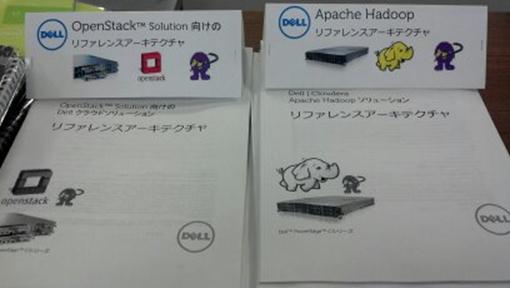
Given Crowbar‘s frenetic Freshman year, it’s impossible to predict everything that Crowbar could become. I certainly aspire to see the project gain a stronger developer community and the seeds of this transformation are sprouting. I also see that community driven work is positioning Crowbar to break beyond being platforms for OpenStack and Apache Hadoop solutions that pay the bills for my team at Dell to invest in Crowbar development.
I don’t have to look beyond the summer to see important development for Crowbar because of the substantial goals of the Crowbar 2.0 refactor.

Crowbar 2.0 is really just around the corner so I’d like to set some longer range goals for our next year.

  • Growing acceptance of Crowbar as an in data center extension for DevOps tools (what I call CloudOps)
  • Deeper integration into more operating environments beyond the core Linux flavors (like virtualization hosts, closed and special purpose operating systems.
  • Improvements in dynamic networking configuration
  • Enabling more online network connected operating modes
  • Taking on production ops challenges of scale, high availability and migration
  • Formalization of our community engagement with summits, user groups, and broader developer contributions.

For example, Crowbar 2.0 will be able to handle downloading packages and applications from the internet. Online content is not a major benefit without being able to stage and control how those new packages are deployed; consequently, our goals remains tightly focused improvements in orchestration.

These changes create a foundation that enables a more dynamic operating environment. Ultimately, I see Crowbar driving towards a vision of fully integrated continuous operations; however, Greg & Rob’s Crowbar vision is the topic for tomorrow’s post.

Our Vision for Crowbar – taking steps towards closed loop operations

When Greg Althaus and I first proposed the project that would become Dell’s Crowbar, we had already learned first-hand that there was a significant gap in both the technologies and the processes for scale operations. Our team at Dell saw that the successful cloud data centers were treating their deployments as integrated systems (now called DevOps) in which configuration of many components where coordinated and orchestrated; however, these approaches feel short of the mark in our opinion. We wanted to create a truly integrated operational environment from the bare metal through the networking up to the applications and out to the operations tooling.
Our ultimate technical nirvana is to achieve closed-loop continuous deployments. We want to see applications that constantly optimize new code, deployment changes, quality, revenue and cost of operations. We could find parts but not a complete adequate foundation for this vision.

The business driver for Crowbar is system thinking around improved time to value and flexibility. While our technical vision is a long-term objective, we see very real short-term ROI. It does not matter if you are writing your own software or deploying applications; the faster you can move that code into production the sooner you get value from innovation. It is clear to us that the most successful technology companies have reorganized around speed to market and adapting to pace of change.

System flexibility & acceleration were key values when lean manufacturing revolution gave Dell a competitive advantage and it has proven even more critical in today’s dynamic technology innovation climate.

We hope that this post helps define a vision for Crowbar beyond the upcoming refactoring. We started the project with the idea that new tools meant we could take operations to a new level.

While that’s a great objective, we’re too pragmatic in delivery to rest on a broad objective. Let’s take a look at Crowbar’s concrete strengths and growth areas.

Key strength areas for Crowbar

  1. Late binding – hardware and network configuration is held until software configuration is known.  This is a huge system concept.
  2. Dynamic and Integrated Networking – means that we treat networking as a 1st class citizen for ops (sort of like software defined networking but integrated into the application)
  3. System Perspective – no Application is an island.  You can’t optimize just the deployment, you need to consider hardware, software, networking and operations all together.
  4. Bootstrapping (bare metal) – while not “rocket science” it takes a lot of careful effort to get this right in a way that is meaningful in a continuous operations environment.
  5. Open Source / Open Development / Modular Design – this problem is simply too complex to solve alone.  We need to get a much broader net of environments and thinking involved.

Continuing Areas of Leadership

  1. Open / Lean / Incremental Architecture – these are core aspects of our approach.  While we have a vision, we also are very open to ways that solve problems faster and more elegantly than we’d expected.
  2. Continuous deployment – we think the release cycles are getting faster and the only way to survive is the build change into the foundation of operations.
  3. Integrated networking – software defined networking is cool, but not enough.  We need to have semantics that link applications, networks and infrastructure together.
  4. Equilivent physical / virtual – we’re not saying that you won’t care if it’s physical or virtual (you should), we think that it should not impact your operations.
  5. Scale / Hybrid – the key element to hybrid is scale and to hybrid is scale.  The missing connection is being able to close the loop.
  6. Closed loop deployment – seeking load management, code quality, profit, and cost of operations as factor in managed operations.

Stop the Presses! Austin OpenStack Meetup 7/12 features docs, bugs & cinder

Don’t miss the 7/12 OpenStack Austin meetup!  We’ve got a great agenda lined up.

This meetup is sponsored by HP (Mark Padovani will give the intro).

Topics will include

  1. 6:30 pre-meeting OpenStack intro & overview for N00bs.
  2. Anne Gentle, OpenStack Technical Writer at Rackspace Hosting, talking about How to contribute to docs & the areas needed. *
  3. Report on the Folsom.3 bug squash day (http://wiki.openstack.org/BugDays/20120712BugSquashing)
  4. (tentative) Greg Althaus, Dell, talking about the “Cinder” Block Storage project
  5. White Board – Next Meeting Topics

* if you contribute to docs then you’ll get an invite to the next design summit!   It’s a great way to support OpenStack even if you don’t write code.

Crowbar Celebrates 1st Anniversary

Nearly a year ago at OSCON 2011, my team at Dell opened sourced “Crowbar, an OpenStack installer.” That first Github commit was a much more limited project than Crowbar today: there was no separation into barclamps, no distinct network configuration, one operating system option and the default passwords were all “openstack.” We simply did not know if our effort would create any interest.

The response to Crowbar has been exciting and humbling. I most appreciate those who looked at Crowbar and saw more than a bare metal installer. They are the ones who recognized that we are trying to solve a bigger problem: it has been too difficult to cope with change in IT operations.

During this year, we have made many changes. Many have been driven by customer, user and partner feedback while others support Dell product delivery needs. Happily, these inputs are well aligned in intent if not always in timing.

  • Introduction of barclamps as modular components
  • Expansion into multiple applications (most notably OpenStack and Apache Hadoop)
  • Multi-Operating System
  • Working in the open (with public commits)
  • Collaborative License Agreements

Dell‘s understanding of open source and open development has made a similar transformation. Crowbar was originally Apache 2 open sourced because we imagined it becoming part of the OpenStack project. While that ambition has faded, the practical benefits of open collaboration have proven to be substantial.

The results from this first year are compelling:

  • For OpenStack Diablo, coordination with the Rackspace Cloud Builder team enabled Crowbar to include the Keystone and Dashboard projects into Dell’s solution
  • For OpenStack Essex, the community focused work we did for the March Essex Hackday are directly linked to our ability to deliver Dell’s OpenStack-Powered Essex solution over two months earlier than originally planned.
  • For Apache Hadoop distributions for 3.x and 4.x with implementation of Cloudera Manager and eco system components.
  • We’ve amassed hundreds of mail subscribers and Github followers
  • Support for multiple releases of RHEL, Centos & Ubuntu including Ubuntu 12.04 while it was still in beta.
  • SuSE does their own port of Crowbar to SuSE with important advances in Crowbar’s install model (from ISO to package).

We stand on the edge of many exciting transformations for Crowbar’s second year. Based on the amount of change from this year, I’m hesitant to make long term predictions. Yet, just within next few months there are significant plans based on Crowbar 2.0 refactor. We have line of site to changes that expand our tool choices, improve networking, add operating systems and become more even production ops capable.

That’s quite a busy year!

OpenStack Deploy Day generates lots of interest, less coding

Last week, my team at Dell led a world-wide OpenStack Essex Deploy event. Kamesh Pemmaraju, our OpenStack-powered solution product manager, did a great summary of the event results (200+ attendees!). What started as a hack-a-thon for deploy scripts morphed into a stunning 14+ hour event with rotating intro content and an ecosystem showcase (videos).  Special kudos to Kamesh, Andi Abes, Judd Maltin, Randy Perryman & Mike Pittaro for leadership at our regional sites.

Clearly, OpenStack is attracting a lot of interest. We’ve been investing time in content to help people who are curious about OpenStack to get started.

While I’m happy to be fueling the OpenStack fervor with an easy on-ramp, our primary objective for the Deploy Day was to collaborate on OpenStack deployments.

On that measure, we have room for improvement. We had some great discussions about how to handle upgrades and market drivers for OpenStack; however, we did not spend the time improving Essex deployments that I was hoping to achieve. I know it’s possible – I’ve talked with developers in the Crowbar community who want this.

If you wanted more expert interaction, here are some of my thoughts for future events.

  • Expert track did not get to deploy coding. I think that we need to simply focus more even tightly on to Crowbar deployments. That means having a Crowbar Hack with an OpenStack focus instead of vice versa.
  • Efforts to serve OpenStack n00bs did not protect time for experts. If we offer expert sessions then we won’t try to have parallel intro sessions. We’ll simply have to direct novices to the homework pages and videos.
  • Combining on-site and on-line is too confusing. As much as I enjoy meeting people face-to-face, I think we’d have a more skilled audience if we kept it online only.
  • Connectivity! Dropped connections, sigh.
  • Better planning for videos (not by the presenters) to make sure that we have good results on the expert track.
  • This event was too long. It’s just not practical to serve Europe, US and Asia in a single event. I think that 2-3 hours is a much more practical maximum. 10-12am Eastern or 6-8pm Pacific would be much more manageable.

Do you have other comments and suggestions? Please let me know!

Asia-Pac Session for OpenStack Essex Global Deploy day

I did not want us to neglect Asia-Pac for the upcoming OpenStack Deploy day, so I was delighted when Mike Pittaro offered to help host the online content for the last session. Mike is an OpenStack contributor who recently joined my team at Dell.

This addresses the concern that our first Essex hack day was America’s daytime only so it was difficult for time zones east of GMT to participate.

We are working with Dell teams in Asia-Pac to setup more information to support Japan, China, Korea and Australia.

This picture, taken by Dan Choquette (my team too!), is from Toyko DevOpsDays.

Hungry for Operational Excellence? ChefConf 2012 satisfies!

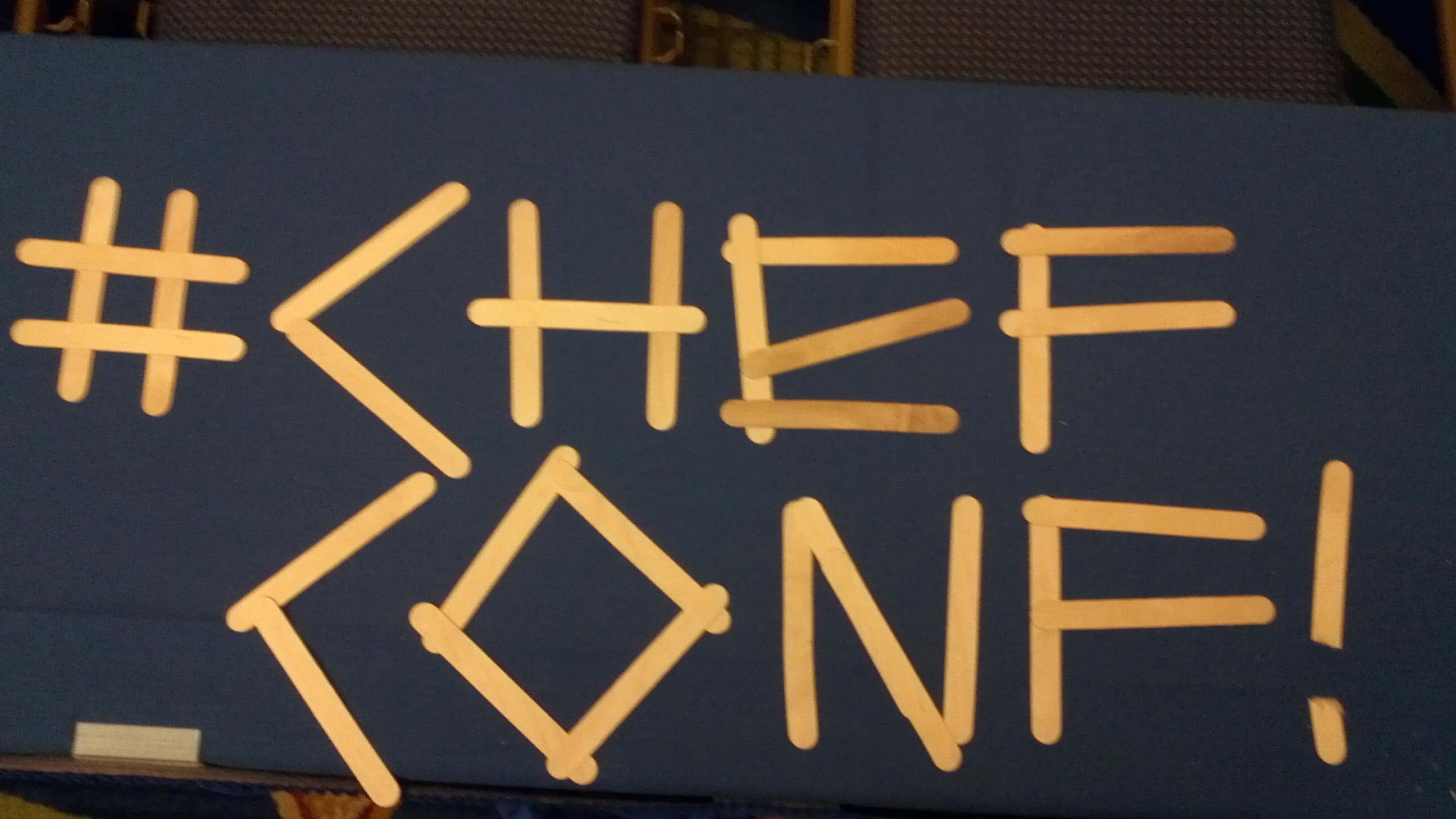
Since my team at Dell sponsored the inaugural ChefConf, we had the good fortune to get a handful of passes and show up at the event in force.  I was also tapped for a presentation (Chef+Crowbar gets Physical+OpenStack Cloud) and Ignite session (Crowbar history).

I live demo’ed using a single command window with knife to manage both physical and cloud infrastructure.    That’s freaking cool!  (and thanks to Matt Ray for helping to get this working)

It’s no surprise that I’m already a DevOps advocate and Opscode enthusiast, there were aspects of the conference that are worth reiterating:

  • Opscode is part of the cadre of leaders redefining how we operate infrastructure.  The energy is amazing.
  • The acknowledgement of the “snowflake” challenge where all Ops environments are alike, but no two are the same.
  • A tight integration between Operations and lean delivery because waterfall deployments are not sustainable
  • Opscode’s vision is rooted in utility.  You can be successful without design and then excel when you add it.  I find that refreshing.
  • There was a fun, friendly (“hug driven development?!”) and laid back vibe.  This group laughed A LOT.
  • For a first conference, Opscode did a good job with logistics and organization.
  • I saw that the back rooms and hallways are buzzing with activity.  This means that people are making money with the technology.

Crowbar + Chef installs & manages OpenStack Essex (Live Demo, 45 minutes):


Ignite Talk about Dell Crowbar History (5 minutes)

Dell Cloud in the Community – events, speaking and sponsorships!

Members of various Dell Cloud teams are out and about!  You can catch us North, South, East, West and Central!

I get a lot of questions about the Dell Hosted Cloud (my team does “private hyperscale cloud“) so I’m glad to offer ACUG as a venue where people can talk to Stephen Spector and hear it from the source.

Date Topics Event Venue Sponsor
5/12 Topics: OpenStack Foundation, DevStack & Folsom Summit review. Austin OpenStack Meetup Austin, TX (Tech Ranch) Puppet Labs
5/15 Dell Public Cloud team will discuss and demonstrate vCloud running an HPC platform for highly processor intensive applications (Greenbutton and SAP) Austin Cloud User Group Austin, TX Dell Public Cloud
5/16 OpenStack Topics (TBD) including Folsom Summit review, Quantum, HyperV Boston OpenStack Meetup Boston, MA (Havard, Maxwell Dworkin 119) SUSE
5/16-17 DevOps applications for Chef on OpenStack private clouds using Crowbar. Chef User Conference San Francisco, CA Opscode
5/??
TBD
Help us kick out a rock solid Essex deploy using Crowbar and Chef. World Wide Essex Deploy Day Multiple Live & Remote Locations Dell OpenStack
5/23-24 Open source software in the government.  Specifically, I’m talking about  OpenStack, Hadoop and Crowbar.  I know that Cloudera and Canonical will be there. Military Open Source Charleston, SC Mill-OSS

PS: The slides are posted if you missed our 3-way joint session with Dell, Opscode & enStratus at the OpenStack Summit.

Did Austin Stackers get what we wanted at the OpenStack Design Summit?

image

This post is a follow-up from the April 12 Austin OpenStack  (OSTAX) meeting.

Overall, we had a good meeting with strong attendance.  Unlike last meeting, the attendees were less OpenStack experienced; however, many us worked for companies that are members of the OpenStack Foundation.  I work for Dell (a gold sponsor).

Rather than posting before the summit, I’ve scored my summit experiences against our poll to see if our priorities were met.  (note: Thanks to Greg Althaus for additional input in the commentary)

Issue OSTAX Rank Results from Summit Outlook
Stability vs. Features Prioritization & Processes 68% This was a major thread throughout the summit in multiple sessions.   My feeling of the dialog was the stability (including continuous integration) was a core requirement. Excellent
API vs Code. What does it mean to be “OpenStack” 68% This is a good news / bad news story.  As OpenStack Compute gets split into more and more independent pieces; their interactions will require a well-defined externalized API.  The continuing issue is that these APIs will be still driven by the python-based reference implementation.  In some regards, APIs will emerge and be better codified.  Newer PTLs bring additional perspective and beliefs around APIs vs Code. Mixed
Operations focus: making OpenStack easy to deploy and manage 68% This was a major topic with many sessions dedicated to operationalizing OpenStack.  Special focus was given to shared Puppet and Chef deployment code.There were specific sessions around High Availability and what that means.  From this session, consensus was built for infrastructure HA documentation using Pacemaker for Folsom.  There was NOT consensus for instance-level HA. Trending Positive
Documentation Standards and improved user guides 59% Anne Gentle is championing this and had a presence throughout the summit. Strong
Driving for Hypervisor feature parity (KVM, Xen and also VMware/HyperV) 57% While Libvirt/KVM continues to dominate.  Citrix was present to support XenServer and Microsoft made commitments for (returning) HyperV support. Uneven Progress
Improving collaboration (get beyond listserv & IRC) so information is more persistent 56% I was not involved in discussions around this topic. No Comment
Have more operations discussion / design at the Design Summit 54% We had many sessions about operations tooling but little about specific considerations for operations.  Perhaps we need to take a step towards shared deployment scripts. Action with Fragmentation
Nova-volume to split out and/or more API driven (less integrated) 51% This was a major topic in multiple sessions.  There are a number of parties that are signing up to create block storage as a stand-alone project.Cinder will be the block storage service.  Not just good sessions were held, but good plans were built for constructing and improving the project.  The project will start as a clone of the current nova project with unique chunks living in Cinder and common pieces of both projects move to the openstack-common project.The Cinder working group is very cross company and had a strong desire to maintain a minimal specification (current API replacement) with only one additional feature required for Folsom (boot from volume).  The boot from volume feature is really a Nova feature, but the Cinder team will most likely drive it to ensure Cinder/Nova separation. Surprisingly Active
OpenStack on Windows & HyperV 50% This is two topics.  Microsoft is committing for OpenStack to support HyperV as a Nova Compute node.  Running the rest of the suite on Windows does not appear to be a priority (or practical?) Promising Potential
Orchestration. More projects like Donabe? 48% There are a number of ecosystem projects emerging.  Now that Essex has emerged as a solid release, I expect to see an acceleration projects.  At this time, they are still incubating.There was also the acknowledgement that there are two levels of orchestration, instance orchestration (think nova scheduler) and workload orchestration (think Donabe or VAPP).  Instance orchestration had many good discussions and improvements suggested and started (host aggregates, filter scheduler extensions, …) Building Slowly
Making Nova into smaller components 46% This was a thread in several sessions and it part of the ongoing stabilization work to improve collaboration.  One important component of this is moving common code into a shared library. In process, needs focus
How should invitations be handed out to Summit? Was the last process to Dev focused? 40% I was not aware of any discussion of this at the summit.  Looks like we all need to go out and commit some code! No Comment

Overall, I think that the Austin Stacker priorities were well positioned at the Design Summit.

After the split, I’m posted the twitter feed from the meeting (in post  order):

Continue reading

Dell Team at the OpenStack Spring 2012 Summit

It’s OpenStack Summit time again for my team at Dell and there’s deployment in the air. It’s been an amazing journey from the first Austin summit to Folsom today. Since those first heady days, the party has gotten a lot more crowded, founding members have faded away, recruiters became enriched as employees changed email TLDs and buckets of code was delivered.

Throughout, Dell has stayed the course: our focus from day-one has been ensuring OpenStack can be deployed into production in a way that was true to the OpenStack mission of community collaboration and Apache-2-licensed open source.

We’ve delivered on the making OpenStack deployable vision by collaborating broadly on the OpenStack components of the open source Crowbar project. I believe that our vision for sustainable open operations based on DevOps principles is the most complete strategy for production cloud deployments.

We are at the Folsom Summit in force and we’re looking forward to discussions with the OpenStack community. Here are some of the ways to engage with us:

  • Demos
    • During the summit (M-W), we’ll have our Crowbar OpenStack Essex deployments running. We kicked off Essex development with a world-wide event in early March and we want more people to come and join in.
    • During the conference (W-F), we’ll be showing off application deployments using enStratus and Chef against our field proven Diablo release.
  • Speakers
    • Thursday 1:00pm, OpenStack Gains Momentum: Customers are Speaking Up by Kamesh Pemmaraju (Dell)
    • Friday 9:50am, Deploy Apps on OpenStack using Dashboard, Chef and enStratus by Rob Hirschfeld (Dell), Matt Ray (Opscode) and Keith Hudgins (enStratus).
    • Friday 11:30am, Expanding the Community Panel
      including Joseph George (Dell)
    • This fun round trip road trip from Rackspace & Dell HQs in Austin to the summit and home again promises to be an odyssey of inclusion. Dell OpenStack/Crowbar engineer Andi Abes (@a_abes). Follow @RoadstackRV to follow along as they return home and share their thoughts about the summit!
  • Parties
    • Monday 6pm Mirantis Welcome Party, co-sponsored with Dell, at Sens Restaurant (RSVP)
    • Tuesday 5pm “Demos & Drinks” Happy Hour, co-hosted by Dell, Mirantis, Morphlabs, Canonical at the Hyatt Regency Hospitality Room off the Atrium

My team has been in the field talking to customers and doing OpenStack deployments. We are proud to talk about it and our approach.

Mostly importantly, we want to collaborate with you on our Essex deployments using Crowbar.  Get on our list, download/build crowbar, run the “essex-hack” branch and start banging on the deploy.  Let’s work together to make this one rock solid Essex deploy.