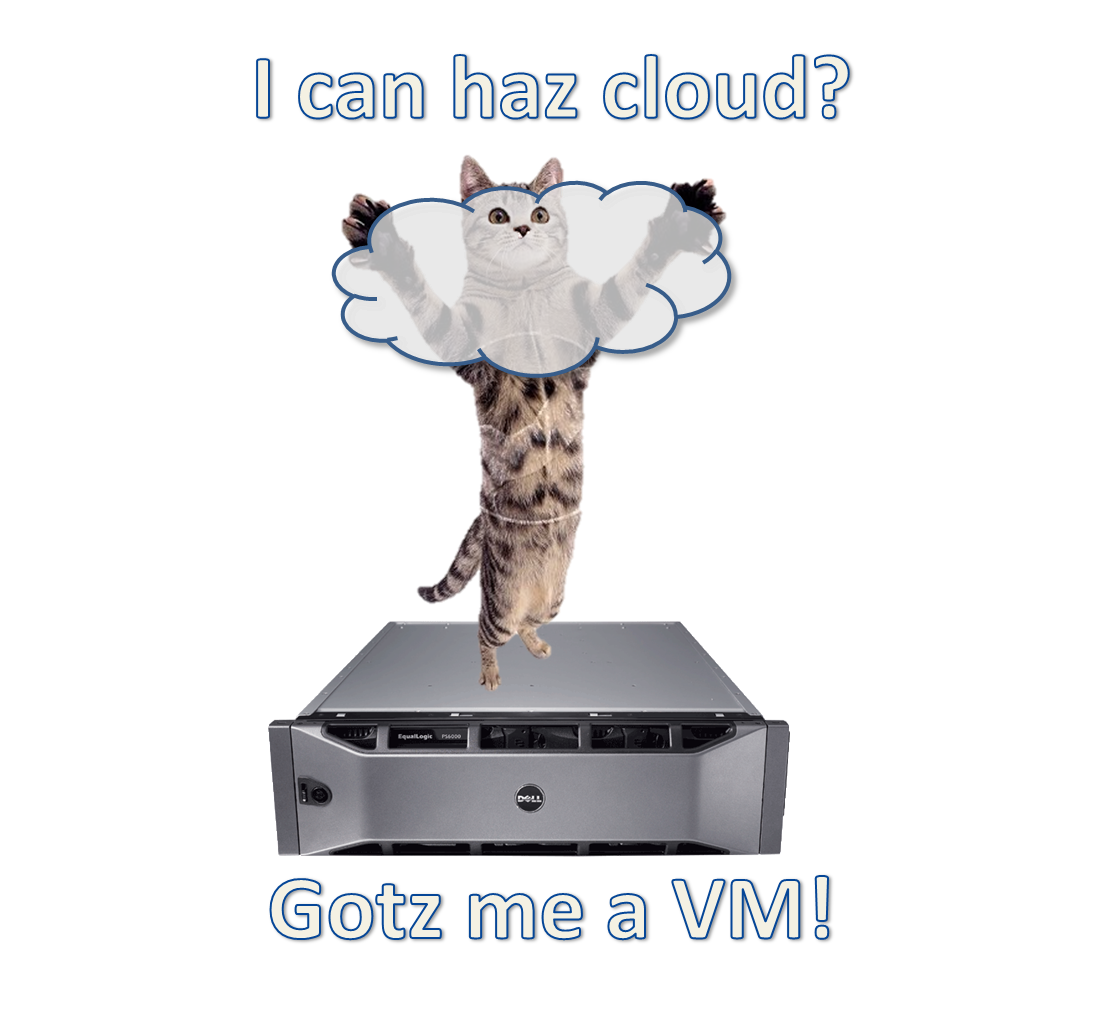
Start-ups are Time Machines for Big Companies [and open source is a worm hole]

My time at Dell (ended 10/2014) forced me to correct one of the most common misconceptions I hear about big companies – that they cannot innovate. My surprise at Dell was not the lack of innovation, but it’s overabundance. Having talked to many colleagues at big companies, I find the same pattern is everywhere. It’s not that these companies lack amazing and creative ideas, it’s that they have so many that it’s impossible for them to filter and promote them.

Innovation at a big company is like a nest of baby chicks all fighting for a worm but the parent bird can’t decide which chicks to feed.

In order for an idea to win at a big company, it generally has to shout so loudly and promise so extravagantly that it’s setup to fail right out of incubation. Consequently, great ideas are either never launched or killed in adolescence. Of course YMMV, but I’ve seen this pattern repeated throughout the tech industry.

TeamTimeCar.com-BTTF DeLorean Time Machine-OtoGodfrey.com-JMortonPhoto.com-07.jpg

“TeamTimeCar.com-BTTF DeLorean Time Machine-OtoGodfrey.com-JMortonPhoto.com-07” by Terabass. Licensed under CC BY-SA 4.0 via Wikimedia Commons

What big companies really need is a time machine. That way, they can retroactively pick the right innovation and nurture it into a product that immediately benefits from their customer base, support infrastructure and market presence.

Money is a time machine.

With enough money, they can go backwards in time and unwind the decision to not invest in that innovative idea or team. It’s called purchasing a company. Sure, there’s a significant cash premium but that’s easier than stealing more plutonium for your DeLorean. In my experience, it’s behaviorally consistent for companies to act quickly on large outlays for retroactively correct decisions while being unwilling to deal with the political and long-term planning aspects of incubation.

I’ve come to embrace this cycle of innovation with an interesting twist: the growth of open source business models enables a new degree of cross innovation between start-ups and big companies. With open source, corporate locked innovators can exercise their ideas with start-ups and start-ups can leverage the talent and financial depth of big companies.

That’s like creating temporal worm holes in the venture-time continuum. Now that sounds like a topic for a future post… thoughts?

Art Fewell and I discuss DevOps, SDN, Containers & OpenStack [video + transcript]

A little while back, Art Fewell and I had two excellent discussions about general trends and challenges in the cloud and scale data center space.  Due to technical difficulties, the first (funnier one) was lost forever to NSA archives, but the second survived!

The video and transcript were just posted to Network World as part of Art’s on going interview series.  It was an action packed hour so I don’t want to re-post the transcript here.  I thought selected quotes (under the video) were worth calling out to whet your appetite for the whole tamale.

My highlights:

  1. .. partnering with a start-up was really hard, but partnering with an open source project actually gave us a lot more influence and control.
  2. Then we got into OpenStack, … we [Dell] wanted to invest our time and that we could be part of and would be sustained and transparent to the community.
  3. Incumbents are starting to be threatened by these new opened technologies … that I think levels of playing field is having an open platform.
  4. …I was pointing at you and laughing… [you’ll have to see the video]
  5. docker and containerization … potentially is disruptive to OpenStack and how OpenStack is operating
  6. You have to turn the crank faster and faster and faster to keep up.
  7. Small things I love about OpenStack … vendors are learning how to work in these open communities. When they don’t do it right they’re told very strongly that they don’t.
  8. It was literally a Power Point of everything that was wrong … [I said,] “Yes, that’s true. You want to help?”
  9. …people aiming missiles at your house right now…
  10. With containers you can sell that same piece of hardware 10 times or more and really pack in the workloads and so you get better performance and over subscription and so the utilization of the infrastructure goes way up.
  11. I’m not as much of a believer in that OpenStack eats the data center phenomena.
  12. First thing is automate. I’ve talked to people a lot about getting ready for OpenStack and what they should do. The bottom line is before you even invest in these technologies, automating your workloads and deployments is a huge component for being successful with that.
  13. Now, all of sudden the SDN layer is connecting these network function virtualization ..  It’s a big mess. It’s really hard, it’s really complex.
  14. The thing that I’m really excited about is the service architecture. We’re in the middle of doing on the RackN and Crowbar side, we’re in the middle of doing an architecture that’s basically turning data center operations into services.
  15. What platform as a service really is about, it’s about how you store the information. What services do you offer around the elastic part? Elastic is time based, it’s where you’re manipulating in the data.
  16. RE RackN: You can’t manufacture infrastructure but you can use it in a much “cloudier way”. It really redefines what you can do in a datacenter.
  17. That abstraction layer means that people can work together and actually share scripts
  18. I definitely think that OpenStack’s legacy will more likely be the community and the governance and what we’ve learned from that than probably the code.

Want CI Consul Love? OK! Run Consul in Travis-CI [example scripts]

If you are designing an application that uses microservice registration AND continuous integration then this post is for you!  If not, get with the program, you are a fossil.

Inside The EngineSunday night, I posted about the Erlang Consul client I wrote for our Behavior Driven Development (BDD) testing infrastructure.  That exposed a need to run a Consul service in the OpenCrowbar Travis-CI build automation that validates all of our pull requests.  Basically, Travis spins up the full OpenCrowbar API and workers (we call it the annealer) which in turn registers services in Consul.

NOTE: This is pseudo instructions.  In the actual code (here too), I created a script to install consul but this is more illustrative of the changes you need to make in your .travis.yml file.

In the first snippet, we download and unzip consul.  It’s in GO so that’s about all we need for an install.  I added a version check for logging validation.

before_script:
  - wget 'https://dl.bintray.com/mitchellh/consul/0.4.1_linux_amd64.zip'
  - unzip "0.4.1_linux_amd64.zip"
  - ./consul --version

In the second step, we setup the consul service and register it to itself in the background.  That allows the other services to access it.

script: 
  - ../consul agent -server -bootstrap-expect 1 -data-dir /tmp/consul &

After that, the BDD infrastructure can register the fake services that we expect (I created an erlang consul:reg_serv(“name”) routine that makes this super easy).  Once the services are registered, OpenCrowbar will check for the services and continue without trying to instantiate them (which it cannot do in Travis).

Here’s the pull request with the changes.

Erlang Consul Client

OpenCrowbar has been using Consul more and more deeply.  We’ve reached the point where we must register services on Consul to pass automated tests.

Consequently, I had to write a little Consul client in Erlang.

The client is very basic, but it seems to perform all of the required functions.  It relies on some other libraries in OpenCrowbar’s BDD but they are relatively self-contained.  Pulls welcome if you’d like to help build this out.

Here’s the code and the API reference.   Check in OpenCrowbar/BDD for latest updates and dependencies.

All About That Loop. Lessons from the OpenStack Product Mid-Cycle

OpenStack loves to track developer counts and committers, but velocity without A Feedback loop to set direction is unlikely to get us anywhere sustainable.

LoopLast week, I attended the first day of the OpenStack Product Working Group meeting.   My modest expectations (I just wanted them talking) were far exceeded.  The group managed to cover both strategic and tactical items including drafting a charter and discussing pending changes to the incubation process.

OpenStack needs a strong feedback loop from users and operators back to developers and vendors – statement made during the PM meeting.

The most critical wins from last week what the desire for the PM group to work more closely with the OpenStack technical leadership.  I’m excited to see the community continue to expand the scope of collaboration.

Why is this important?  Because developers and product managers need mutual respect to be effective.

The members of the Product team are leaders within their own organization responsible for talking to users and operators.  We rely on them to close the communication loop by both collecting feedback and explaining direction.  To accomplish this difficult job, the Product team must own articulating a vision for the future.

For OpenStack to succeed, we need to be listening intently to feedback about both how we are doing and if we are headed in the right direction.  Both are required to create a feedback loop.

After seeing this group in action, I’m excited to see what’s next.

Want to read more?

Get involved!  Join the discussion on the OpenStack Product mailing list!

too easy to bare metal? Ansible just works with OpenCrowbar

2012-01-15_10-21-12_716I’ve talked before about how OpenCrowbar distributes SSH keys automatically as part of its deployment process.  Now, it’s time to unleash some of the subsequent magic!

[5/21 Update: We added the “crowbar-access” role to the Drill release that allows you to inject/remove keys on a per node basis from the API or CLI at any point in the node life-cycle]

If you provision servers with your keys in place, then Ansible will just work with truly minimal configuration (one line in a file!).

Video Demo (steps bellow):

Here are my steps:

  1. Install OpenCrowbar and run some nodes to ready state [videos]
  2. Install Ansible [simple steps]
  3. Add hosts range “192.168.124.[81:83]  ansible_ssh_user=root” to the
    “/etc/ansible/hosts” file
  4. If you are really lazy, add “[Default] // host_key_checking = False” to your “~/.ansible.cfg” file
  5. now ping the hosts, “ansible all -m ping”
  6. pat yourself on the back, you’re done.
  7. to show off:
    1. touch all machines “ansible all -a “/bin/echo hello”
    2. look at types of Linux “ansible all -a “uname -a”

Further integration work can make this even more powerful.  

I’d like to see OpenCrowbar generate the Ansible inventory file from the discovery data and to map Ansible groups from deployments.  Crowbar could also call Ansible directly to use playbooks or even do a direct hand-off to Tower to complete an install without user intervention.

Wow, that would be pretty handy!   If you think so too, please join us in the OpenCrowbar community.

Online Meetup Today (1/13): Build a rock-solid foundation under your OpenStack cloud

Reminder: Online meetup w/ Crowbar + OpenStack DEMO TODAY

HFoundation Rawere’s the notice from the site (with my added Picture)

Building cloud infrastructure requires a rock-solid foundation. 

In this hour, Rob Hirschfeld will demo automated tooling, specifically OpenCrowbar, to prepare and integrate physical infrastructure to ready state and then use PackStack to install OpenStack.


The OpenCrowbar project started in 2011 as an OpenStack installer and had grown into a general purpose provisioning and infrastructure orchestration framework that works in parallel with multiple hardware vendors, operating systems and devops tools.  These tools create a fast, durable and repeatable environment to install OpenStack, Ceph, Kubernetes, Hadoop or other scale platforms.


Rob will show off the latest features and discuss key concepts from the Crowbar operational model including Ready State, Functional Operations and Late Binding. These concepts, built into Crowbar, can be applied generally to make your operations more robust and scalable.

Research showing that Short Lived Servers (“mayflies”) create efficiency at scale [DATA REQUESTED]

Last summer, Josh McKenty and I extended the puppies and cattle metaphor to limited life cattle we called “mayflies.” It was an attempt to help drive the cattle mindset (I think of it as social engineering, or maybe PsychOps) by forcing churn. I’ve come to think of it a step in between cattle and chaos monkeys (see Adrian Cockcroft).

While our thoughts were on mainly ops patterns, I’ve heard that there could be a real operational benefit from encouraging this behavior. The increased turn over in the environment improves scheduler optimization, planned load drains and coping with platform/environment migration.

Now we have a chance to quantify this benefit: a college student (disclosure: he’s my son) has created a data center emulation to see if Mayflies help with utilization. His model appears to work.

Now, he needs some real world data, here’s his request for assistance [note: he needs data by 1/20 to be included in this term]:

Hello!

I am Alexander Hirschfeld, a freshman at Rose-Hulman Institute of Technology. I am working on an independent study about Mayflies, a new idea in virtual machine management in cloud computing. Part of this management is load balancing and resource allocation for virtual machines across a collection of servers. The emulation that I am working on needs a realistic set of data to be the most accurate when modeling the results of using the methods outlined by the theory of mayflies.

Mayflies are an extension of the puppies verses cattle approach to machines, they are the extreme version of cattle as they have a known limited lifespan, such as 7 days. This requires the users of the cloud to build inherently more automated and fault-resistant applications. If you could send me a collection of the requests for new virtual machines(per standard unit of time and their requested specs/size), as well as an average lifetime for the virtual machines (or a graph or list of designated/estimated life times), and a basic summary of the collection of servers running the virtual machines(number, ram, cores), I would be better able to understand how Mayflies can affect a cloud.

Thanks,
Alexander Hirschfeld, twitter: @d-qoi

Needless to say, I’m really excited about the progress on demonstrating some the impact of this practice and am looking forward to posting about his results in the near future.

If you post in the comments, I will make sure you are connected to Alex.

OpenCrowbar v2.1 Video Tour from Metal to OpenStack and beyond

With the OpenCrowbar v2.1 out, I’ve been asked to update the video library of Crowbar demos.  Since a complete tour is about 3 hours, I decided to cut it down into focused demos that would allow you to start at an area of interest and work backwards.

I’ve linked all the videos below by title.  Here’s a visual table on contents:

Video Progression

Crowbar v2.1 demo: Visual Table of Contents [click for playlist]

The heart of the demo series is the Annealer and Ready State (video #3).

  1. Prepare Environment
  2. Bootstrap Crowbar
  3. Add Nodes ♥ Ready State (good starting point)
  4. Boot Hardware
  5. Install OpenStack (Juno using PackStack on CentOS 7)
  6. Integrate with Chef & Chef Provisioning
  7. Integrate with SaltStack

I’ve tried to do some post-production so limit dead air and focus on key areas.  As always, I value content over production values so feedback is very welcome!

2015, the year cloud died. Meet the seven riders of the cloudocalypse

i can hazAfter writing pages of notes about the impact of Docker, microservice architectures, mainstreaming of Ops Automation, software defined networking, exponential data growth and the explosion of alternative hardware architecture, I realized that it all boils down to the death of cloud as we know it.

OK, we’re not killing cloud per se this year.  It’s more that we’ve put 10 pounds of cloud into a 5 pound bag so it’s just not working in 2015 to call it cloud.

Cloud was happily misunderstood back in 2012 as virtualized infrastructure wrapped in an API beside some platform services (like object storage).

That illusion will be shattered in 2015 as we fully digest the extent of the beautiful and complex mess that we’ve created in the search for better scale economics and faster delivery pipelines.  2015 is going to cause a lot of indigestion for CIOs, analysts and wandering technology executives.  No one can pick the winners with Decisive Leadership™ alone because there are simply too many possible right ways to solve problems.

Here’s my list of the seven cloud disrupting technologies and frameworks that will gain even greater momentum in 2015:

  1. Docker – I think that Docker is the face of a larger disruption around containers and packaging.  I’m sure Docker is not the thing alone.  There are a fleet of related technologies and Docker replacements; however, there’s no doubt that it’s leading a timely rethinking of application life-cycle delivery.
  2. New languages and frameworks – it’s not just the rapid maturity of Node.js and Go, but the frameworks and services that we’re building (like Cloud Foundry or Apache Spark) that change the way we use traditional languages.
  3. Microservice architectures – this is more than containers, it’s really Functional Programming for Ops (aka FuncOps) that’s a new generation of service oriented architecture that is being empowered by container orchestration systems (like Brooklyn or Fleet).  Using microservices well seems to redefine how we use traditional cloud.
  4. Mainstreaming of Ops Automation – We’re past “if DevOps” and into the how. Ops automation, not cloud, is the real puppies vs cattle battle ground.  As IT creates automation to better use clouds, we create application portability that makes cloud disappear.  This freedom translates into new choices (like PaaS, containers or hardware) for operators.
  5. Software defined networking – SDN means different things but the impacts are all the same: we are automating networking and integrating it into our deployments.  The days of networking and compute silos are ending and that’s going to change how we think about cloud and the supporting infrastructure.
  6. Exponential data growth – you cannot build applications or infrastructure without considering how your storage needs will grow as we absorb more data streams and internet of things sources.
  7. Explosion of alternative hardware architecture – In 2010, infrastructure was basically pizza box or blade from a handful of vendors.  Today, I’m seeing a rising tide of alternatives architectures including ARM, Converged and Storage focused from an increasing cadre of sources including vendors sharing open designs (OCP).  With improved automation, these new “non-cloud” options become part of the dynamic infrastructure spectrum.

Today these seven items create complexity and confusion as we work to balance the new concepts and technologies.  I can see a path forward that redefines IT to be both more flexible and dynamic while also being stable and performing.

Want more 2015 predictions?  Here’s my OpenStack EOY post about limiting/expanding the project scope.