Join us 5/31 for a OpenStack Deploy Hack-a-thon (all-day, world-wide online & multi-city)

An OpenStack Deploy Hack-a-thon is like 3-liter bottle of distilled open source community love.  Do you want direct access to my Dell team of OpenStack/Crowbar/Hadoop engineers?  Are you just getting started and want training about OpenStack and DevOps?  This is the event for you!

Here’s the official overview:

The OpenStack Deploy hack-a-thon focuses on automation for deploying OpenStack Essex with Dell Crowbar and Opscode Chef. This is a day-long, world-wide event bringing together developers, operators, users, ecosystem vendors and the open source cloud curious. (read below: We are looking for global sites and leaders to extend the event hours!)

OpenStack is the fastest growing open source cloud infrastructure project with broad market adoption from major hardware and software vendors. Crowbar is an Apache 2 licensed, open infrastructure deployment tool and is one of the leading multi-node deployers for OpenStack and Hadoop.

Learn first-hand how OpenStack and Crowbar can make it easy to deploy and operate your own cloud environments.

The Deploy day will offer two individual parallel tracks with something for both experts and beginners:

  • Newbies n00bs will learn the basics of OpenStack, Crowbar and DevOps and how they can benefit your organization. We’ll also have time for ecosystem vendors to discuss how they are leveraging OpenStack.
  • Experts l33ts will take a deep dive into new features of OpenStack Essex and Crowbar, and learn how Crowbar works under the hood, which will enable them to extend the product using Crowbar Barclamps.
Note: If you’re a n00b but want l33t content, we’ll be offering online training materials and videos to help get you up to speed.

Why now? We’ve validated our OpenStack Essex deployment against the latest release bits from Ubuntu. Now it’s time to reach out to the OpenStack and Crowbar communities for training, testing and collaborative development.

Join the event!  We’re organizing information on the Crowbar wiki.  (I highly recommend you join the Crowbar list to get access to support for prep materials).  You can also reach out to me via the @DellCrowbar handle.

We’d love to get you up to speed on the basics and dive deep into the core.

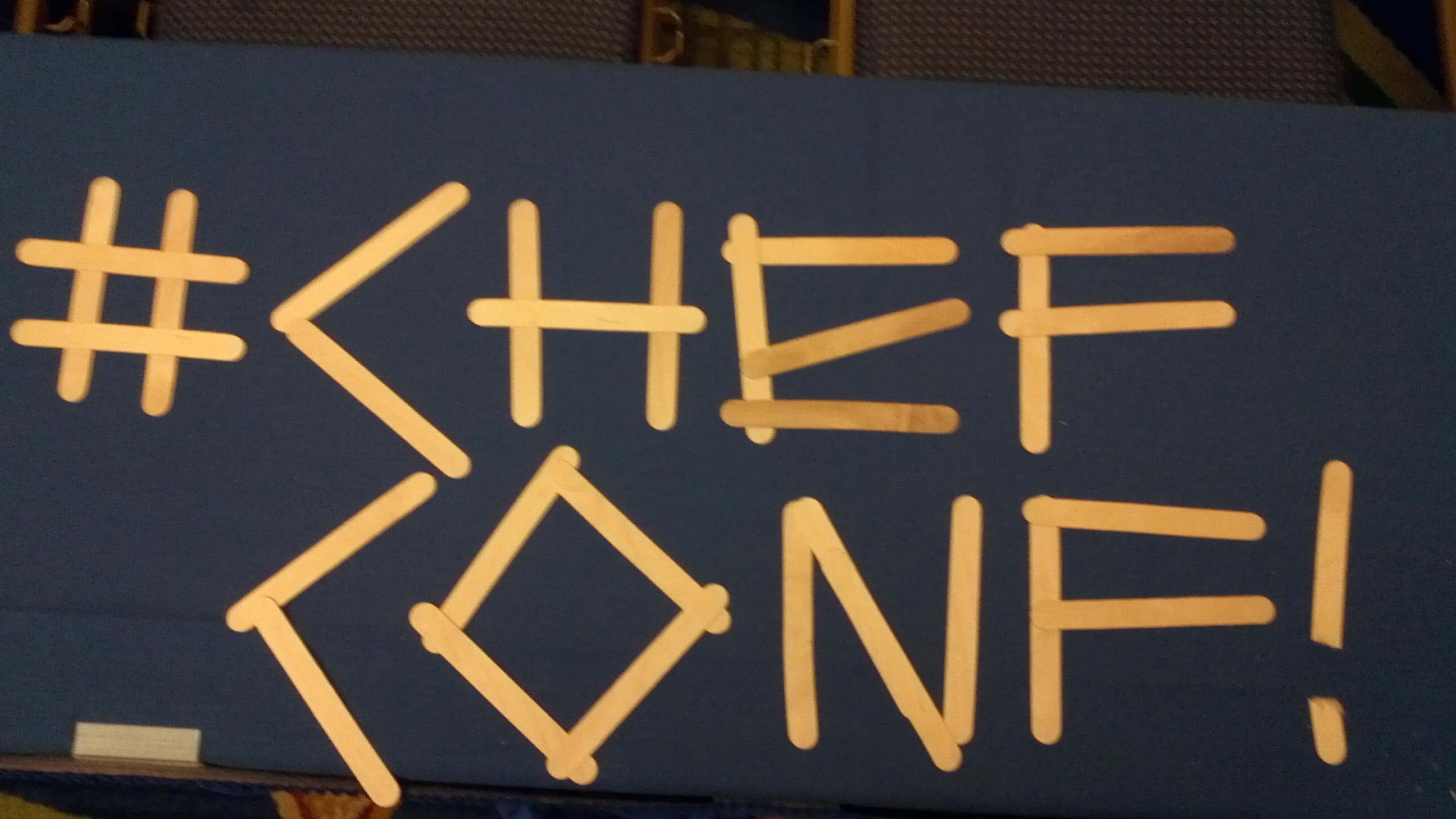
Hungry for Operational Excellence? ChefConf 2012 satisfies!

Since my team at Dell sponsored the inaugural ChefConf, we had the good fortune to get a handful of passes and show up at the event in force.  I was also tapped for a presentation (Chef+Crowbar gets Physical+OpenStack Cloud) and Ignite session (Crowbar history).

I live demo’ed using a single command window with knife to manage both physical and cloud infrastructure.    That’s freaking cool!  (and thanks to Matt Ray for helping to get this working)

It’s no surprise that I’m already a DevOps advocate and Opscode enthusiast, there were aspects of the conference that are worth reiterating:

  • Opscode is part of the cadre of leaders redefining how we operate infrastructure.  The energy is amazing.
  • The acknowledgement of the “snowflake” challenge where all Ops environments are alike, but no two are the same.
  • A tight integration between Operations and lean delivery because waterfall deployments are not sustainable
  • Opscode’s vision is rooted in utility.  You can be successful without design and then excel when you add it.  I find that refreshing.
  • There was a fun, friendly (“hug driven development?!”) and laid back vibe.  This group laughed A LOT.
  • For a first conference, Opscode did a good job with logistics and organization.
  • I saw that the back rooms and hallways are buzzing with activity.  This means that people are making money with the technology.

Crowbar + Chef installs & manages OpenStack Essex (Live Demo, 45 minutes):


Ignite Talk about Dell Crowbar History (5 minutes)

Crowbar’s emergence as a DevOps enabled Cloud Provisioner

I’m going to be talking Crowbar & OpenStack at Chef Conf next week.  While I’m always excited to wave the Crowbar flag, it’s humbling to see our vision for an open source based cloud provisioner picking up momentum in the community.

Dieter Plaetinck

…I think this tool deserves more attention and should be added to your devops toolchain for the cloud (triple buzzword bonus!!!)…

Hosting News

…As an alternative to proprietary, licensed software models, Dell continues to see heavy customer interest in the OpenStack-Powered Cloud Solution, which integrates the OpenStack cloud operating system, cloud-optimized Dell PowerEdge C servers, the Dell-developed Crowbar software framework, and services…

Sys-Con Post by Mirantis

…Finally, there is Dell and Crowbar. Dell’s approach to riding the OpenStack wave is, perhaps, the most creative. Crowbar is neither a hardware appliance nor an enterprise version of OpenStack. It’s a configuration management tool built around OpSource’s Chef, designed specifically to deploy OpenStack on Dell servers. Crowbar effectively serves as the glue between the hardware and any distribution of OpenStack (and not only OpenStack)…

Robert Booth w/ Zenoss

Well if you care to only give them the best then introduce them to a set of tools that will drastically change the way they do business in a way they want to. Introduce them to Dell’s Crowbar and OpsCode Chef and you will make their job easier, faster and possibly put a stop to the finger pointing! No longer will they have to pull out the IT secret decoder ring to understand what the dev team put in the deployment docs.

Work with me! Our Dell team is hiring architects, engineers & open source gurus

If you’ve been watching my team’s progress at Dell on Crowbar, OpenStack and Hadoop and want a front row seat in these exciting open source projects then the ball is in our your court!   We are poised to take all three of these projects into new territories that I cannot reveal here, but, take my word for it, there has never been a better time to join our team.

Let me repeat: my team has a lot of open engineering and marketing positions.

Not only are we doing some really kick ass projects, we are also helping redefine how Dell delivers software.  Dell is investing significantly in building our software capabilities and focus.

Basically, we are looking for engineers with a passion for scale applications, devops and open source.   Experience in Hadoop and/or OpenStack will move you to the top of the pile.   These positions say Hadoop, but we’re also looking for OpenStack, DevOps and Chef.  We think like a start-up.

Ideally in Austin, Boston or the Bay.  We’ll also be happy to hear from you if you’ve got l33t chOps but are not as senior as these positions require.
If you are interested, the BEST NEXT  STEP IS TO APPLY ONLINE.
If you don’t want to click the links, I’m attaching the descriptions of the engineering positions after the split.

Continue reading

2012: A year of Cloud Coalescence (whatever that means)

This post is a collaboration between three Dell Cloud activists: Rob Hirschfeld (@zehicle), Joseph B George (@jbgeorge) and Stephen Spector (@SpectoratDell).

We’re not making predictions for the “whole” Cloud market, this is a relatively narrow perspective based on technologies that on our daily radar. These views are strictly our own and based on publicly available data. They do not reflect plans, commitments, or internal data from our employer (Dell).

The major 2012 theme is cloud coalescence.  However, Rob worries that we’ll see slower adoption due to lack of engineers and confusing names/concepts.

Here are our twelve items for 2012:

  1. Open source continues to be a disruptive technology delivery model. It’s not “free” software – there’s an emerging IT culture that is doing business differently, including a number of large enterprises. The stable of sleeping giant vendors are waking up to this in 2012 but full engagement will take time.
  2. Linux. It is the cloud operating system and had a great 2012. It seems silly pointing this out since it seems obvious, but it’s the foundation for open source acceleration.
  3. Tight market for engineering and product development talent will get tighter. The catch-22 of this is that potential mentors are busy breaking new ground and writing code, making it hard for new experts to be developed.
  4. On track, OpenStack moves into its awkward adolescence. It is still gangly and rebelling against authority, but coming into its own. Expect to see a groundswell of installations and an expected wave of issues and challenges that will drive the community. By the “F” release, expect to see OpenStack cement itself as a serious, stable contender with notable public deployments and a significant international private deployment foot print.
  5. We’ll start seeing OpenStack Quantum (networking) in near-production pilots by year end. OpenStack Quantum is the glue that holds the big players in OpenStack Nova together. The potential for next generation cloud networking based on open standards is huge, but it will emerge without a killer app (OpenStack Nova in this case) pushing it forward. The OpenStack community will pull together to keep Quantum on track.
  6. Hadoop will cross into mainstream awareness as the need for big data analysis grows exponentially along with the data. Hadoop is on fire in select circles and completely obscure in others. The challenge for Hadoop is there are not enough engineers who know how to operate it. We suspect that lack of expertise will throttle demand until we get more proprietary tools to simplify analysis. We also predict a lot of very rich entrepreneurs and VCs emerging from this market segment.
  7. DevOps will enter mainstream IT discussions. Marketers from major IT brands will struggle and fail to find a better name for the movement. Our prediction is that by 2015, it will just be the way that “IT” is done and the name won’t matter.
  8. KVM continues to gain believers as the open source hypervisor. In 2011, I would not have believed this prediction but KVM making great strides and getting a lot of love from the OpenStack community, though Xen is also a key open source technology as well. I believe that Libvirt compatibility between LXE & KVM will further accelerate both virtualization approaches. 
      
  9. Big Data and NoSQL will continue to converge. While NoSQL enthusiasm as a universal replacement for structured databases appears to be deflating, real applications will win.
  10. Java will continue to encounter turbulence as a software platform under Oracle’s overly heady handed management.
  11. PaaS continues to be a confusing term. Cloud players will struggle with a definition but I don’t think a common definition will surface in 2012. I think the big news will be convergence between DevOps and PaaS; however, that will be under the radar since most of the market is still getting educated on both of those concepts.
  12. Hybrid cloud will continue to make strides but will not truly emerge in 2012 – we’ll try to develop this technology, and expose gaps that will get us there ultimately (see PaaS and Quantum above)

Thoughts?  We’d love to hear your comments.

Rob, JBG, and Stephen

You can follow Rob at www.RobHirschfeld.com or @zehicle on Twitter.
You can follow Joseph at www.JBGeorge.net or @jbgeorge on Twitter.

You can follow Stephen at http://en.community.dell.com/members/dell_2d00_stephen-sp/blogs/default.aspx or @SpectoratDell on Twitter.

Opscode Summit Recap – taking Chef & DevOps to a whole new level

Opscode Summit Agenda created by open space

I have to say that last week’s Opscode Community Summit was one of the most productive summits that I have attended. Their use of the open-space meeting format proved to be highly effective for a team of motivated people to self-organize and talk about critical topics. I especially like the agenda negations (see picture for an agenda snapshot) because everyone worked to adjust session times and locations based on what else other sessions being offered. Of course, is also helped to have an unbelievable level of Chef expertise on tap.

Overall

Overall, I found the summit to be a very valuable two days; consequently, I feel some need to pay it forward with some a good summary. Part of the goal was for the community to document their sessions on the event wiki (which I have done).

The roadmap sessions were of particular interest to me. In short, Chef is converging the code bases of their three products (hosted, private and open). The primary change on this will moving from CouchBD to a SQL based DB and moving away the API calls away from Merb/Ruby to Erlang. They are also improving search so that we can make more fine-tuned requests that perform better and return less extraneous data.

I had a lot of great conversations. Some of the companies represented included: Monster, Oracle, HP, DTO, Opscode (of course), InfoChimps, Reactor8, and Rackspace. There were many others – overall >100 people attended!

Crowbar & Chef

Greg Althaus and I attended for Dell with a Crowbar specific agenda so my notes reflect the fact that I spent 80% of my time on sessions related to features we need and explaining what we have done with Chef.

Observations related to Crowbar’s use of Chef

  1. There is a class of “orchestration” products that have similar objectives as Crowbar. Ones that I remember are Cluster Chef, Run Deck, Domino
  2. Crowbar uses Chef in a way that is different than users who have a single application to deploy. We use roles and databags to store configuration that other users inject into their recipes. This is dues to the fact that we are trying to create generic recipes that can be applied to many installations.
  3. Our heavy use of roles enables something of a cookbook service pattern. We found that this was confusing to many chef users who rely on the UI and knife. It works for us because all of these interactions are automated by Crowbar.
  4. We picked up some smart security ideas that we’ll incorporate into future versions.

Managed Nodes / External Entities

Our primary focus was creating an “External Entity” or “Managed Node” model. Matt Ray prefers the term “managed node” so I’ll defer to that name for now. This model is needed for Crowbar to manage system components that cannot run an agent such as a network switch, blade chassis, IP power distribution unit (PDU), and a SAN array. The concept for a managed node is that that there is an instance of the chef-client agent that can act as a delegate for the external entity. I had so much to say about that part of the session, I’m posting it as its own topic shortly.

The 451 Group Cloudscape report strikes chord misses harmony (DevOps, Hybrid Cloud, Orchestration)

It’s impossible to resist posting about this month’s  451 Group Cloudscape report when it calls me out by name as a leading cloud innovator:

… ProTier founders Dave McCrory and Rob Hirschfeld. ProTier [note: now part of Quest] was, indeed, the first VMware ecosystem vendor to be tracked by The 451 Group. In the face of a skeptical world, these entrepreneurs argued that virtualization needed automation in order to realize its full potential, and that the test lab was the low-hanging fruit. Subsequent events have more than vindicated their view (pg. 33).

It’s even better when the report is worth reading and offers insights into forces shaping the industry.  It’s nice to be “more than vindicated” on an amazing journey we started over 10 years ago!

Rather than recite 451’s points (hybrid cloud = automation + orchestration + devops + pixie dust), I’d rather look at the problem different way as a counterpoint.

The problem is “how do we deal with applications that are scattered over multiple data centers?”

I do not think orchestration is the complete answer.  Current orchestration is too focused on moving around virtual machines (aka workloads).

Ultimately, the solution lies in application architecture; however, I feel that is also a misdirection because cloud is redefining what an “application architecture” means.

Applications are a dynamic mix of compute, storage, and connectivity.

We’re entering an age when all of these ingredients will be delivered as elastic services that will be managed by the applications themselves.  The concept of self management is an extension of DevOps principles that fuse application function and deployment. There are missing pieces, but I’m seeing the innovation moving to fill those gaps.

If you want to see the future of cloud applications then look at the network and storage services that are emerging.  They will tell you more about the future than orchestration.


Dell Crowbar Project: Open Source Cloud Deployer expands into the Community

Note: Cross posted on Dell Tech Center Blogs.

Background: Crowbar is an open source cloud deployment framework originally developed by Dell to support our OpenStack and Hadoop powered solutions.  Recently, it’s scope has increased to include a DevOps operations model and other deployments for additional cloud applications.

It’s only been a matter of months since we open sourced the Dell Crowbar Project at OSCON in June 2011; however, the progress and response to the project has been over whelming.  Crowbar is transforming into a community tool that is hardware, operating system, and application agnostic.  With that in mind, it’s time for me to provide a recap of Crowbar for those just learning about the project.

Crowbar started out simply as an installer for the “Dell OpenStack™-Powered Cloud Solution” with the objective of deploying a cloud from unboxed servers to a completely functioning system in under four hours.  That meant doing all the BIOS, RAID, Operations services (DNS, NTP, DHCP, etc.), networking, O/S installs and system configuration required creating a complete cloud infrastructure.  It was a big job, but one that we’d been piecing together on earlier cloud installation projects.  A key part of the project involved collaborating with Opscode Chef Server on the many system configuration tasks.  Ultimately, we met and exceeded the target with a complete OpenStack install in less than two hours.

In the process of delivering Crowbar as an installer, we realized that Chef, and tools like it, were part of a larger cloud movement known as DevOps.

The DevOps approach to deployment builds up systems in a layered model rather than using packaged images.  This layered model means that parts of the system are relatively independent and highly flexible.  Users can choose which components of the system they want to deploy and where to place those components.  For example, Crowbar deploys Nagios by default, but users can disable that component in favor of their own monitoring system.  It also allows for new components to identify that Nagios is available and automatically register themselves as clients and setup application specific profiles.  In this way, Crowbar’s use of a DevOps layered deployment model provides flexibility for BOTH modularized and integrated cloud deployments.

We believe that operations that embrace layered deployments are essential for success because they allow our customers to respond to the accelerating pace of change.  We call this model for cloud data centers “CloudOps.”

Based on the flexibility of Crowbar, our team decided to use it as the deployment model for our Apache™ Hadoop™ project (“Dell | Apache Hadoop Solution”).  While a good fit, adding Hadoop required expanding Crowbar in several critical ways.

  1. We had to make major changes in our installation and build processes to accommodate multi-operating system support (RHEL 5.6 and Ubuntu 10.10 as of Oct 2011).
  2. We introduced a modularization concept that we call “barclamps” that package individual layers of the deployment infrastructure.  These barclamps reach from the lowest system levels (IPMI, BIOS, and RAID) to the highest (OpenStack and Hadoop).

Barclamps are a very significant architecture pattern for Crowbar:

  1. They allow other applications to plug into the framework and leverage other barclamps in the solution.  For example, VMware created a Cloud Foundry barclamp and Dream Host has created a Ceph barclamp.  Both barclamps are examples of applications that can leverage Crowbar for a repeatable and predictable cloud deployment.
  2. They are independent modules with their own life cycle.  Each one has its own code repository and can be imported into a live system after initial deployment.  This allows customers to expand and manage their system after initial deployment.
  3. They have many components such as Chef Cookbooks, custom UI for configuration, dependency graphs, and even localization support.
  4. They offer services that other barclamps can consume.  The Network barclamp delivers many essential services for bootstrapping clouds including IP allocation, NIC teaming, and node VLAN configuration.
  5. They can provide extensible logic to evaluate a system and make deployment recommendations.  So far, no barclamps have implemented more than the most basic proposals; however, they have the potential for much richer analysis.

Making these changes was a substantial investment by Dell, but it greatly expands the community’s ability to participate in Crowbar development.  We believe these changes were essential to our team’s core values of open and collaborative development.

Most recently, our team moved Crowbar development into the open.  This change was reflected in our work on OpenStack Diablo (+ Keystone and Dashboard) with contributions by Opscode and Rackspace Cloud Builders.  Rather than work internally and push updates at milestones, we are now coding directly from the Crowbar repositories on Github.  It is important to note that for licensing reasons, Dell has not open sourced the optional BIOS and RAID barclamps.  This level of openness better positions us to collaborate with the crowbar community.

For a young project, we’re very proud of the progress that we’ve made with Crowbar.  We are starting a new chapter that brings new challenges such as expanding community involvement, roadmap transparency, and growing Dell support capabilities.  You will also begin to see optional barclamps that interact with proprietary and licensed hardware and software.  All of these changes are part of growing Crowbar in framework that can support a vibrant and rich ecosystem.

We are doing everything we can to make it easy to become part of the Crowbar community.  Please join our mailing list, download the open source code or ISO, create a barclamp, and make your voice heard.  Since Dell is funding the core development on this project, contacting your Dell salesperson and telling them how much you appreciate our efforts goes a long way too.
Crowbar near-term features: increasing DevOps mojo and brewing Diablo

We’ve been so busy working on getting RHEL support ready to drop into the Crowbar repos that I have not had time to post about what’s coming next for Crowbar. The RHEL addition has required a substantial amount of work to accommodate different packaging models and capabilities. This change moves Crowbar closer to being able allow nodes’ operating systems (the allocated TFTP Boot Image) to be unique per node.

I will post more forward looking details soon but wanted to prime the pump and invite suggestions from our community.

We are tracking two major features for delivery by the OpenStack October Design Conference

  1. OpenStack Diablo Barclamps. Expect to see individual barclamps for various components like Keystone, Dashboard, Glace, Nova, Swift, etc)
  2. Barclamp versioning / connected imports. This feature will enable Crowbar to pull in the latest components for barclamps from remote repositories. I consider this a critical feature for Crowbar’s core DevOps/CloudOps capabilities and to support more community development for barclamps.

We are also working on some UI enhancements

  • Merging together the barclamps/proposals/active views into a single view
  • Enabling bulk actions for nodes (description, BIOS types, and allocate)
  • Allowing users to set node names and showing the names throughout the UI
  • More clarity on state of proposal application process (stretch goal)

I am planning to post more about our design ideas as work begins.

If you want to help with Diablo barclamps, these will be worked in the open and we’d be happy to collaborate. We’re also open to suggestion for what’s next.

Substituting Action for Knowledge – adopting “ready, fire, aim” as a strategy (and when to run like hell)

Today my mother-in-law (a practicing psychiatrist) was bemoaning the current medical practice of substituting action for knowledge. In her world, many doctors will make rapid changes to their patients’ therapy. Their goal is to address the issues immediately presented (patient feels sad so Dr prescribes antidepressants) rather than taking time to understand the patients’ history or make changes incrementally and measure impacts. It feels like another example of our cultural compulsion to fix problems as quickly as possible.

Her comments made me question the core way that I evangelize!

Do Lean and Agile substitute action for knowledge? No. We use action to acquire knowledge.

The fundamental assumption that drives poor decision-making is that we have enough information to make a design, solve a problem or define a market. Lean and Agile’s more core tenet is that we must attack this assumption. We must assume that we can’t gather enough information to fully define our objective. The good news, is that even without much analysis we know a lot! We know:

  • roughly what we want to do (road map)
  • the first steps we should take (tactics)
  • who will be working on the problem (team members)
  • generally how much effort it will take (time & team size)
  • who has the problem that we are trying to solve (market)

We also know that we’ll learn a lot more as we get closer to our target. Every delay in starting effectively pushed our “day of clarity” further into the future. For that reason, it is essential that we build a process that constantly reviews and adjusts its targets.

We need to build a process that acquires knowledge as progress is made and makes rapid progress.

In Agile, we translate this need into the decorations of our process: reviews for learning, retrospectives for adjustments, planning for taking action and short iterations to drive the feedback loop.  Agile’s mantra is “ready, fire, aim, fire, aim, fire, aim, …” which is very different from simply jumping out of a plane without a parachute and hoping you’ll find a haystack to land in.

For cloud deployments, this means building operational knowledge in stages.  Technology is simply evolving too quickly and best practices too slowly for anyone to wait for a packaged solution to solve all their cloud infrastructure problems.  We tried this and it does not work: clouds are a mixture hardware, software and operations.  More accurately, clouds are an operational model supported by hardware and software.

Currently, 80% of cloud deployment effort is operations (or “DevOps“).

When I listen to people’s plans about building product or deploying cloud, I get very skeptical when they take a lot of time to aim at objects far off on the horizon.  Perhaps they are worried that they will substitute action for knowledge; however, I think they would be better served to test their knowledge with a little action.

My MIL agrees – she sees her patients frequently and makes small adjustments to their treatment as needed.  Wow, that’s an Rx for Agile!